A BMW transmission repair is not a job to put off. Whether you’re driving a 3 Series through the Lockyer Valley or running a later-model X5 on the highway between Gatton and Ipswich, a gearbox that’s slipping, hesitating, or hunting through ratios will only get worse the longer it’s ignored. BMW automatic and manual transmissions are engineered to close tolerances, which means they’re responsive and efficient when healthy, but genuinely unforgiving when a problem develops and goes unaddressed. Getting the diagnosis right the first time is what separates a straightforward repair from an expensive rebuild.
Warning Signs Your BMW Gearbox Needs Attention
BMW transmissions rarely fail without giving some warning. The issue is that those early signs are easy to dismiss, especially if your car still drives well enough to get you from A to B. Here’s what to watch for.
- Delayed engagement: A pause when you shift from Park to Drive, or a thud when drive engages, often points to fluid condition issues or early internal wear in the ZF automatic gearbox fitted to many BMW models.
- Slipping between gears: The engine revs rise but the car doesn’t accelerate in proportion. This is a clear sign the clutch packs or bands inside the transmission are not holding correctly.
- Harsh or jerky shifting: BMW’s smooth gear changes are a known feature of the brand. If shifts become abrupt or the car seems to search for a gear, something has changed inside the transmission or in the control unit.
- Shudder under load: A vibration or shudder felt through the driveline when accelerating from low speed can indicate torque converter issues, common in certain BMW automatic gearbox configurations.
- Warning lights: A transmission warning, cog symbol, or DSC light on the dashboard should be read with a BMW-compatible scan tool, not a generic code reader, to pull accurate fault codes from the EGS (electronic gearbox module).
- Fluid leaks: Red or brown fluid spots under the car near the centre or rear suggest a transmission oil seal or pan gasket failure.
If you’re seeing any of these signs, it’s worth getting the car looked at before the repair scope grows. A fluid change or solenoid replacement caught early is a very different job to a full transmission rebuild.
How We Diagnose and Repair BMW Transmissions in Gatton
We start with a proper scan of the EGS module using diagnostic equipment capable of reading BMW-specific fault codes. This matters because BMW’s gearbox control systems communicate using proprietary protocols that a standard OBD-II reader won’t fully decode. Getting accurate data from the module tells us whether the fault is electronic, hydraulic, or mechanical before a single component is touched.
From there, we carry out a physical inspection of the transmission. This includes checking fluid condition and level, inspecting for external leaks, and assessing the condition of transmission mounts and driveshafts for any secondary issues that could be contributing to the symptoms. For automatic gearbox repairs, we also evaluate torque converter health and the condition of the valve body, which controls hydraulic pressure and is a common source of shifting problems in the ZF 8-speed units found in many current-generation BMW models.
For BMW manual gearbox repairs, we inspect the clutch assembly, flywheel condition, and gear selector linkages as part of the diagnostic process. Manual transmission faults often show up in conjunction with clutch wear, so we look at both together rather than treating them in isolation.
Parts used in our BMW gearbox repairs are sourced to OEM specification. We don’t cut corners with generic-equivalent components where the application calls for correct spec fluid or a specific seal kit. BMW transmissions, particularly the ZF automatic units, are sensitive to fluid viscosity, and using the wrong fluid grade can cause shifting issues even on an otherwise healthy gearbox.
What Affects the Cost and Timeline of a BMW Transmission Repair?
Honest answer: it depends on what we find. A solenoid replacement or fluid service is a very different scope to a full automatic transmission rebuild or replacement. The main variables that influence cost are the severity of the fault, the specific BMW model and gearbox type, and whether OEM or quality aftermarket parts are the right fit for the job.
Parts availability can also affect turnaround time. Some BMW transmission components require ordering, particularly for older models or less common variants. We’ll give you a clear picture of what’s involved before any work begins, with no surprises added on at the end.
Why Gatton Drivers Bring Their BMWs to Us
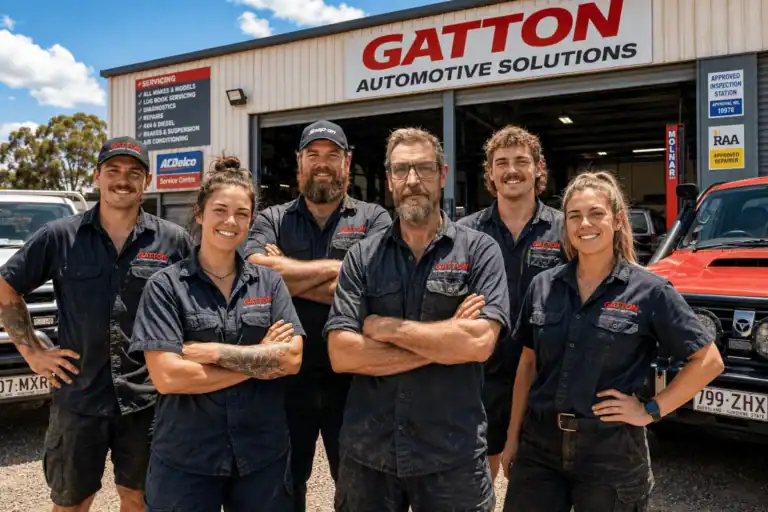
Gatton Automotive Solutions is a full-service workshop, not a narrow-scope operation. We handle everything from everyday car servicing through to heavy vehicle mechanical work, smash repairs, suspension upgrades, and tyre fitting, all under one roof. For BMW owners in the Lockyer Valley, that means you’re not driving 45 minutes to Ipswich or Toowoomba for a gearbox repair that can be done locally, by a team with the diagnostic equipment and experience to do it properly.
With five-star reviews from local drivers, our reputation is built on giving people straight information and doing the work right. We don’t recommend repairs that aren’t needed, and we explain what we’ve found before we ask you to approve anything. Roadworthy certificates are issued on-site, and we also handle parts sourcing in-house, so you’re not chasing down components yourself. If your BMW needs a transmission repair, we’ll tell you exactly what’s involved and why.
Ready to get your BMW looked at? Book Your Free Inspection online or Call Us Now, and we’ll get your Gatton-area service sorted without the unnecessary trip out of town.