Your brakes are the single most important safety system on your vehicle. When they’re working properly, you don’t think about them. When they’re not, the consequences can be serious. Brake repair covers everything from worn brake pads and scored rotors to failing calipers, spongy brake lines, and a failing brake booster. At Gatton Automotive Solutions, we handle all of it – from a basic pad replacement on the family hatchback to brake work on 4WDs, utes, and heavy vehicles.
Warning Signs Your Brakes Need Attention
Brakes rarely fail without warning. Most drivers notice something weeks or even months before there’s a real problem, but it’s easy to put off investigating until it becomes urgent. If you recognise any of the following, it’s worth getting your brakes checked sooner rather than later.
- Squealing or squeaking when you apply the brakes – this is often the wear indicator on your brake pads telling you they’re running low
- Grinding or metal-on-metal noise – this usually means the pad material has worn through completely and the backing plate is contacting the rotor
- A pulsing or vibrating sensation through the brake pedal – often caused by warped rotors, particularly common after heavy or repeated braking
- The car pulling to one side when braking – can indicate an uneven brake caliper, a seized slide pin, or uneven pad wear across an axle
- A soft or spongy pedal that travels further than usual before the brakes engage – this can point to air in the brake lines or a fluid leak
- A hard pedal that requires significant force – often linked to a failing brake booster, which is the vacuum-assisted component that amplifies your foot pressure
- The brake warning light illuminating on your dashboard – this should always be investigated promptly
None of these symptoms improve on their own. If you’re driving around the Lockyer Valley with any of these warning signs, book a brake inspection before the problem escalates.
What Happens During a Brake Repair at Our Gatton Workshop
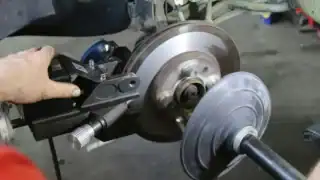
We start with a thorough inspection before any work is quoted or carried out. That means pulling the wheels and physically measuring pad thickness, checking rotor condition (looking at surface finish, measuring for thickness variation, and assessing whether machining or replacement is needed), and inspecting the calipers and brake hardware for signs of seizure or corrosion. We also check brake fluid condition and level, and test brake hoses for cracking or swelling that can develop over time.
For vehicles showing a soft pedal or suspected fluid leak, we check the master cylinder and all lines for signs of deterioration. If brake booster repair is needed, we’ll diagnose the vacuum system or hydraulic assist depending on your vehicle type before recommending a course of action.
We only recommend work that’s actually needed. If your front pads are worn but the rear pads still have plenty of life, we’ll tell you that and replace the front axle only. Our aim is to give you an honest picture of what your brakes need right now, and what to keep an eye on down the track.
What Affects the Cost of Car Brake Repair?
Brake repair costs vary depending on several factors, and we think it’s useful for drivers to understand what drives those differences before they come in.
How much is worn: A straightforward pad replacement is a very different job to replacing pads, machining rotors, freeing a seized caliper, and bleeding the brake lines. The more components involved, the more labour time is required.
Vehicle type: Brake components for a large 4WD, a dual-cab ute, or a truck are physically bigger and generally more expensive than those for a small passenger car. Performance vehicles can also carry a significant parts premium.
Parts choice: We discuss this with every customer. OEM-specification parts are available for most makes and models and are generally our recommendation for reliability and fit. Quality aftermarket options exist for many applications and can offer genuine value. We’ll explain the difference and let you decide.
Whether additional work is needed: Sometimes a brake inspection uncovers related issues – a cracked brake hose, corroded hardware, or a wheel bearing that’s contributing to uneven wear. We’ll explain any additional findings clearly and won’t proceed without your go-ahead.
Why Gatton Drivers Choose Us for Brake Work
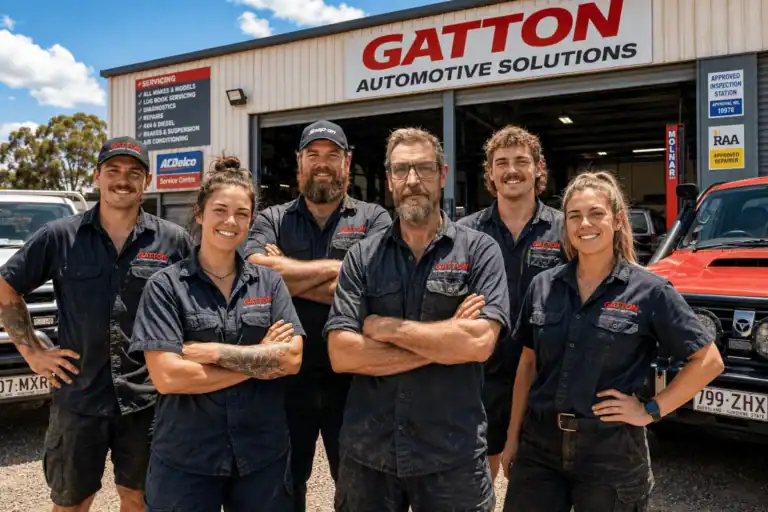
We’re a full-service workshop covering cars, 4WDs, trucks, and heavy equipment. That breadth matters for brake work because we regularly handle everything from light passenger vehicles to farm machinery and commercial vehicles – which means our team understands the demands different vehicle types place on their braking systems.
Being locally owned and based in Gatton means you’re not driving 45 minutes to Ipswich or Toowoomba for a brake inspection. We handle parts sourcing directly, so we’re not waiting on you to track down components. If your vehicle needs a roadworthy certificate after brake repairs, we issue those on-site as well.
We’ve built our reputation in the Lockyer Valley on honest advice and fair pricing, and that’s reflected in five-star reviews from local drivers and businesses. No upselling, no unnecessary work – just a clear explanation of what your car needs and a straightforward quote to fix it.
If you’re noticing any of the warning signs above, don’t wait. Call Us Now or Book Your Free Inspection online, and we’ll get your brakes assessed at our Gatton workshop.