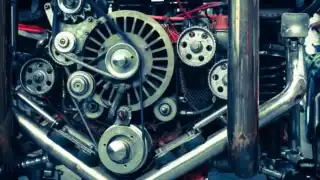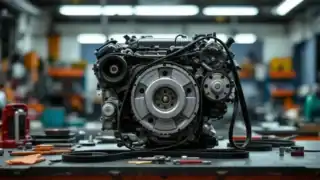
Your timing belt is one of the most important components under the bonnet, yet most drivers never see it and rarely think about it until something goes wrong. Timing belt replacement is a scheduled maintenance job, not a breakdown repair, and that distinction matters enormously. The belt keeps your engine’s camshaft and crankshaft rotating in precise sync, controlling exactly when your valves open and close relative to the pistons. At Gatton Automotive Solutions, we see vehicles come in from across the Lockyer Valley where this job has been left too long, and the results are rarely cheap.
What Happens When a Timing Belt Fails
Unlike a flat tyre or a dead battery, a timing belt rarely gives you much warning before it goes. When it does fail, the consequences depend on your engine type. On an interference engine (which most modern petrol engines are), the pistons and valves occupy the same space at different times, kept apart only by the belt’s precise timing. If the belt snaps, that separation disappears. Valves bend, pistons crack, and you can be looking at internal engine damage that costs far more to repair than the cam belt replacement itself ever would have.
That said, there are a few signs worth knowing. Some vehicles produce a ticking or rattling noise from the front of the engine as the belt and its tensioner wear. You might notice the engine running roughly or misfiring at low revs, which can indicate the belt has stretched and timing has shifted. In some cases, oil leaks from the front of the engine (from worn cam or crank seals) can contaminate the belt and accelerate wear well ahead of schedule.
How Often Does a Timing Belt Need Replacing?
The honest answer is: check your logbook. Replacement intervals vary considerably between manufacturers and engine families. Many petrol engines call for replacement somewhere between 60,000 km and 100,000 km, but some specify time-based intervals too, meaning a belt on a low-mileage vehicle that is several years old may still need replacing based on age alone. Rubber degrades over time regardless of kilometres travelled.
If you have bought a used vehicle and you’re not sure when the belt was last done, that uncertainty alone is a good reason to have it inspected. A belt showing cracking, fraying, glazing, or missing teeth is overdue. One that looks fine visually might still be at or beyond its recommended service life based on age.
What Our Timing Belt Replacement Includes
We don’t replace just the belt and nothing else. A timing belt job done properly addresses everything in that system at the same time, because the labour to access the belt covers everything nearby. Our standard approach includes:
- Removal of ancillary components to access the timing cover
- Replacement of the timing belt itself
- Replacement of the tensioner and idler pulleys, which wear at a similar rate to the belt and should never be left on when a new belt goes in
- Replacement of the water pump if it is driven by the timing belt (common on many four-cylinder engines) since it makes no sense to pay for the labour twice
- Inspection of the cam and crank seals for leaks, with replacement recommended if they show weeping
- Correct torquing and timing verification before the engine is started
Skipping the tensioners or the water pump to save a small amount on parts is a false economy. If a tensioner fails six months after a belt replacement, you are back to square one with the same labour costs all over again.
What Affects the Cost and Time of This Job?
Several variables influence what you will pay and how long the job takes. Engine layout is the biggest one. A four-cylinder engine with straightforward access is a very different job from a V6 or larger engine where the timing system is more complex. Vehicle age and parts availability also matter. For common Australian models, parts are usually readily available. For less common vehicles or older models, sourcing quality components may take a little longer.
The choice between OEM-specification parts and quality aftermarket equivalents is worth discussing with us directly. Both have their place, and we’ll give you a straight recommendation based on your vehicle and budget, without steering you toward unnecessary cost. If a cam seal is weeping and needs replacing while the belt is out, it is far better to know that upfront than to discover it later.
Timing Belt Replacement in Gatton, Without the Drive to Ipswich or Toowoomba
Getting this job done locally means you’re not adding 90 to 160 kilometres to your day for a service that is available right here. Gatton Automotive Solutions is a full-service workshop handling everything from everyday passenger cars and 4WDs through to trucks, heavy equipment, and agricultural machinery. Parts sourcing is handled by our team, so you’re not waiting on a parts run or chasing a quote. We work across all common vehicle makes and model types and give you a clear picture of what the job involves before we start.
If you know your vehicle is coming up on its timing belt interval, or if you’ve owned it a while and aren’t sure when it was last done, Book Your Free Inspection online or Call Us Now and we’ll take a look at it here in Gatton.