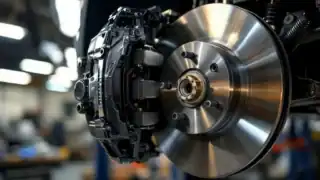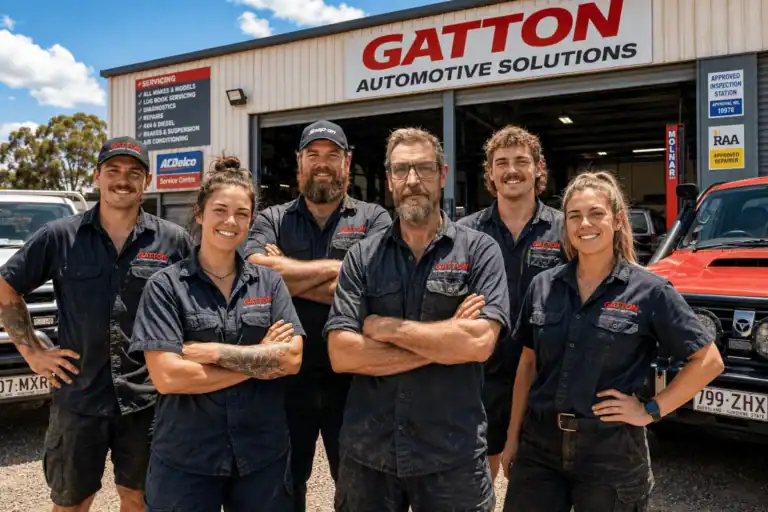
Your brakes are the single most important safety system on your vehicle. Brake replacement isn’t something to put off when the warning signs are there. Whether it’s worn brake pads grinding against the rotor, soft brake shoes that have lost their lining, or rotors that have worn past their minimum thickness, deteriorating brakes extend your stopping distance and put you and everyone around you at risk. At Gatton Automotive Solutions, we carry out brake work across all vehicle types, from everyday cars and family SUVs through to utes, 4WDs, and heavy equipment.
Warning Signs You May Need Brake Replacement
Brakes wear down gradually, so the signs can be easy to dismiss at first. Knowing what to listen and feel for means you can act before a minor repair becomes a bigger problem.
- Squealing or squeaking when braking: Most brake pads include a small metal wear indicator that makes a high-pitched noise when the pad material gets low. This is your first warning.
- Grinding noise: If squealing has progressed to a harsh grinding sound, the pad material has worn away and metal is contacting metal. This can damage the rotor and drum surfaces quickly.
- Soft or spongy brake pedal: A pedal that travels further than usual before engaging the brakes can indicate worn pads or an issue with the brake hydraulics.
- Pulling to one side under braking: Uneven wear between the left and right sides can cause the vehicle to pull when you apply the brakes.
- Vibration through the pedal: This often points to warped rotors, particularly common after repeated heavy braking on long descents.
- Longer stopping distances: If your vehicle takes noticeably more road to stop than it used to, something has changed and it needs looking at.
If you’re experiencing any of these symptoms around Gatton or out on the highway runs to Ipswich or Toowoomba, don’t wait. Worn brakes only get more expensive and more dangerous the longer they’re left.
What Does a Brake Replacement Involve?
We start with a thorough inspection before we replace anything. There’s no point fitting new pads onto rotors that are below minimum thickness, and there’s no point quoting for parts you don’t need. Our technicians measure rotor thickness, check rotor and drum surfaces for scoring or warping, inspect brake pad and shoe lining depth, and assess the condition of callipers, brake lines, and hydraulic components.
From there, we give you a clear picture of what needs replacing now and what can wait. A typical brake pad replacement involves removing the wheel, releasing the calliper, pressing back the calliper piston, fitting new pads, and reassembling everything to the correct torque. If the rotors are worn or scored, we’ll discuss whether machining (resurfacing) is viable or whether brake rotors replacement is the better option for your vehicle.
Rear drum brakes use a different system involving brake shoes that press outward against the inside of a drum. Brake shoe replacement requires the drum to be removed, the old shoes and associated hardware to be stripped out, and new components fitted and adjusted correctly. Rear drums are still common on older vehicles, smaller cars, and the rear axle of some 4WDs and light commercial vehicles.
Once the work is done, we bed in the new components with a series of controlled stops before handing the vehicle back to you.
What Affects the Cost of Brake Replacement?
A few variables determine how long a brake job takes and what it costs. Vehicle type plays a big role. Rear brake pads replacement on a small hatchback is a different job from rear brake pads replacement on a four-wheel drive with an integrated park brake mechanism. Trucks and heavy equipment have their own brake systems altogether.
Parts quality and availability is another factor. We source parts suited to your vehicle’s application, whether that’s quality aftermarket components or OEM-specification parts depending on what the vehicle needs and your preference. A set of brake pads for a daily commuter and a set for a loaded work ute are specified differently, and we’ll explain the difference before we order anything.
If rotors or drums are also required, that naturally adds to both cost and time. If there are hydraulic issues, callipers that are seized, or brake lines that need attention, we’ll identify those during the initial inspection so there are no surprises.
Can Brake Work Be Done While You Wait in Gatton?
For straightforward brake pad changes on common vehicles, we can often complete the work while you wait. More involved jobs, particularly where parts need to be sourced or multiple components are being replaced, may require the vehicle for longer. We’ll give you a realistic timeframe upfront so you can plan accordingly.
Why Gatton Drivers Choose Us for Brake Work
We’re a full-service workshop based in Gatton, covering everything from a simple car brake replacement through to brake systems on trucks, trailers, and farm equipment. That breadth means our technicians work on a wide range of brake configurations regularly, not just the most common passenger cars. We also have tyre fitting in-house, so if your vehicle needs new rubber at the same time, we can handle it all without you making two trips.
Our approach is straightforward: we inspect first, explain what we find, and don’t replace parts that don’t need replacing. With five-star reviews from local drivers, that approach seems to be working. For Lockyer Valley residents, there’s no need to drive to Ipswich or Toowoomba for quality brake work when it’s available right here in town.
Ready to get your brakes checked? Book Your Free Inspection online or Call Us Now and we’ll sort out a time that works for you.