Volkswagen transmission repair is something we see regularly at Gatton Automotive Solutions, and it’s rarely a small job to ignore. The transmission is what moves power from your engine to your wheels, and when it starts playing up, the whole vehicle becomes unreliable. Whether you’re driving a Polo around town, hauling a trailer in an Amarok, or putting regular kilometres on a Tiguan or Golf, a gearbox that isn’t shifting right is a problem worth sorting sooner rather than later. Drivers across the Lockyer Valley know that leaving transmission issues unaddressed usually means a bigger repair bill down the track.
What Does a Failing VW Transmission Actually Feel Like?
Volkswagen’s automatic and DSG (Direct Shift Gearbox) transmissions are engineered with tight tolerances. That means when something starts to wear or lose calibration, you’ll often notice it before any warning light comes on. The symptoms can be subtle at first, then get progressively harder to ignore.
- Gear hesitation or slipping: The engine revs but the car doesn’t accelerate properly, or it feels like it’s momentarily losing drive between gear changes.
- Jerky or harsh shifting: Gear changes that feel more like a shunt than a smooth transition, particularly common in VW’s DSG gearboxes when mechatronic units or clutch packs start to wear.
- Delayed engagement: You shift into Drive or Reverse and there’s a noticeable pause before the vehicle moves.
- Shuddering at low speed: A vibration or shudder when pulling away from a stop, especially in first or second gear, is a known characteristic of DSG wear in many VW models.
- Gearbox warning light: A transmission-related fault code appearing on the dash, sometimes alongside a flashing glow plug light or EPC warning depending on the model.
- Fluid leaks: Reddish or dark fluid under the car, which may indicate a transmission seal or pan gasket issue.
If any of these symptoms sound familiar, the worst thing to do is wait. Continued driving with a compromised transmission can turn a mechatronic replacement or fluid service into a full gearbox rebuild.
How We Diagnose and Repair Volkswagen Transmissions
VW vehicles run on the VAG group architecture, which means accurate diagnosis depends on using scan tools that can communicate with the transmission control module at the depth the factory intended. Generic OBD readers often miss the fault codes that matter most in DSG and automatic gearboxes. Our diagnostic process starts by reading and interpreting those fault codes properly, then cross-referencing them with the physical symptoms you’ve described.
For DSG transmissions specifically, we check the mechatronic unit (the integrated electro-hydraulic control assembly that manages clutch engagement and gear selection), the clutch packs, and the transmission fluid condition. DSG fluid degrades differently to a conventional automatic fluid, and VW specifies its own fluid types for the 6-speed and 7-speed variants. Using the wrong fluid, or leaving worn fluid in too long, accelerates internal wear significantly.
For manual gearbox repairs, we inspect the synchromesh rings, gear selectors, and clutch linkage as part of the diagnosis. A manual gearbox that grinds going into third, or pops out of gear under load, usually points to a specific internal component rather than a wholesale rebuild.
We source parts to OEM-equivalent or genuine specification wherever possible. Volkswagen gearbox repairs that use undersized or incompatible components rarely hold up, and we’d rather tell you that upfront than see you back in six months with the same fault.
What Affects the Cost and Time Involved?
VW transmission repairs vary quite a bit in scope. A DSG fluid and filter service is a very different job to replacing a mechatronic unit or rebuilding a gearbox from the internals out. Several factors influence what you’ll pay and how long the work takes.
- The type of transmission fitted to your specific model (DSG 6-speed DQ250, DSG 7-speed DQ200, traditional torque converter automatic, or manual)
- Whether the fault requires a complete unit replacement or targeted component repair
- Parts availability for your particular VW variant, which can vary between common models like the Golf and less common configurations
- The age and overall condition of the transmission, since a unit with multiple worn components may be more economically rebuilt rather than patched
We’ll always walk you through what we’ve found and what we recommend before any work begins. No surprises, no parts fitted without your sign-off.
Volkswagen Transmission Repairs in Gatton, Without the Drive to Ipswich
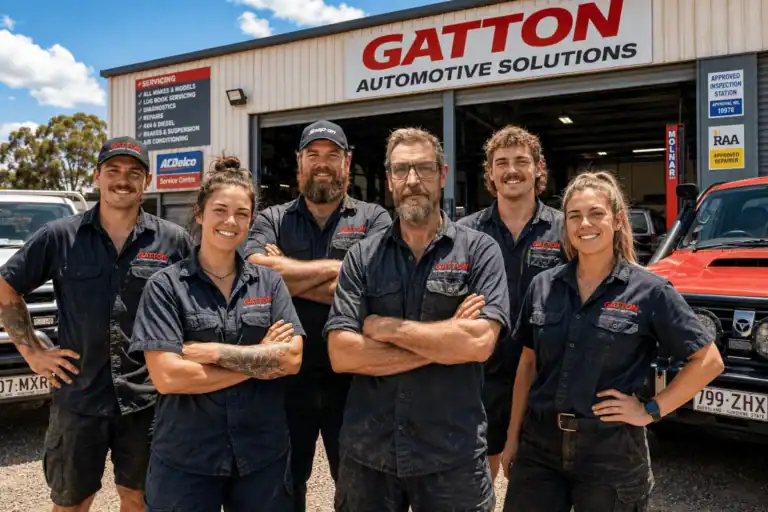
Getting VW transmission work done in the Lockyer Valley used to mean a trip to Ipswich or Toowoomba. Gatton Automotive Solutions handles these repairs locally, which saves you a significant round trip and keeps your vehicle close to home while it’s being worked on. We’re a full-service workshop covering everything from everyday passenger cars through to 4WDs, utes, light trucks, and heavy equipment, so no matter what VW model you’re running, we can look after it under one roof.
Our team has earned five-star reviews from drivers across Gatton and the wider Lockyer Valley, and that reputation is built on giving people honest assessments, not upselling work that isn’t needed. If your transmission needs a fluid service and nothing more, that’s what we’ll tell you. We also issue roadworthy certificates on-site and handle tyre fitting, suspension work, and smash repairs in-house, so if your VW needs more than just a gearbox fix, you won’t need to visit multiple workshops.
If your VW is shifting rough, slipping gears, or throwing a warning light, Call Us Now or Book Your Free Inspection online. We’re here to help Gatton and Lockyer Valley drivers get back on the road with confidence.