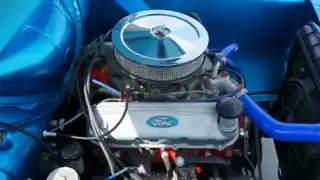
Ford vehicles are everywhere in the Lockyer Valley. Rangers on the back roads, Everests doing school runs, older Falcons still putting in work for tradies around Gatton. When something goes wrong with yours, finding a workshop that actually knows Ford is worth more than just finding one that’s nearby. Good Ford car repair means more than swapping out parts — it means understanding how Ford’s systems behave, what the common failure points are, and diagnosing the real cause before any work begins.
Common Ford Problems Worth Knowing About
Ford has a broad range of vehicles on Australian roads, and they don’t all share the same weak points. That said, a few issues come up often enough that we see them regularly in our workshop.
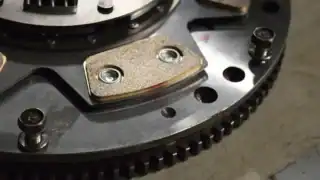
The 6-speed PowerShift dual-clutch transmission fitted to older Focus and Fiesta models is well-known for shuddering on take-off, hesitation when pulling away from a standstill, and jerky low-speed behaviour. If you’ve owned one of these and noticed that sluggish, almost slipping sensation at low speeds, it’s worth having it assessed properly rather than hoping it improves on its own.
Ford Rangers — particularly the 2.2L and 3.2L TDCi models — can develop issues with EGR valves (exhaust gas recirculation valves, which direct exhaust gases back into the engine to reduce emissions). A clogged EGR valve often shows up as rough idle, a noticeable drop in power, or a check engine light. These are diagnosable with the right scan tools, but they’re sometimes misread as fuel system or injector problems without a proper Ford-aware diagnostic process.
Other things we see fairly regularly on Fords across different models:
- Coolant leaks from the thermostat housing, particularly on older four-cylinder Falcons and Territories
- Timing chain wear on EcoBoost engines, often presenting as a rattle on cold start
- Tailgate latch failures and rear seal leaks on Rangers
- Power steering faults and sensor errors on Mondeos and Territories
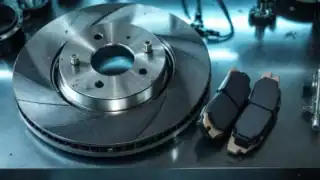
- Brake booster issues and premature brake wear across various models
Signs Your Ford Needs Attention
Some warning signs are hard to ignore. Others creep up gradually and are easy to rationalise until something bigger fails. Here are some worth acting on sooner rather than later:
- A check engine light that stays on, even if the car seems to drive fine
- Unusual vibrations through the steering wheel or pedals at highway speed
- Gear changes that feel rough, delayed, or inconsistent
- A noticeable knock or tick from the engine on cold start
- Fluid spots in the driveway — coolant, oil, or transmission fluid
- Reduced fuel economy without any obvious change in how you’re driving
Ford’s onboard systems throw fault codes for a reason. A persistent warning light doesn’t always mean a major repair, but ignoring it long enough can turn a minor issue into one that’s much more expensive to fix.
What Ford Auto Repair Looks Like at Our Workshop
We start with a proper diagnostic scan using scan tools capable of reading Ford-specific fault codes — not just generic OBD2 codes that give you a starting point but not the full picture. Ford’s modules communicate across the vehicle’s network, and pulling the right data means looking at live sensor feeds alongside stored codes to understand what’s actually happening.
From there, the process depends on what we find. Mechanical inspection, fluid checks, test drives where needed — we work through it methodically rather than jumping straight to parts replacement. Before any work is approved, we walk you through what we’ve found, what needs attention now, and what can wait. No pressure, no padding the job.
For parts, we source OEM-equivalent or genuine-quality components suited to Ford’s specifications. Using the right spec fluid for a PowerShift transmission, for example, matters more than most people realise — the wrong fluid can make the problem worse. We handle parts sourcing in-house, so you’re not chasing things down yourself.
What Affects the Cost and Time of Ford Car Repairs in Gatton
A straightforward service or minor repair can often be turned around while you wait. More involved work — a transmission service, an EGR clean, a timing chain inspection — takes longer, and the time depends on what we find once the job is underway. We’ll always let you know upfront if a repair is likely to take more than a short visit.
Cost varies based on what needs doing, which model you’re driving, and whether parts need to be ordered in. Ford Ranger parts are generally well-stocked given how common the vehicle is. Older Falcon or Territory parts can sometimes require a little more lead time. Being upfront about this is how we work — if something is going to affect timing or cost, you’ll know before we proceed.
Why Gatton Automotive Solutions for Your Ford
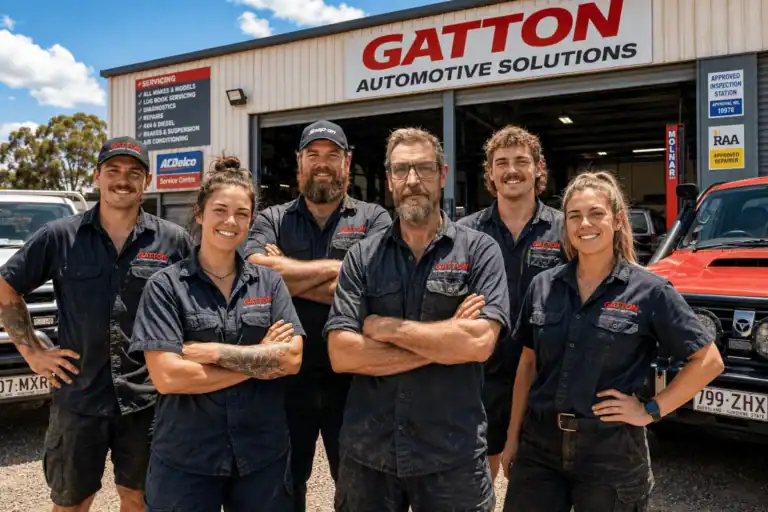
We’re a full-service workshop based right here in Gatton. Cars, 4WDs, trucks, and heavy equipment — we handle it all under one roof. That means if your Ranger needs a mechanical repair and the body needs some panel attention, or you need a roadworthy certificate before selling, we can take care of it without sending you somewhere else.
Driving to Ipswich or Toowoomba for Ford auto repairs adds up — in fuel, time, and inconvenience. We’ve built a reputation locally by doing solid work and being straight with people about what needs to be done. Our five-star reviews reflect that, and we’d rather keep earning them than coast on them.
Whether it’s a routine service, a fault you’ve been putting off, or something that just doesn’t feel right, Book Your Free Inspection online or Call Us Now and we’ll take a proper look at your Ford right here in Gatton.