Hyundai has become one of the most common vehicles on roads across the Lockyer Valley, and for good reason. They’re practical, fuel-efficient, and generally very reliable when they’re properly maintained. But like any vehicle, Hyundais need regular attention from mechanics who understand their systems. Whether you’re driving an i30 around Gatton every day or relying on a Tucson or Santa Fe for longer runs to Ipswich or Toowoomba, keeping up with Hyundai car repair and servicing protects the vehicle and keeps it running the way it should.
Common Signs Your Hyundai Needs Attention
Hyundais tend to give early warning signs when something is off. Knowing what to look for can help you catch a small issue before it becomes an expensive repair.
- Engine warning light on the dash – Hyundai’s onboard diagnostics flag a wide range of issues, from minor sensor faults to more serious mechanical concerns. Don’t leave it flashing and hope it clears.
- Rough idle or hesitation on acceleration – common in higher-mileage Hyundai four-cylinder engines, often linked to spark plugs, ignition coils, or fuel injector build-up.
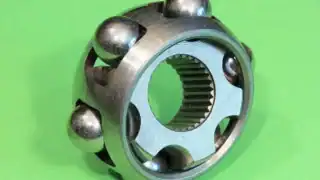
- Shudder or vibration through the steering wheel – can point to worn CV joints or driveshaft issues, which are fairly typical on older Hyundai Elantras and i-series models.
- Coolant loss or overheating – Hyundai’s Theta II and Nu petrol engines can develop cooling system issues over time. If your temperature gauge is climbing, get it looked at promptly.
- Transmission hesitation or clunking – particularly relevant on models fitted with Hyundai’s dual-clutch transmission (DCT). Early service and fluid changes matter here.
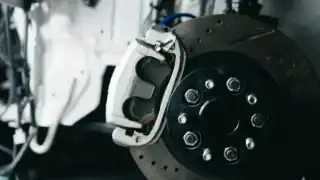
- Brakes pulling, grinding, or feeling soft – Hyundais have reliable brake systems, but worn pads and rotors still need replacing on schedule like any other vehicle.
- Oil consumption between services – some Hyundai Theta II petrol engines are known for higher oil consumption. If you’re topping up more often than expected, let us take a look.
What’s Involved in Hyundai Repairs at Our Workshop
We read Hyundai’s specific fault codes using diagnostic equipment that communicates with the vehicle’s OBD system rather than relying on generic scanners that miss manufacturer-specific codes. This matters because Hyundai uses its own diagnostic protocols across different model generations, and a scan that only reads generic engine codes can miss transmission, ABS, or SRS faults that are actively logged.
For mechanical repairs, we work from Hyundai’s service specifications. That means using the correct torque settings, the right fluid grades (including the specific ATF type for DCT-equipped models), and OEM-spec or genuine-equivalent parts suited to that model’s design. We don’t use parts that broadly fit – we source to specification for the Hyundai in front of us.
Typical Hyundai Repairs We Handle
- Engine diagnostics and fault code interpretation
- Logbook and scheduled servicing to Hyundai’s maintenance intervals
- Brake pad, rotor, and caliper replacement
- CV joint, driveshaft, and wheel bearing repairs
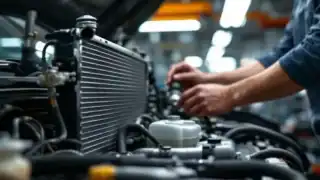
- Cooling system repairs including thermostat, water pump, and radiator work
- Timing belt and timing chain replacement at the manufacturer’s recommended intervals
- Suspension components including struts, shock absorbers, and control arms
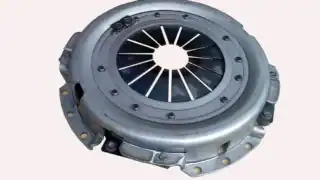
- Clutch replacement on manual Hyundai models
- Exhaust repairs and catalytic converter replacement
- Transmission fluid servicing for automatic and DCT models
What Affects the Cost and Time for Hyundai Auto Repairs?
Cost varies depending on a few straightforward factors. The age and model of your Hyundai plays a part – parts for a current-model Tucson are usually readily available, while sourcing components for an older Sonata or Lantra might take a day or two. We handle parts sourcing at the workshop, so you don’t need to chase down components yourself.
Whether a repair needs OEM-spec parts or whether a quality aftermarket alternative is appropriate also affects pricing. We’ll discuss that with you honestly rather than defaulting to the most expensive option. Some Hyundai repairs can be turned around in a single visit, particularly if we can get parts locally. More involved work like timing belt replacement or suspension overhauls naturally takes longer, and we’ll give you a realistic picture of what’s needed before we start.
Servicing Your Hyundai in Gatton Without the Drive to the City
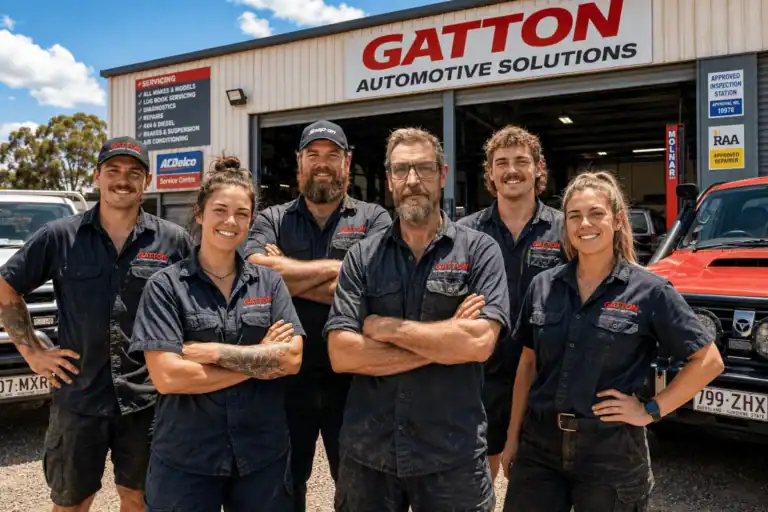
A lot of Lockyer Valley drivers have been making the trip to Ipswich or Toowoomba for specialist servicing. It’s understandable – not every local workshop handles the full range of what a Hyundai might need over its lifetime. Gatton Automotive Solutions is set up differently. We’re a full-service workshop covering everything from general mechanical repairs and logbook servicing through to smash repairs, custom paintwork, suspension upgrades, tyre supply and fitting, and roadworthy certificates, all under one roof. There’s no need to manage multiple workshops or travel 45 to 80 kilometres for work that can be done right here in Gatton.
We’ve built a strong local reputation across Gatton and the broader Lockyer Valley, with five-star reviews from drivers who’ve trusted us with their vehicles. Hyundai owners make up a solid part of our regular customer base, and we see the full range of models from i20s and i30s through to larger SUVs and commercial variants. Honest advice and straight pricing means you’ll know what the repair involves and what it’ll cost before we touch it.
If your Hyundai needs attention, Call Us Now or Book Your Free Inspection online. Our Gatton workshop is ready to help, and we’ll give you a straight answer from the start.