Ford suspension repair covers a range of work that keeps your vehicle stable, comfortable, and in control on the road. Whether you’re driving a Ranger through the Lockyer Valley on a mix of sealed and unsealed roads, or commuting through Gatton in an Everest or Territory, the suspension system takes a constant beating. When components start to wear or fail, the effects show up in handling, tyre wear, and ride quality well before anything breaks completely. Getting it checked early is the safer and cheaper option.
Signs Your Ford Suspension Needs Attention
Ford vehicles are used hard across regional Queensland. Rangers in particular spend time towing, carrying loads, and travelling on roads that aren’t exactly smooth. That kind of use accelerates wear on components like shock absorbers, control arm bushes, and ball joints faster than typical urban driving would.
Some signs are easy to notice from the driver’s seat. Others are more subtle and only show up during an inspection. If you’re experiencing any of the following, it’s worth booking a look before the issue develops into something more involved:
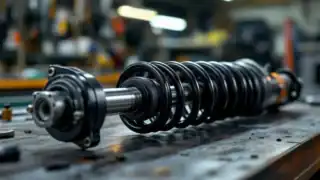
- Bouncing or wallowing after going over a bump, which points to worn shock absorbers or struts
- Pulling to one side while driving on a straight road, particularly if the issue appeared after hitting a pothole or gutter
- Uneven tyre wear across the front or rear axle, often caused by misalignment linked to worn suspension geometry
- Clunking or knocking sounds over bumps or when turning, commonly associated with worn ball joints, control arm bushes, or sway bar links
- Steering that feels loose or vague at highway speeds, which can indicate worn tie rod ends or strut mounts
- The nose dipping sharply under braking, or the rear squatting excessively when loaded, both of which suggest damper wear
Fords registered in rural and semi-rural areas like Gatton tend to show suspension wear at lower kilometres than their metro equivalents, simply because of the roads and the loads. If your Ranger or Everest is working regularly, annual suspension checks make sense even if nothing feels obviously wrong.
How We Diagnose and Repair Ford Suspension
Ford’s suspension design varies meaningfully across the range. The Ranger uses a twin-I-beam or double-wishbone front setup depending on the generation, while the Mustang runs an independent rear multilink arrangement. The Everest and Territory share platform architecture with the Ranger but have different ride height and load specifications. Knowing these differences matters when diagnosing a complaint, because the same symptom can have different root causes depending on the model.
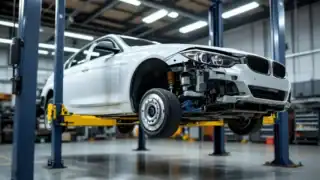
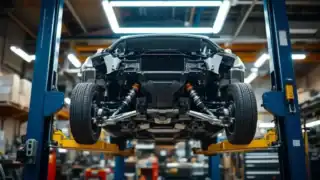
We start with a visual inspection and hands-on check of the major components, looking for play in ball joints, cracked or collapsed bushes, leaking shock absorbers, and any evidence of physical damage to control arms or subframe mounts. Where a complaint involves alignment or pulling, we use this inspection to identify the mechanical cause before any wheel alignment is carried out, because aligning a car with worn components will only mask the problem temporarily.
For Rangers and Everests that have been lifted or fitted with aftermarket suspension, we also check that the geometry remains within a safe operating range. Lifts that exceed manufacturer specifications can put strain on CV joints, driveshafts, and diff seals in ways that aren’t always immediately obvious.
Parts used for Ford automotive suspension repair are sourced to match OEM specifications where possible, with quality aftermarket equivalents available for components where the performance and fitment are equivalent. We handle parts sourcing in-house, which avoids the delays that come with waiting on external suppliers.
What Affects the Cost and Time of Ford Suspension Work
Suspension repair pricing depends on what’s actually worn or damaged. Replacing a pair of front shock absorbers on a Ranger is a different job in scope and parts cost compared to replacing lower control arms with new bushes and ball joints. Labour time also varies based on accessibility and whether related components like wheel bearings need to be removed to complete the work.
OEM Ford parts typically cost more than quality aftermarket alternatives, but there are cases where genuine parts are the right call, particularly for safety-critical joints and mounts on newer models still under warranty consideration. We’ll walk you through the options honestly so you can make the right call for your situation and budget.
If a roadworthy certificate is needed after significant suspension work, we can issue that on-site rather than requiring a separate inspection elsewhere. That’s one less step and one less trip for you.
Why Lockyer Valley Ford Owners Choose Gatton Automotive Solutions
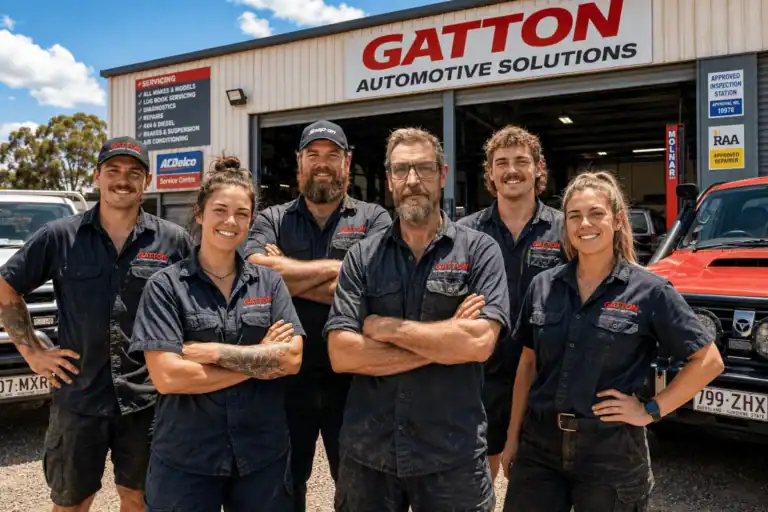
We’re a full-service workshop based in Gatton handling everything from everyday cars through to 4WDs, utes, trucks, and heavy equipment. Ford owners across the Lockyer Valley come to us because we cover the full scope of work under one roof, including suspension upgrades and tyre fitting, wheel alignments, roadworthy certificates, and general mechanical repairs, without the need to drive to Ipswich or Toowoomba for a specialist.
We don’t recommend work that isn’t needed. If your suspension checks out fine, we’ll tell you that. If something needs attention, we’ll explain what it is, why it matters, and what the options are. That’s been the way we operate since we opened, and our five-star reviews from customers across the region reflect it.
If your Ford is showing any suspension symptoms, or you just want peace of mind before a long trip, Call Us Now or Book Your Free Inspection online. We’re here in Gatton and ready to help.