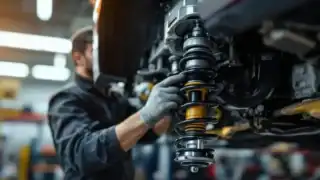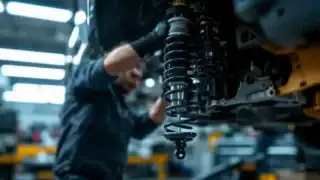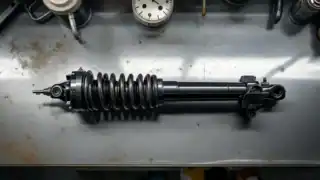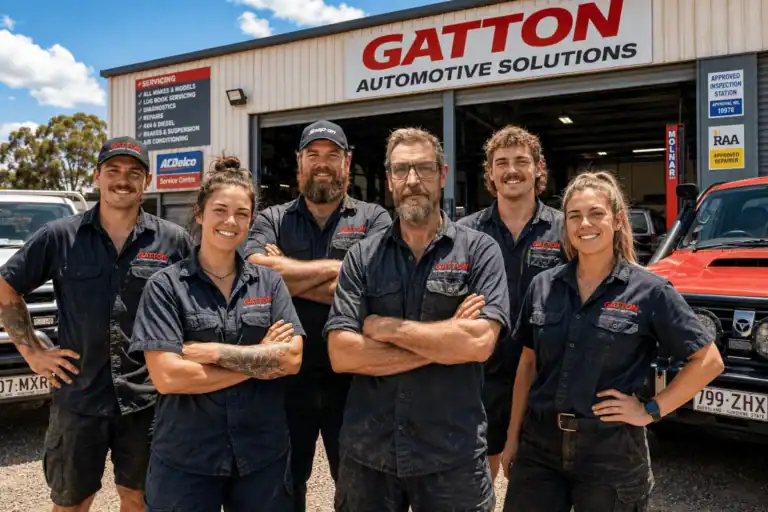
A worn or damaged suspension system doesn’t just make your Hyundai ride rough. It affects how your vehicle steers, how confidently it brakes, and how safely it handles everything from the Warrego Highway to gravel roads out through the Lockyer Valley. Hyundai suspension repair covers a range of components, from shock absorbers and struts to control arms, ball joints, and sway bar links. If something in that system is failing, you’ll usually feel it before you see it, and that’s exactly when to act. At Gatton Automotive Solutions, we work on Hyundai models regularly and know the wear patterns these vehicles develop over time.
What Are the Warning Signs Your Hyundai’s Suspension Needs Attention?
Hyundai owners often describe the same early symptoms: a knock or clunk coming through the cabin on bumps, a vehicle that pulls slightly to one side, or a front end that feels loose through corners. These aren’t just comfort issues. They’re signals that specific components are no longer doing their job properly.
Common signs we see on Hyundais include:
- Knocking or clunking sounds from the front or rear when going over speed humps, potholes, or rough surfaces
- Uneven tyre wear, particularly cupping or scalloping on the tread surface, which often points to worn shock absorbers
- Steering wheel vibration or wobble at highway speeds
- The vehicle sitting lower on one corner than the others
- A nose-dip feeling when braking, or the rear squatting heavily when accelerating or carrying a load
- A vague, disconnected feeling through the steering that makes the car feel less predictable
Knocking from the front suspension on a Hyundai i30 or Tucson, for instance, often traces back to worn front strut mounts or degraded rubber bushings. On older Santa Fe models with higher kilometres, rear shock absorbers and lower control arm bushings are common failure points. These aren’t design faults, they’re normal wear that happens across most makes, but knowing which components are prone to fatigue on specific Hyundai platforms helps us inspect the right areas first.
How We Inspect and Repair Hyundai Suspension Systems
We start with a visual inspection and a hands-on assessment. That means physically checking for play in the ball joints and tie rod ends, looking at the condition of rubber bushings, checking strut mounts for corrosion or cracking, and assessing shock absorber performance. Where it’s not obvious, we put the vehicle on the hoist for a proper look underneath.
Hyundai’s suspension geometry is set to specific tolerances, and OEM-spec or quality-equivalent replacement parts matter here. Using undersized or ill-fitting aftermarket components can leave you with handling that’s improved but not quite right. We source parts suited to your specific model, whether that’s a Hyundai i20, Accent, Elantra, Tucson, Santa Fe, Kona, or Staria, and we match them to the vehicle’s original specifications.
Once repairs are completed, a wheel alignment is almost always the right next step. Suspension work that changes geometry, like replacing a control arm or strut, will pull the alignment out if it’s not checked and corrected afterward. We handle alignment in-house, so you’re not driving across town to finish the job.
Roadworthy Certificates After Suspension Repairs
If your Hyundai needs a roadworthy certificate, suspension is one of the areas inspected. Worn ball joints, excessive play in steering linkages, or leaking shock absorbers can cause a vehicle to fail. We issue roadworthy certificates on-site, so if your vehicle needs suspension work to pass, we can handle both the repair and the certificate without you needing to visit multiple workshops.
What Affects the Cost and Time of Hyundai Suspension Repairs?
Suspension repairs vary quite a bit depending on what’s failed, how many components are involved, and which Hyundai model you’re driving. A single worn sway bar link is a straightforward job. A front strut assembly replacement is more involved. If both sides need attention, parts and labour costs will reflect that.
Parts availability affects timing too. Most Hyundai components are well-stocked in the Australian parts network, but some older or less common models may need ordering. We handle parts sourcing directly, so you’re not chasing down parts yourself. We’ll give you a clear picture of what’s needed and what it involves before any work starts.
Why Gatton Drivers Trust Us With Their Hyundai
Gatton Automotive Solutions is a full-service workshop covering everything from everyday passenger cars to 4WDs, light trucks, and heavy equipment. Hyundai suspension repair sits comfortably within that, and so does wheel alignment, tyre fitting, roadworthy certificates, and anything else your vehicle needs in the same visit. You’re not managing multiple bookings at multiple places.
For Lockyer Valley drivers, that matters. Travelling to Ipswich or Toowoomba for a suspension repair, alignment, and roadworthy adds time, fuel, and inconvenience that simply isn’t necessary. We’ve built a reputation in Gatton for honest assessments and straight pricing. We tell you what we found, what needs doing, and what can wait, without pushing work that isn’t warranted. With five-star reviews from local customers, that approach speaks for itself.
If your Hyundai is showing any of the signs described above, don’t leave it. Book Your Free Inspection online or Call Us Now and we’ll get your vehicle assessed by the team here in Gatton.