A Hyundai transmission service is one of those jobs that tends to get overlooked until something goes wrong. The transmission is what transfers engine power to the wheels, and in most modern Hyundais it does that job quietly and efficiently for years on end. But the fluid inside degrades, internal wear accumulates, and without periodic maintenance, what starts as a minor issue can become a costly repair. For Hyundai owners in Gatton and across the Lockyer Valley, getting that service done locally saves the trip to Ipswich or Toowoomba and keeps your vehicle in the hands of a team that works on Hyundais regularly.
Warning Signs Your Hyundai Transmission Needs Attention
Transmission problems rarely appear without warning. The challenge is knowing which signs matter and which are normal variation. Here are the symptoms that tell us something needs looking at sooner rather than later.
- Delayed engagement: You shift into Drive or Reverse and there’s a pause before the vehicle moves. This is often the first sign of worn fluid or pressure issues inside the transmission.
- Shuddering or jerking: A vibration or shudder when accelerating from a stop, particularly common in Hyundai models equipped with a dual-clutch transmission (DCT). These units are sensitive to fluid condition and clutch wear.
- Slipping between gears: The engine revs rise but the car doesn’t accelerate to match, as if the gears aren’t holding properly.
- Unusual noises: Whining, clunking, or humming that changes with vehicle speed or load can point to worn internal components or low fluid levels.
- Warning lights: A transmission or gear warning light on your instrument cluster. Some Hyundai models will also log fault codes before any physical symptom becomes obvious.
- Fluid leaks: Reddish fluid under the vehicle, particularly towards the centre or rear underside, suggests a seal or gasket issue that needs attention before it leads to low fluid damage.
If any of these match what you’re experiencing, it’s worth getting the vehicle looked at before the issue progresses. Transmission repairs become significantly more involved when low fluid or internal contamination has been allowed to continue unchecked.
How We Service Hyundai Transmissions
Hyundai’s transmission lineup includes traditional torque converter automatics, the dual-clutch unit found across the i30, Tucson, and Kona ranges, and continuously variable transmissions (CVTs) in some smaller models. Each type has its own service requirements and failure patterns, which means we approach the job differently depending on what’s fitted to your vehicle.
We start by reading the vehicle’s fault codes through Hyundai-compatible scan tools. Even if there’s no warning light showing, stored codes can reveal shift quality issues, solenoid faults, or hydraulic pressure irregularities that aren’t yet obvious in normal driving. This diagnostic step matters because it shapes what we do next.
From there, a typical Hyundai transmission service includes draining the old fluid and replacing it with a fluid that meets Hyundai’s OEM specifications. This isn’t a job where any generic transmission fluid will do. Hyundai specifies particular fluid grades for its DCT units, and using the wrong product can cause shift quality issues or accelerate internal wear. We source fluids and parts that align with manufacturer specifications rather than substituting with whatever’s on the shelf.
We also inspect the transmission pan (where accessible), check the condition of the filter if the design allows for it, examine external seals for leaks, and note any warning signs in the drained fluid such as unusual colour, burnt smell, or metallic particles. If the fluid shows signs of contamination or the vehicle has a history of hard use, we’ll discuss whether further internal inspection is warranted before completing the service.
Hyundai DCT and CVT Specific Considerations
The dual-clutch transmission found in many Hyundai i30 and Kona models has been the subject of attention in Australia due to shudder complaints at low speeds. Hyundai has released updated software calibrations and revised fluid specifications for some of these units over the years. When we service a Hyundai with a DCT, we check the service history, note the current fluid condition, and can advise whether the transmission software is up to date if that’s relevant to the symptoms you’re experiencing.
What Affects the Cost and Time of a Transmission Service?
The honest answer is that it depends on the vehicle and what we find. A straightforward fluid service on a Hyundai Accent or i30 takes less time and involves fewer variables than a full inspection of a Tucson with a reported slipping complaint. Fluid capacity varies between transmission types, which affects parts cost. If fault codes point to a solenoid, sensor, or other component that needs replacement, that adds to the work involved.
We’ll always tell you what we’ve found and what we recommend before any additional work is approved. No surprises on the invoice.
Servicing Hyundais in Gatton Without the Long Drive
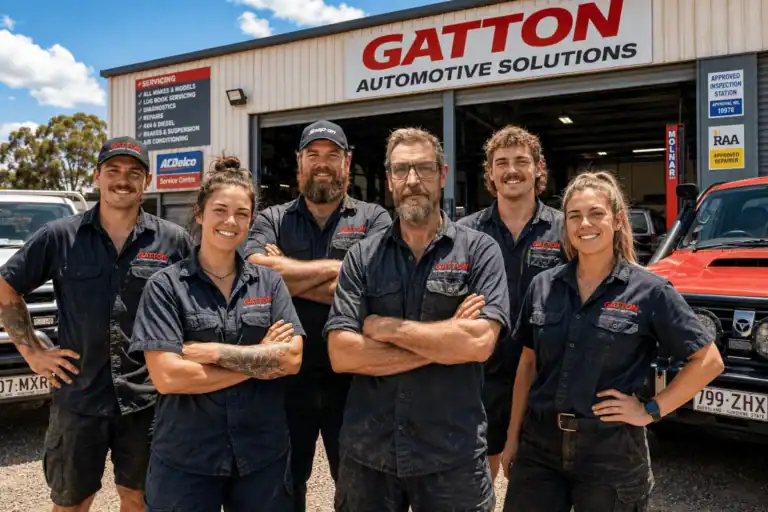
Gatton Automotive Solutions handles everything from passenger vehicles and 4WDs through to trucks, trailers, and heavy equipment, all under one roof. Hyundai owners across the Lockyer Valley, including drivers coming in from Laidley, Plainland, and Withcott, choose us because the work gets done properly without the need to drive 45 minutes or more to a dealer service centre.
We carry parts, handle sourcing, and give you straight advice on what your vehicle actually needs. With five-star reviews, that approach seems to be working.
If your Hyundai is due for a gearbox service or you’re noticing any of the symptoms above, Call Us Now or Book Your Free Inspection online. We’re based in Gatton and ready to help drivers across the Lockyer Valley get back on the road with confidence.