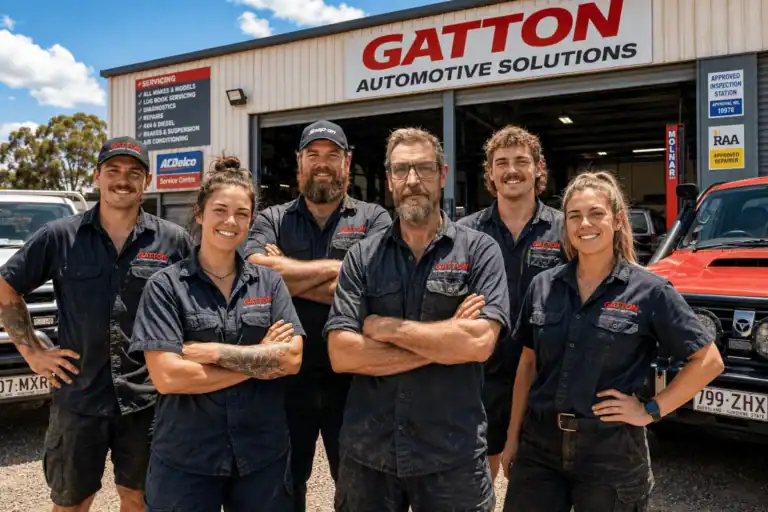
A transmission problem rarely announces itself quietly. For Hyundai owners in Gatton, the signs tend to creep in gradually — a hesitation between gears, a shudder at highway speed, or a warning light that appears one morning and refuses to go away. Hyundai transmission repair covers everything from diagnosing intermittent faults to replacing worn internal components, and getting the right diagnosis early is what separates a manageable repair from a much costlier one down the road. At Gatton Automotive Solutions, we work on Hyundai transmissions across the full range of models and generations, from older manual Excels to the newer dual-clutch and automatic setups found in current i30s, Tucsons, Santa Fes, and Accents.
Hyundai Transmission Problems: What to Watch For
Hyundai’s automatic and dual-clutch transmissions (DCTs) have their own quirks compared to other brands, and knowing what to look for helps you act before a fault becomes serious. The DCT used across many Hyundai models – including the i30 and Elantra – is known to produce a low-speed shudder or jerky takeoff, particularly when the transmission fluid is degraded or the clutch packs are wearing. This is not just driver error or a rough road. It’s a recognised behaviour pattern that points to a specific mechanical cause.
More broadly, here are the symptoms that should prompt a transmission inspection:
- Gear slipping: The engine revs rise but acceleration doesn’t follow, as if the gearbox has momentarily lost grip.
- Delayed engagement: A pause between selecting Drive or Reverse and the vehicle actually moving.
- Shuddering or vibrating: Most noticeable at low speeds or when pulling away from a stop.
- Rough or hard shifts: Clunking or jerking between gears rather than a smooth progression.
- Transmission warning light: May appear alongside the check engine light on Hyundai models, often storing fault codes in the TCM (transmission control module).
- Fluid leak: A reddish-brown stain under the vehicle, particularly beneath the centre of the car.
- Burning smell: Overheated transmission fluid has a distinctive burnt odour, especially noticeable after stop-start driving.
If your Hyundai is showing one or more of these signs, it’s worth having it looked at promptly. A slipping or shuddering transmission doesn’t tend to self-correct.
How We Diagnose and Repair Hyundai Transmissions in Gatton
We start every transmission job with a proper diagnostic scan using equipment that reads Hyundai-specific fault codes stored in the TCM. Generic OBD scanners often miss transmission-specific codes, so having access to make-aware diagnostics matters here. The scan tells us what the system has recorded, and then we cross-reference that with a road test to confirm what we’re actually feeling in the gearbox behaviour.
From there, the scope of work depends entirely on what we find. A transmission service – draining and replacing the fluid, sometimes dropping the sump to inspect the filter – is the starting point if there’s no major mechanical fault. Hyundai’s DCT transmissions are particularly sensitive to fluid condition, and the manufacturer specifies a dedicated DCT fluid that differs from conventional automatic transmission fluid. Using the wrong fluid type, or letting the correct fluid degrade, accelerates wear on the clutch packs. We source OEM-spec or genuine-equivalent fluids appropriate to your specific Hyundai model and transmission type.
Where internal mechanical work is required – worn solenoids, faulty valve body components, damaged clutch packs, or torque converter issues on traditional autos – we work through the repair in a methodical order, addressing the confirmed fault rather than replacing parts speculatively. If the damage is beyond internal repair, we discuss replacement options honestly with you before any work proceeds.
What Affects the Cost and Time Involved
Transmission repairs vary considerably depending on a few straightforward factors. A transmission fluid service on a Hyundai automatic is a very different job from replacing a worn valve body or rebuilding a DCT unit. Parts availability affects timing, particularly for some older or less common Hyundai models where certain internal components need to be sourced. We handle parts sourcing directly, which means you’re not chasing suppliers yourself while your car sits waiting.
Whether OEM or quality aftermarket parts are more appropriate depends on the component and the age of the vehicle. We’ll give you a clear explanation of the options so you can make an informed decision. We never recommend work that isn’t genuinely needed, and we explain the reasoning behind every quote before we proceed.
Why Gatton Drivers Bring Their Hyundais to Us
We’re a full-service workshop in Gatton covering everything from everyday passenger cars to 4WDs, utes, light trucks, and heavy equipment. Hyundai owners across the Lockyer Valley don’t need to drive to Ipswich or Toowoomba for a transmission repair – we have the diagnostic equipment, the technical knowledge, and the parts-sourcing capability to handle the job locally.
With five-star reviews from local customers, the feedback we consistently hear is that we give straight answers and do the work properly. No upselling, no unnecessary extras added to your invoice. If your fleet includes Hyundai vehicles, we can accommodate commercial servicing needs as well, helping keep downtime to a minimum.
Ready to get your Hyundai’s transmission sorted? Call Us Now or Book Your Free Inspection online, and we’ll take a proper look at what’s happening before we recommend anything.