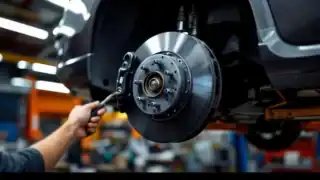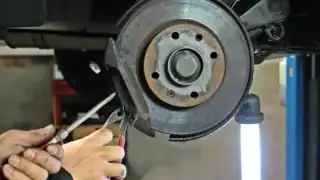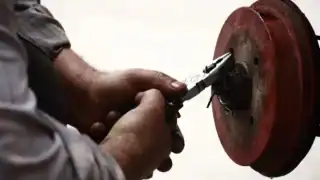
Brake problems rarely give much warning before they become serious. If your Hyundai has been pulling to one side under braking, making a grinding or squealing noise, or the pedal feels softer than usual, those are signs that need a proper look, not a wait-and-see approach. At Gatton Automotive Solutions, we carry out Hyundai brake repair for all models, from everyday Accents and i30s through to larger SUVs like the Tucson and Santa Fe, as well as the Staria van that has become a common sight around the Lockyer Valley.
Warning Signs Your Hyundai Brakes Need Attention
Hyundai’s braking systems are generally well-designed and reliable, but like any wear item, pads, rotors, and brake fluid all have a service life. Knowing what to look out for can make the difference between a straightforward pad swap and a full rotor replacement.
- Squealing or squeaking when braking: Most Hyundai brake pads include a wear indicator that produces a high-pitched noise when the pad material is getting low. This is the system doing its job, but it means you’re close to the limit.
- Grinding or metal-on-metal sound: If the squealing has progressed to grinding, the pad material has likely worn through and the backing plate is contacting the rotor directly. This causes rotor damage quickly and is a safety concern.
- Brake pedal feels soft or spongy: A pedal that sinks further than normal before braking takes effect often points to air in the brake lines or a fluid issue, both of which require immediate inspection.
- Vehicle pulling under braking: If your Hyundai drifts to one side when you apply the brakes, it can indicate uneven pad wear, a stuck caliper, or a seized slide pin.
- Vibration or pulsing through the pedal: Brake shudder usually means rotor distortion or uneven wear across the rotor surface, often called rotor runout, where the rotor surface is no longer perfectly flat.
- Warning light on the dash: Many Hyundai models have a brake warning light that activates for low brake fluid or handbrake engagement. If it appears while driving normally, have it checked promptly.
What We Inspect and Repair
When your Hyundai comes in for brake work, we start with a thorough visual and operational inspection before any parts are discussed. This means we check pad thickness on all four corners, measure rotor thickness against Hyundai’s minimum specifications, assess caliper condition and movement, inspect the brake lines and fluid reservoir, and test the brake fluid for moisture contamination using a dedicated tester.
Hyundai uses an Electronic Parking Brake (EPB) on a number of its models, including many Tucson and Santa Fe variants from recent years. Rear brake service on these vehicles requires a scan tool capable of activating the EPB retract function, otherwise the caliper piston cannot be properly compressed to fit new pads. We carry the diagnostic equipment to handle EPB-equipped Hyundais correctly, which is not something every local workshop is set up for.
For parts, we work with OEM-spec or equivalent quality components that meet Hyundai’s friction and dimensional requirements. There is a noticeable difference in brake feel and wear life between quality pads designed for Hyundai applications and generic alternatives, and we are happy to talk through the options so you understand what is going in on your car.
What Affects the Cost and Time of Brake Repair in Gatton?
The scope of brake work varies a lot depending on what is actually worn and what model you are driving. A front pad replacement on an i30 is a straightforward job. A full four-wheel pad and rotor service on a Santa Fe with EPB rear calipers is more involved. Factors that influence the overall cost include how far the pads have worn, whether the rotors need machining or full replacement, the condition of the calipers and hardware kit, and whether brake fluid has become contaminated enough to warrant a flush.
Hyundai’s service documentation recommends brake fluid be replaced every two years regardless of mileage, as the fluid absorbs moisture over time and this lowers its boiling point, which is not something you want to discover under hard braking. If your Hyundai is due for a fluid change alongside the brake work, we will let you know and explain what is involved before doing anything.
Same-Day Brake Repairs Where Possible
Many brake jobs can be completed the same day, and for straightforward pad replacements, while-you-wait servicing is often available. We will give you a clear picture of timing once we have assessed the vehicle, not before.
Why Gatton Drivers Choose Us for Hyundai Brake Work
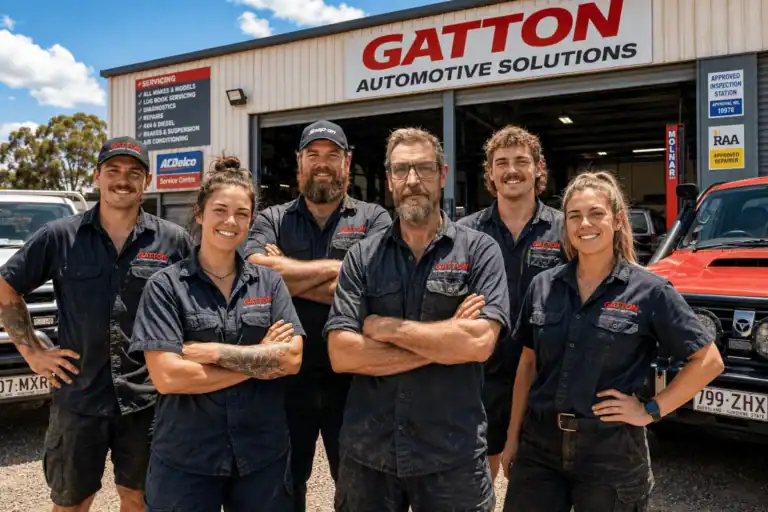
Gatton Automotive Solutions is a full-service workshop handling everything from everyday passenger cars to heavy equipment, all under one roof in town. If you have previously made the trip to Ipswich or Toowoomba for brake work, you will know how much time and fuel that adds up to. We handle the same quality of work locally, and we issue roadworthy certificates on-site if your Hyundai needs one alongside any safety repairs.
We do not recommend work you do not need. If your pads have plenty of life left, we will tell you. If only the fronts need replacing, we will not talk you into doing all four. Our five-star reviews reflect the straightforward approach we take with every customer, and we are proud of the reputation we have built in the Lockyer Valley community.
If your Hyundai’s brakes are giving you cause for concern, Call Us Now or Book Your Free Inspection online. Our team in Gatton will take a proper look and give you honest advice on what is needed.