A clutch failure rarely announces itself politely. For Land Rover owners, the signs often build gradually over weeks or months before the vehicle becomes difficult to drive or stranded entirely. Land Rover clutch replacement is one of the more involved repairs we carry out at Gatton Automotive Solutions, and doing it properly matters whether you’re commuting through Gatton, heading out to a worksite, or running a dual-cab Defender across farm tracks in the Lockyer Valley.
Warning Signs Your Land Rover Clutch Needs Attention
Land Rover drivetrains are engineered for both on-road comfort and serious off-road load. That means the clutch assembly works hard, and wear patterns can look different to what you’d see on a typical passenger car.
- Slipping clutch: The engine revs climb but the vehicle doesn’t accelerate at the same rate. You’ll notice it most under load, on hills, or when towing.
- Difficult or stiff gear changes: If selecting first or reverse requires force, or gears grind even with the clutch pedal fully depressed, the friction disc or release bearing is likely worn.
- Clutch pedal sitting high or low: A pedal that engages almost at the top of its travel, or one that sits noticeably lower than usual, points to wear in the clutch plate or hydraulic components.
- Burning smell: A sharp, acrid smell after hill starts or towing is often clutch material overheating. In off-road use, this can happen faster than expected.
- Juddering on takeoff: Shuddering as you pull away, especially from a standstill, can indicate a warped friction disc or contamination from an oil leak onto the clutch face.
If you’re noticing any of these symptoms, it’s worth having the clutch inspected before the situation gets worse. A slipping clutch that’s left too long can score the flywheel, which significantly adds to the repair cost.
How We Approach Land Rover Clutch Replacement in Gatton
Land Rovers have their own quirks, and the clutch system is no exception. Models like the Defender, Discovery, and Range Rover Sport use hydraulic clutch actuation rather than a cable, which means the master cylinder, slave cylinder, and fluid line condition all need to be checked as part of the diagnosis, not just the friction components themselves.
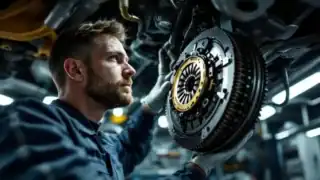
When your Land Rover comes in, we start with a road test to confirm the fault and assess the severity of wear. From there, we pull the gearbox to inspect the clutch kit in full. We look at the friction disc for wear depth and surface condition, the pressure plate for heat stress or warping, and the release bearing for noise or resistance under load. The flywheel gets checked for scoring and runout. On many Land Rover models, especially those with higher kilometres or a history of off-road work, the dual-mass flywheel is also assessed, as this component is designed to absorb drivetrain vibration and can wear out around the same time as the clutch itself.
We source parts to OEM specification or genuine-equivalent quality to match the tolerances Land Rover’s drivetrains are built around. Using undersized or mismatched components on a Land Rover’s transfer case and gearbox setup can create new problems quickly, particularly on vehicles that spend time in low range. We handle our own parts sourcing here at the workshop, so we’re not waiting on you to track anything down.
Hydraulic System Checks on Land Rovers
One detail worth understanding with Land Rovers specifically: the hydraulic clutch system is directly linked to the brake fluid circuit on many models, including several Defender and Discovery variants. If the clutch fluid is contaminated or the master cylinder is showing signs of internal wear, those faults need to be addressed at the same time as the clutch replacement, not left for a second visit. We check the full hydraulic circuit as a standard part of this job.
What Affects the Cost and Time for This Job?
Clutch replacement on a Land Rover takes longer than on a small hatchback, full stop. The drivetrain is more complex, access to the gearbox requires more disassembly on certain models, and the dual-mass flywheel question adds a decision point that can affect both parts and labour. We’ll tell you what we find and give you a clear picture of what’s needed before we proceed with anything.
Factors that typically affect the overall scope include the specific model and year, the condition of the flywheel, whether the hydraulic components need replacing, and parts availability for your variant. We’ll always be upfront about this rather than quoting one thing and presenting something different at collection.
Why Lockyer Valley Land Rover Owners Come to Us
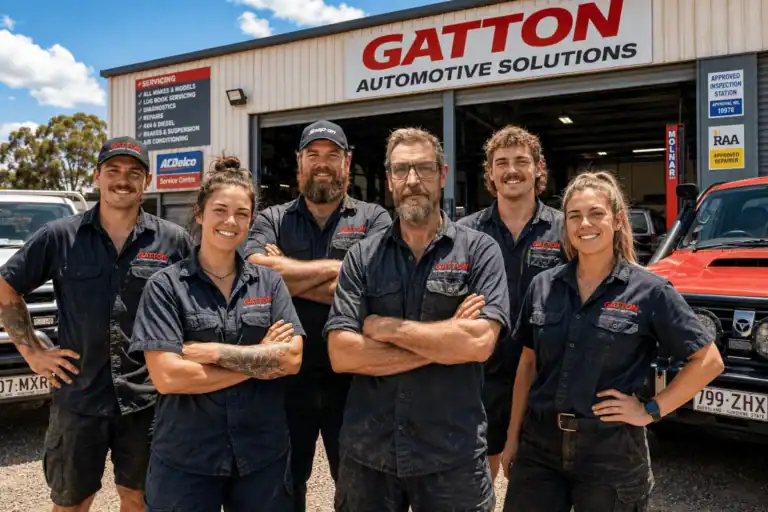
Gatton Automotive Solutions handles everything from everyday passenger cars through to 4WDs, utes, trucks, and heavy equipment, all under one roof. For Land Rover owners in and around Gatton, that means you’re not driving to Ipswich or Toowoomba for a job we can do right here. With five-star reviews, we’ve built a reputation in this region for straight advice and doing the work properly.
We don’t look for extra jobs to tack on, and we don’t use vague language when explaining what your vehicle needs. If the clutch is the issue, we’ll confirm it before we start pulling anything apart. If there’s something else worth knowing about while we’re in there, we’ll tell you clearly and let you decide.
Ready to get your Land Rover sorted? Book Your Free Inspection online or Call Us Now, and we’ll get you back on the road from Gatton without the trip out of the valley.