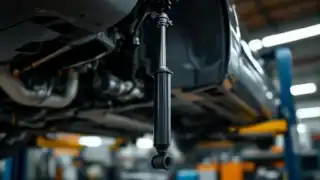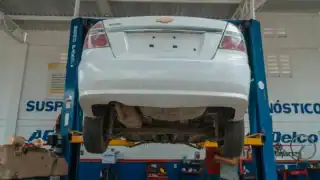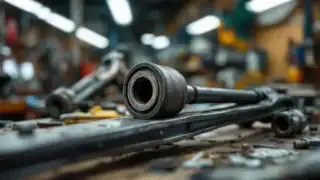
European vehicles are engineered to tight tolerances, and that precision extends to the suspension. When something feels off — a knock over a rough crossing, vague steering on the highway, or a corner that used to feel planted now feeling loose — it’s rarely something you should wait on. A European vehicles suspension service looks at the full picture: control arms, ball joints, bushings, shock absorbers, struts, and anti-roll bar components, all assessed against what the manufacturer intended. Drivers across Gatton and the Lockyer Valley bring their Volkswagens, BMWs, Audis, Mercedes-Benz, Peugeots, and Volvos to us for exactly this kind of work, and we approach every job with make-specific diagnostics rather than a generic checklist.
Warning Signs That Your European Vehicle’s Suspension Needs Attention
Suspension wear rarely announces itself dramatically. More often it creeps in gradually, and drivers adapt without realising how much handling has deteriorated. These are the signs worth acting on promptly.
- Clunking or knocking sounds when going over speed humps, dips, or corrugated sections — a common indicator of worn control arm bushings or failing ball joints
- Pulling to one side during braking or cornering, which can signal a collapsed strut bearing or uneven spring sag
- Excessive body roll through bends, suggesting anti-roll bar links or drop links have worn out
- Steering that feels vague or requires constant correction on open roads — European vehicles with worn suspension geometry lose directional precision faster than most
- Uneven tyre wear, particularly feathering or camber wear on the inner or outer edges, which often traces back to suspension geometry being out of spec
- A bouncy or wallowing ride over undulations, pointing to shock absorbers or struts that have lost their damping ability
If you’re noticing any combination of these, a proper inspection is the right first step. Guessing at parts without understanding what’s actually worn tends to waste money and leave the root cause unresolved.
How We Approach European Suspension Diagnostics and Repair in Gatton
European vehicles often use multi-link rear suspension, adaptive dampers, or pneumatic air suspension — systems that reward careful diagnosis over part-swapping. Our process starts with a visual inspection of the full suspension layout, followed by a physical check of each component for play, wear, and deterioration. For vehicles with electronic suspension systems (common on BMW, Mercedes-Benz E-class and above, and Audi A6 and Q-series), we use diagnostic tooling to read any stored fault codes alongside the mechanical inspection. Software faults and mechanical wear often co-exist, and you need both assessed to get an accurate picture.
We check wheel bearing condition at the same time, since worn bearings on European platforms are frequently misdiagnosed as suspension noise. Geometry — specifically camber, caster, and toe — is assessed where relevant, and we’ll recommend a wheel alignment once components are replaced to restore the car to its designed handling profile.
Parts and Specifications for European Makes
One of the more important decisions in European suspension work is parts selection. OEM-specification or genuine-equivalent components matter on these vehicles. A BMW 3 Series front strut mount, a Volkswagen Golf control arm bushing, or an Audi A4 anti-roll bar link all need to meet specific load ratings and geometry tolerances that budget aftermarket parts frequently don’t match. We source parts that are appropriate for the make and model, and we’ll walk you through the options honestly — what’s available, what the differences are, and what we’d recommend for your driving situation.
What Affects Cost and Turnaround for Suspension Work?
Suspension repair costs on European vehicles vary more than on mainstream Japanese or Korean makes, largely because of parts complexity and availability. A straightforward front strut replacement on a common VW or BMW platform is generally uncomplicated. More involved work — replacing a full rear multi-link assembly, repairing an air suspension system, or sourcing components for older or less-common European models — takes longer and parts may need to be ordered in. We’ll give you a clear picture of what’s needed and what it involves before any work starts. No surprises, no unnecessary extras added after the fact.
The condition of surrounding components also matters. If one ball joint has failed, the opposing side often isn’t far behind, and replacing both while the car is already on the hoist saves time and a second visit. We’ll flag that honestly so you can make an informed call.
Why Gatton Drivers Bring Their European Vehicles to Us
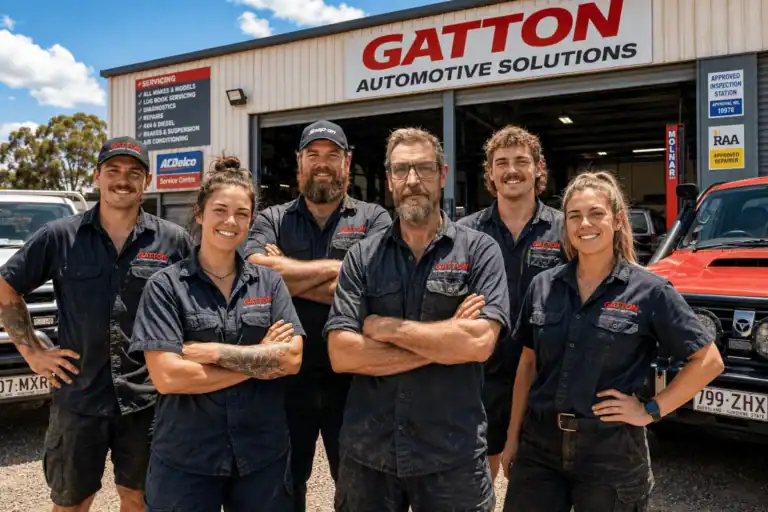
Gatton Automotive Solutions is a full-service workshop handling everything from everyday family cars and utes through to 4WDs, trucks, and heavy equipment — all in one place. Suspension upgrades and tyre fitting are done in-house, which means if your inspection turns up tyre wear caused by suspension geometry issues, we can address both without you needing to book somewhere else. We also issue roadworthy certificates on-site, which matters when suspension faults affect a vehicle’s compliance status.
For drivers in Gatton and across the Lockyer Valley, getting quality suspension work done locally means you’re not spending an hour each way travelling to Ipswich or Toowoomba for something we can handle right here. With five-star reviews, our reputation is built on straightforward advice and doing the job properly the first time. We don’t upsell work that isn’t needed — if your suspension is sound, we’ll tell you that too.
Ready to get your European vehicle’s suspension checked? Book Your Free Inspection online or Call Us Now — our team at Gatton Automotive Solutions is ready to help.