Worn shock absorbers are one of those problems that sneak up on you gradually, so by the time the ride feels genuinely rough, the degradation has usually been building for a while. European vehicles shock absorber replacement is a job we handle regularly at Gatton Automotive Solutions, and it’s one worth taking seriously. Shock absorbers don’t just affect ride comfort; they keep your tyres in firm contact with the road, which directly affects your braking distance and how the car responds in an emergency. If your suspension feels off, it’s worth getting it checked sooner rather than later.
How Do You Know Your Shock Absorbers Need Replacing?
European marques like BMW, Mercedes-Benz, Audi, Volkswagen, and Volvo are engineered with tightly calibrated suspension geometry. That means worn shock absorbers tend to make themselves known in fairly specific ways on these vehicles. The car might feel vague through corners, or the front end might dip noticeably under firm braking. Some drivers describe it as a floating sensation on the highway, where the car takes a moment too long to settle after bumps or undulations in the road.
More obvious signs include:
- A bouncing or wallowing feeling over uneven surfaces, even at low speeds
- Uneven tyre wear, particularly scalloping or cupping across the tread
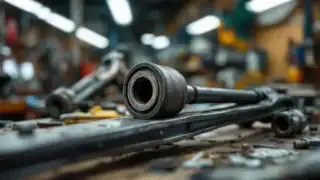
- Oily streaks visible on the outside of the shock absorber body, indicating a seal has failed and hydraulic fluid is leaking out
- Knocking or clunking noises when going over speed humps or rough ground
- Longer stopping distances than you’re used to
- The car pulling to one side, which can be related to uneven damper performance across an axle
On air-suspended European models, which appear across several BMW, Mercedes-Benz, and Audi platforms, the symptoms can look different again. You might notice the car sitting lower than normal on one corner, or the air suspension warning light appearing on the dash. These systems combine damping with adjustable ride height, so when something fails, the behaviour can vary quite a bit.
What European Shock Absorber Replacement Involves at Our Workshop
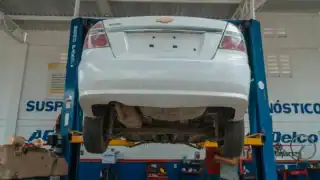
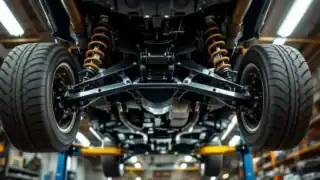
We start with a proper inspection before we recommend anything. That means getting the vehicle on the hoist, removing the wheels, and assessing the condition of each shock absorber along with the surrounding suspension components. We check for fluid leaks, deterioration in the rubber mounts and bump stops, and any signs of physical damage. On many European vehicles, the shock absorber is integrated into a strut assembly, so the inspection also includes the top mount bearing and spring seat.
European vehicles often use dampers with tighter tolerances than their Japanese or American counterparts, and some models use electronically controlled adaptive dampers. Adaptive damping systems, found on models like the Audi A6 with Drive Select or BMW’s Dynamic Damper Control, require scan tool diagnostics to check for fault codes alongside the physical inspection. If a sensor or wiring harness has failed rather than the damper itself, we want to identify that before fitting new parts.
When it comes to parts, we discuss your options honestly. OEM-specification or OEM-equivalent parts are available for most European makes, and for vehicles still under warranty or those where brand-specific ride characteristics matter, that’s often the right call. For older vehicles where budget is the priority, reputable aftermarket brands that meet European manufacturer specifications are a genuine alternative. We’ll explain what’s available for your specific model and let you decide.
After fitting, we check wheel alignment. Shock absorber replacement, particularly on strut-based front suspension common to many European sedans and hatchbacks, can shift alignment angles. Driving with incorrect alignment after a suspension job undoes some of the benefit and accelerates tyre wear, so it’s a step we include in the process, not an afterthought.
What Affects the Cost and Time for European Vehicles Shock Absorber Replacement in Gatton?
A few variables influence both the cost and the time your car will need to be with us. The model and variant matter significantly; a straightforward shock absorber swap on a Volkswagen Golf is a different job to replacing adaptive strut assemblies on a Mercedes-Benz E-Class. Parts availability for European vehicles can vary, and some components need to be ordered in. We source parts ourselves, so you’re not chasing suppliers.
Whether you’re replacing one shock absorber or doing all four also affects the scope of the job. We’ll always tell you what we find across the full axle and give you a clear picture of what genuinely needs attention now versus what can wait.
Why Bring Your European Vehicle to Gatton Automotive Solutions?
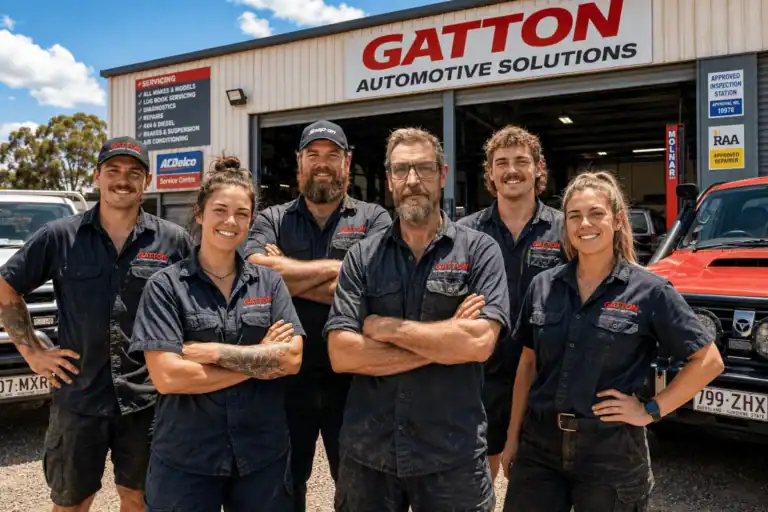
We’re a full-service workshop based right here in Gatton, covering everything from everyday car servicing through to 4WDs, trucks, heavy equipment, smash repairs, custom paintwork, suspension upgrades, and tyre fitting, all under the one roof. For European vehicle owners in the Lockyer Valley, that means no 45-minute drive to Ipswich or Toowoomba for a suspension job. We handle the diagnosis, the parts sourcing, the repair, and the post-fitment alignment check without you having to coordinate between different businesses.
Our team gives you honest advice on what’s needed and what isn’t. We don’t recommend parts you don’t need. With five-star reviews from local drivers, the feedback we hear most often is that people appreciate being treated straight. We also issue roadworthy certificates on-site, which is useful if your suspension work is part of preparing a vehicle for transfer or sale.
If your European vehicle’s ride doesn’t feel right, Call Us Now or Book Your Free Inspection online. We’re here in Gatton and ready to take a look.