Land Rover suspension systems are genuinely different from most vehicles on Australian roads. They’re engineered for both on-road refinement and serious off-road capability, which means the components involved are more complex and the consequences of worn or failing parts are more significant. A Land Rover Suspension Service isn’t just a routine check — it’s a detailed assessment of a system that works hard whether you’re crossing a creek bed out past Gatton or sitting in slow traffic on the way to Ipswich. Getting it right matters for your safety, your comfort, and the long-term health of the vehicle.
Warning Signs Your Land Rover’s Suspension Needs Attention
Land Rovers, including the Defender, Discovery, Range Rover, and Freelander models, each have quirks that show up in predictable ways as components wear. Some signs are hard to miss; others develop slowly enough that drivers adjust without realising something’s wrong.
- The vehicle sits unevenly — one corner visibly lower than the others, particularly noticeable when parked on flat ground.
- Air suspension warning lights on the dash, which are common across Discovery 3, Discovery 4, and Range Rover Sport models. The air suspension compressor and air bags are known failure points on these vehicles.
- Excessive body roll when cornering, or a vague, floaty feeling at highway speeds.
- Clunking or knocking sounds over bumps, speed humps, or corrugated roads — often pointing to worn bushes, ball joints, or shock absorbers.
- Steering that feels loose or slow to respond, which can be linked to worn suspension geometry rather than the steering system itself.
- Tyres wearing unevenly, especially feathering or cupping patterns that point to alignment or damper issues.
- Difficulty maintaining ride height on models with electronic air suspension, where the system drops overnight or struggles to reach full height.
If you’re noticing any of these, it’s worth having the vehicle looked at before the problem compounds. Suspension faults don’t tend to improve on their own.
What a Land Rover Suspension Service Covers at Our Workshop
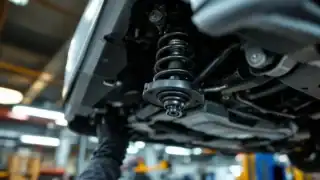
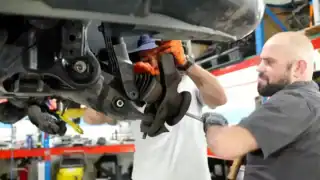
We start with a thorough visual and physical inspection of every major suspension component, front and rear. On Land Rovers, this includes the upper and lower control arms, ball joints, tie rod ends, sway bar links, and bushes throughout. For vehicles equipped with air suspension, we check the air bags (also called air springs) for cracks or leaks, test the compressor, and check for fault codes stored in the vehicle’s electronic control modules.
Wheel alignment is checked as part of the process on any suspension work, because even a small change in component geometry will pull the alignment out of spec. Correcting alignment after suspension work isn’t optional — it protects your tyres and keeps the vehicle tracking straight.
For models with height-adjustable or active suspension, our diagnostic equipment can communicate with the relevant control units to identify faults that a basic visual inspection won’t find. This is particularly relevant for Discovery 3 and 4 models and the Range Rover Sport, which have a history of air suspension faults linked to compressor wear and air bag deterioration. We deal with these regularly and carry knowledge of the common failure patterns that affect these specific models in Australian conditions.
Parts: OEM, OEM-Equivalent, and the Honest Conversation
Land Rover genuine parts are available and appropriate for many jobs, particularly air suspension components where fit and specification matter. For items like control arm bushes, shock absorbers, and ball joints, there are quality aftermarket equivalents that meet OEM specifications and are suitable for most applications. We’ll talk you through the options — what the difference is, what each costs, and what we’d recommend based on your vehicle’s age, mileage, and how it’s used.
What Affects the Cost and Time of Suspension Work on a Land Rover?
Land Rover suspension work varies significantly depending on what’s found and what model you’re driving. Replacing a set of sway bar links is a straightforward job. Rebuilding the front control arms on a Discovery 4, or replacing a failed air suspension compressor and one or more air bags, is a much larger task. Parts availability on Land Rover models can affect turnaround time, which is why we handle parts sourcing in-house and get onto it early so there are no surprises.
Complexity also increases if multiple components have worn together, which is common on higher-mileage Land Rovers. We’ll always tell you what we’ve found, what we’d recommend addressing now, and what can wait — so you can make an informed call on the scope of work.
Why Gatton Drivers Bring Their Land Rovers to Us
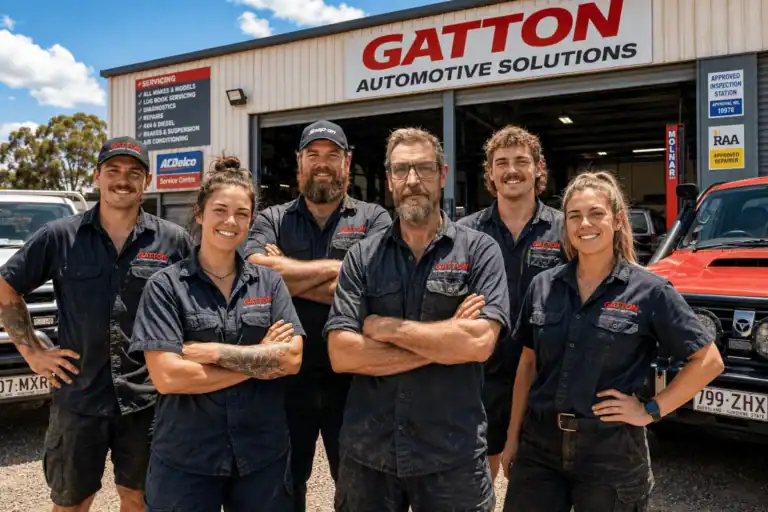
We’re a full-service workshop in Gatton covering cars, 4WDs, trucks, and heavy equipment — everything from general mechanical work through to suspension upgrades, tyre supply and fitting, roadworthy certificates, and smash repairs. For Land Rover owners in the Lockyer Valley, that means you’re not driving to Ipswich or Toowoomba and back for suspension work that we can handle right here. Our team has hands-on experience with Land Rover models across the range and understands how Australian conditions, including rural roads and seasonal flooding approaches, affect these vehicles over time.
Gatton Automotive Solutions is locally owned, our pricing is straightforward, and we won’t recommend work that isn’t needed. With five-star reviews, we’ve built the kind of reputation that only comes from doing the job properly, consistently.
If your Land Rover is showing signs of suspension trouble, or you’d just like it properly checked over, Call Us Now or Book Your Free Inspection online. We’re here in Gatton, ready to help you get it sorted.