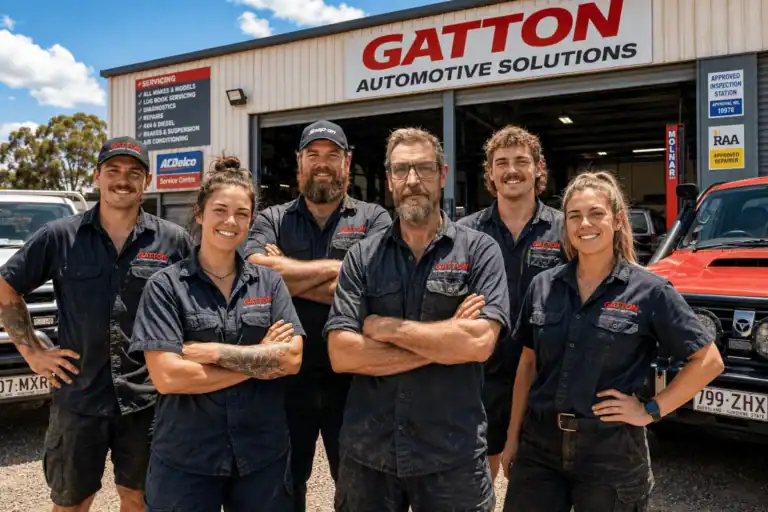
Suspension problems don’t always announce themselves loudly. Sometimes it’s a subtle knock over a rough crossing, a vague pull to one side, or a ride that just feels heavier than it used to. A proper Hyundai suspension service looks at all of it, not just the obvious wear items. Drivers across Gatton and the Lockyer Valley rely on their vehicles to cover a mix of town streets, highway kilometres, and the odd unsealed road, and a suspension system that isn’t tracking true takes a toll on tyres, steering, and driver confidence.
How Do You Know Your Hyundai Suspension Needs Attention?
Hyundai’s range, from small hatches like the i30 to the larger Tucson, Santa Fe, and Staria, puts quite different loads through their suspension geometry. What’s worth watching for depends on how you use the vehicle, but some signs cut across the whole range.
- Bouncing or floating after hitting a bump, which suggests worn shock absorbers or struts
- Clunking, knocking, or creaking over speed humps, driveways, or corrugated roads
- Uneven tyre wear, particularly feathering or scalloping on the inner or outer edges
- Vehicle pulling to one side under braking or on straight roads, which can point to worn bushes or alignment issues
- Steering wheel vibration at highway speeds, often linked to worn ball joints or hub bearings
- Nose diving under braking or the rear squatting heavily under load
If your Hyundai has covered more than 80,000 kilometres without a suspension inspection, it’s worth having the components checked even if nothing feels obviously wrong. Bushes and ball joints degrade gradually, and the change in handling can be so incremental that drivers adjust without realising it.
What Does a Hyundai Suspension Inspection and Service Cover?
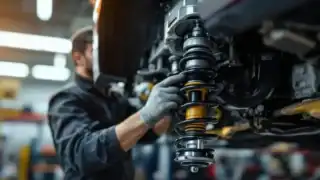
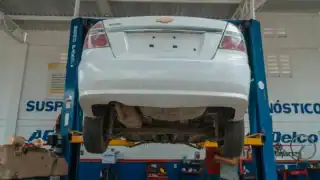
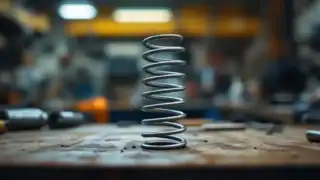
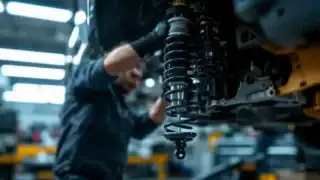
We start with a visual inspection on the hoist. This gives us a clear view of every major component: struts and shock absorbers, coil springs, control arms, sway bar links and bushes, ball joints, tie rod ends, and hub bearings. For Hyundai models specifically, we pay close attention to the front lower control arm bushes, which are a known wear point on higher-mileage i30 and Elantra vehicles, and the rear trailing arm bushes on the i20 and Accent, where cracking and deformation can affect rear alignment before any symptoms become obvious.
Beyond the visual, we carry out a road test to assess actual ride and handling characteristics, followed by a steering and suspension play check. This involves physically testing components for movement they shouldn’t have, including ball joint play, tie rod slop, and bearing roughness. Where alignment is indicated, we can carry out a four-wheel alignment using the same workshop visit, which saves you an extra trip.
For Hyundai’s newer platform vehicles with multi-link rear suspension, like the Tucson and Santa Fe, the rear geometry is more complex. We inspect the additional link arms and their mounting points, which carry more lateral and longitudinal load than simpler torsion beam setups found on entry-level models.
Parts and Specifications for Hyundai Vehicles
We source parts that meet OEM specifications for the relevant Hyundai model and year. For most components, that means genuine or OEM-equivalent parts, and we’ll explain the options before any work starts. Hyundai uses metric torque specs and specific bush compound ratings that vary between models, so fitting generic parts without confirming compatibility isn’t something we do. The goal is a repair that holds up to the conditions your vehicle actually sees, not just passes a visual re-check.
What Affects the Cost and Time of Suspension Work?
Suspension jobs vary considerably in scope. Replacing a single sway bar link is a straightforward job. Replacing both front struts, fitting new top mounts, and performing a wheel alignment is a larger service. The main cost variables are the number of components that need replacement, whether OEM or aftermarket parts are the right fit for your situation, and whether wheel alignment is required after the repair, which it usually is for any front suspension work.
Parts availability for Hyundai models is generally strong in Australia, which keeps waiting time to a minimum. We handle parts sourcing directly, so you don’t need to chase anything down yourself. For straightforward jobs, we can often turn the vehicle around the same day.
Why Bring Your Hyundai to Gatton Automotive Solutions?
Gatton Automotive Solutions handles suspension work across the full range: passenger cars, SUVs, 4WDs, utes, and light commercials. We don’t send cars elsewhere for specialist work, alignment, or tyres. It all happens here, which means no second drop-off and no time wasted driving to Ipswich or Toowoomba for something that can be done locally in Gatton.
We’ve built a reputation in the Lockyer Valley on straight advice and fair pricing. You’ll hear what we found, what we’d recommend, and why, before anything gets approved. With five-star reviews from local drivers, that approach seems to be working. We also issue roadworthy certificates on-site, which is useful if suspension work forms part of a pre-sale or registration check.
If something minor comes up during the inspection that isn’t urgent, we’ll tell you about it and let you decide. No pressure, no unnecessary additions to the job.
Book your Hyundai suspension service today by using Book Your Free Inspection online, or Call Us Now to talk through what your vehicle needs. Our Gatton workshop is ready to help.