A driveshaft is one of those components most drivers never think about until something goes wrong. It’s the shaft that transfers power from your gearbox or differential out to the wheels, and on Holden vehicles it takes a fair bit of punishment over time. Holden driveshaft repair is one of the more common jobs we handle for Lockyer Valley drivers, particularly on older Commodores, Colorado utes, and Captiva wagons that have built up serious kilometres. Catching a driveshaft problem early generally means a repair rather than a full replacement, so it pays to know the warning signs.
What Does a Failing Driveshaft Actually Feel Like?
Driveshaft problems don’t usually announce themselves all at once. More often, the symptoms creep in gradually, which makes it easy to write them off as road noise or tyre wear when they’re actually something more serious.
- Vibration through the floor or seat that gets worse as you accelerate or reach highway speeds
- A clunking or knocking noise when you pull away from a stop or transition between acceleration and deceleration
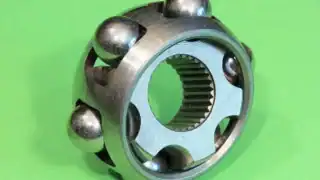
- Clicking from underneath the vehicle when turning, often caused by a worn CV (constant velocity) joint rather than the shaft itself
- Shuddering during acceleration that’s distinct from an engine miss or torque converter issue
- Grease splattered on the underside of your vehicle near the CV boots, which points to a torn boot and a joint that’s already been exposed to dirt and moisture
On rear-wheel drive Holdens like the Commodore VE and VF, a worn universal joint (u-joint) on the tailshaft is a particularly common fault. These joints handle constant flexing through the drivetrain, and once the needle bearings inside start to wear, the resulting vibration can be mistaken for a balance problem or worn tyres. If you’ve had your tyres balanced and the shudder is still there, the driveshaft is worth checking.
How We Diagnose and Repair Holden Driveshafts in Gatton
We start with a visual inspection underneath the vehicle, looking at the condition of the CV boots, the shaft itself for any bending or corrosion, and the u-joint yokes for play or rust staining. On Holden Commodores and Colorado models, we also check the centre bearing (sometimes called the carrier bearing) on two-piece tailshafts, as this is a known wear point that often goes undetected until the vibration becomes obvious.
If the boots are cracked but the joint beneath is still in good shape, a boot replacement and regrease can restore the joint’s service life. If a CV joint or u-joint has been running dry or contaminated with grit, replacement is the better call. We use quality replacement parts matched to the specification of your specific Holden model, because driveshaft geometry and joint angles vary between platforms and a mismatched part will cause problems even if it physically fits.
On Holden four-wheel drive models like the Rodeo and older Frontera, front driveshaft wear patterns differ from the rear-wheel drive setup on Commodores. The front axle shafts on these vehicles are more exposed to off-road stress, and we assess both the inner and outer CV joints as well as the axle seals when a fault is suspected. A proper diagnosis matters here because the symptom can point to either the driveshaft or a differential issue, and replacing the wrong component is an avoidable expense.
What Affects the Cost and Time for Holden Driveshaft Replacement?
The honest answer is that it depends on what we find. A single CV boot replacement on a common Holden model is a straightforward job. A full driveshaft assembly replacement on a less common variant, or one that requires parts to be sourced, takes longer and costs more. We handle parts sourcing in-house, which cuts out the back-and-forth for most common Holden applications.
The main variables are the type of repair needed (boot versus joint versus full shaft), whether OEM-specification or quality aftermarket parts are most appropriate for your vehicle’s age and use, and whether the fault is isolated to one joint or has affected related components like the diff flange or output seal. We’ll give you a clear picture of what’s needed before any work starts.
Why Choose Gatton Automotive Solutions for Your Holden?
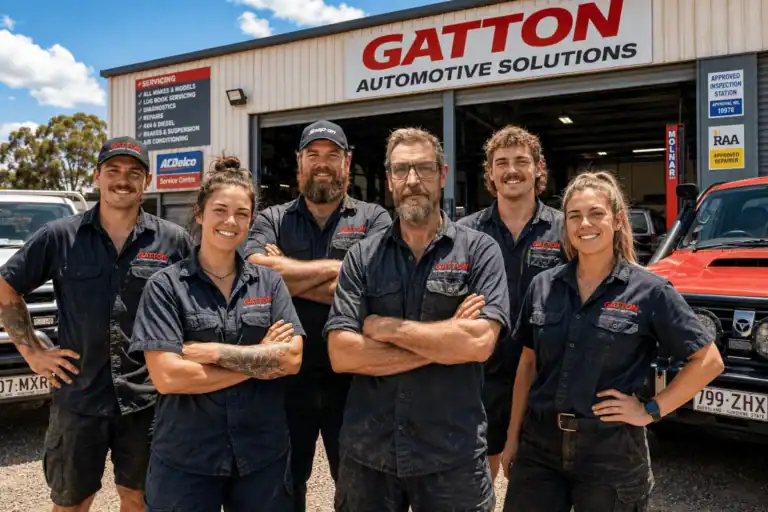
We’re a full-service workshop locally owned and operating in Gatton, and we work on everything from everyday passenger cars to utes, 4WDs, trucks, and farm equipment. Holden vehicles make up a big share of what we see across the Lockyer Valley, from Commodore sedans and wagons to Colorado utes used on properties and work sites. That familiarity with the brand means we know where the common faults sit and how to address them properly.
There’s no need to drive to Ipswich or Toowoomba for this kind of work. We carry parts for common Holden models and we’re straightforward about what your vehicle needs and why. No unnecessary extras, no pressure. We also issue roadworthy certificates on-site, which matters if a driveshaft fault was flagged during an inspection.
Our five-star reputation reflects what we’ve built here: honest work, fair pricing, and repairs done right the first time. From general mechanical work for everyday drivers all the way to heavy vehicle servicing, smash repairs, custom paintwork, suspension upgrades, tyre supply and fitting, and agricultural equipment, Gatton Automotive Solutions handles it all under one roof.
If your Holden is vibrating, clunking, or you’ve spotted grease underneath, Call Us Now or Book Your Free Inspection online. We’re here in Gatton and ready to take a look.