Limited Time: Free Windscreen Wipers With Any Service. Subject To Availability.

Locally Owned & Operated
Honest Upfront Pricing
5★ Reviews
All Makes & Models

Verified 5★ Reviews

Certified Japanese Vehicles Driveshaft Repair In Gatton

Driveshaft problems affect handling and safety. We diagnose and repair Japanese vehicle driveshafts in Gatton with honest advice and fair pricing. Book Your Free Inspection today.

One-Stop Workshop

Honest Advice

5★ Reviews

Japanese Driveshaft Experts

Book Your Free Inspection

Tell us what you need and we'll get back to you with a clear quote.

Booking Form
  • Vehicle Details
  • Confirm Vehicle
  • Services
  • Contact Details
Honest Quotes
All Vehicle Types
Local & Reliable

Why Book With Us

Book Your Free Inspection
Drop Off Your Vehicle
We Get to Work
Collect Your Car

Japanese vehicles are well known for their reliability, but even a well-maintained Toyota, Mazda, Nissan, Subaru, or Mitsubishi will eventually need attention to the driveline. Japanese vehicles driveshaft repair is one of those jobs that catches people off guard — the car feels fine until it doesn’t, and by then the wear has often progressed further than it needed to. At Gatton Automotive Solutions, we see this regularly across all the popular Japanese makes that are common in the Lockyer Valley.

What Does a Driveshaft Actually Do?

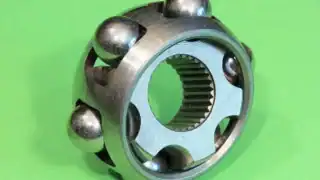
The driveshaft transfers power from the gearbox or differential to the wheels. On a front-wheel drive vehicle, you have two half-shafts running left and right, each fitted with constant velocity (CV) joints at either end. These CV joints allow the shaft to transfer torque smoothly through the full range of suspension travel and steering movement. On rear-wheel drive and four-wheel drive vehicles, there are additional shaft configurations including a centre prop shaft and rear half-shafts. Japanese 4WDs like the Nissan Patrol, Toyota LandCruiser, and Mitsubishi Pajero have more complex driveline setups that require a thorough understanding of how each component works together.

Signs Your Japanese Vehicle’s Driveshaft Needs Attention

The most common early warning sign is a clicking or clunking noise from the front of the vehicle while turning, particularly when pulling out of a car park or turning during low-speed manoeuvres. This is typically a worn outer CV joint. As it deteriorates, the noise gets louder and more frequent, eventually occurring at speed as well.

Other signs worth having checked include:

  • Vibration through the floor or steering wheel at certain speeds, which may point to a worn inner CV joint or an imbalanced or bent shaft
  • Grease on the inside of your tyres or around the CV boot area, indicating a split boot that has allowed the joint to run dry
  • Shuddering during acceleration from a standing start, common on front-wheel drive Japanese vehicles with worn inner joints
  • Clunking when engaging four-wheel drive on a Patrol, Hilux, or Triton, which can point to propshaft wear or worn universal joints

If you notice any of these, it is worth having the driveline inspected sooner rather than later. A split CV boot caught early is a straightforward repair. An ignored split boot leads to joint failure and a much more involved job.

How We Approach Driveshaft Repairs on Japanese Vehicles

Japanese vehicles often have model-specific quirks in their driveline layouts. For example, Subaru’s all-wheel drive system uses a front and rear differential with a centre viscous coupling, which requires a different inspection approach compared to a conventional front-wheel drive Corolla or a part-time 4WD HiLux. Our team works across the full range of Japanese makes, so we know what to look for on each platform.

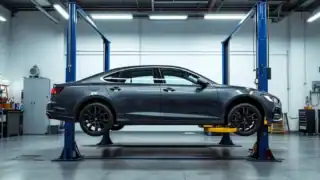
When a vehicle comes in for a driveshaft inspection, we start by road testing to confirm the symptom, then lift the vehicle and inspect each shaft and joint for play, grease loss, and wear. On four-wheel drive vehicles, we inspect both the front and rear shafts, the propeller shaft, and the universal joints. We check boot condition on all accessible joints, and we also check axle nut torque and hub condition where applicable.

Depending on what we find, repair options typically include replacing a split CV boot with a new boot kit and fresh grease if the joint is still serviceable, replacing an individual CV joint while reusing the shaft itself, or fitting a complete replacement driveshaft if the shaft is damaged or the joints have run dry for too long. For Japanese vehicles driveshaft replacement, we source parts that meet or exceed the original specification. We use OEM-grade or quality aftermarket CV joints and shafts suited to each make, not one-size-fits-all parts that may compromise the vehicle’s handling feel or longevity.

What Affects the Cost and Time for This Repair?

A few variables shape how long the job takes and what it costs. The main ones are whether just a boot and grease kit is needed or a full shaft replacement, how accessible the joint is on that particular vehicle, and parts availability for the specific model. Some Japanese vehicles have shafts that are readily available from local suppliers, while others may require sourcing from a specialist importer. We handle all parts sourcing in-house, so you do not need to track anything down yourself.

Labour time also varies by vehicle. A straightforward front CV boot on a Mazda3 or Corolla is a quicker job than a propshaft replacement on a Triton or a full axle shaft job on a Subaru XV. We will tell you what the job involves and what it is likely to cost before any work begins.

Getting the Work Done Without Leaving Gatton

For drivers across the Lockyer Valley, including those coming in from Laidley, Forest Hill, Plainland, and the surrounding rural areas, there is no reason to drive to Ipswich or Toowoomba for Japanese vehicle driveline work. Gatton Automotive Solutions is a full-service workshop handling everything from everyday passenger cars through to 4WDs, utes, trucks, and heavy equipment. Roadworthy certificates, suspension work, tyre fitting, and parts sourcing are all done under the one roof.

We have built a strong local reputation across the Lockyer Valley because we give people straightforward advice and do the work properly. If your Japanese vehicle has a driveshaft that needs attention, Call Us Now or Book Your Free Inspection online and let the team at Gatton Automotive Solutions sort it out for you.
Your Local Workshop for Every Vehicle

Gatton Automotive Solutions is the one-stop shop for cars, 4WDs, trucks, and heavy equipment. Honest advice and fair pricing, right here in Gatton.

Honest Pricing, No Surprises

We tell you what’s needed and what it costs before we start. No upselling, no pressure.

Everything Under One Roof

Bring your car in and we’ll inspect it, explain what we find, and quote you upfront.

OEM-Spec Parts For Japanese Drives

We source and fit OEM-spec driveshafts for Japanese vehicles, locally in Gatton.

How Japanese Driveshaft Repair Works

From diagnosis through to collection, here's how we handle driveshaft faults in your Japanese vehicle.

Step 1

Book Your Free Inspection

Call Us Now or book your free inspection online to have your driveshaft symptoms checked and diagnosed.

Step 2

Driveshaft Diagnostic Assessment

We inspect the shaft, joints, and mounts using Japanese-specification diagnostics to pinpoint wear or damage.

Step 3

Driveshaft Repair Or Replacement

We repair worn joints, replace damaged shafts, and test for smooth operation before handover.

Step 4

Final Check And Collection

Your vehicle is test-driven, inspected for proper function, and ready for safe collection.

Five-Star Rated

Verified 5★ Reviews

Quality Parts From Trusted Suppliers

We use genuine and quality aftermarket parts from reputable suppliers. You get reliable components backed by proper warranties.

Book Your Free Inspection

Tell us what you need and we'll get back to you with a clear quote.

Booking Form
  • Vehicle Details
  • Confirm Vehicle
  • Services
  • Contact Details
Honest Quotes
All Vehicle Types
Local & Reliable

Why Book With Us

Book Your Free Inspection
Drop Off Your Vehicle
We Get to Work
Collect Your Car

Frequently Asked Questions

Browse answers to common questions about our services. Can't find what you're after? Give us a call and we'll help.

The most common warning signs are a clicking or clunking noise when turning or accelerating, vibration through the floor or steering wheel at speed, and a shuddering sensation when pulling away from a stop. On Japanese vehicles like Toyota, Honda, Mazda, and Subaru, worn CV joints (the flexible couplings at each end of the driveshaft) are a frequent cause of that distinctive clicking sound during low-speed turns. If you notice any of these symptoms, it is worth getting the driveshaft and CV boots inspected before the joint fails completely.

Driving on a damaged driveshaft is not recommended. A failing CV joint can deteriorate quickly once the protective rubber boot has cracked or torn, allowing grease to escape and grit to enter. What starts as a minor clicking noise can progress to a joint that seizes or separates, leaving you stranded and potentially causing loss of vehicle control. If you hear knocking or feel unusual vibration, have the vehicle inspected promptly rather than waiting for the next scheduled service.

We start by lifting the vehicle and doing a visual inspection of the driveshaft, CV boots, and joints. If a CV boot has split but the joint itself is still in good condition, we can replace just the boot and repack it with fresh grease. If the joint is worn or damaged, we replace the affected end or the full shaft assembly depending on what the inspection shows. We then test drive the vehicle to confirm the noise or vibration is resolved before handing it back to you.

The cost depends on whether the job involves a CV boot replacement, a single joint replacement, or a full driveshaft assembly. Parts pricing also varies across Japanese makes and models. A Honda CR-V, for example, uses different shaft assemblies to a Mazda CX-5 or a Subaru Forester, and availability of quality parts affects cost. Labour time varies based on the vehicle layout. We give you a clear quote before any work starts, so there are no surprises.

Under ACCC guidance, Australian consumers are generally not required to use a dealership for servicing to maintain their new car warranty, provided the work is carried out properly and appropriate parts are used. This applies to driveshaft repairs just as it does to routine servicing. We recommend checking your specific warranty terms if you have questions about your situation, as this is general information rather than legal advice. Our workshop in Gatton services Japanese vehicles regularly and uses quality parts suited to each make.

Most Japanese vehicle manufacturers recommend inspecting CV boots and driveshafts as part of regular servicing intervals, typically every 12 months or with each major service. Japanese vehicles driven on unsealed roads, farm tracks, or the kind of rough terrain common around the Lockyer Valley will wear through CV boots faster than city driving does. Catching a cracked or torn boot early, before the grease escapes and the joint runs dry, is significantly cheaper than replacing the entire shaft assembly. A quick visual check during a routine service is usually all it takes.

Several popular Japanese models have known wear points worth monitoring. Subaru all-wheel drive vehicles can wear inner CV joints more quickly due to the constant load on all four shafts. Honda CR-Vs from certain model years are known to develop outer CV joint noise relatively early. Toyota HiLux utes used for towing or off-road work put added stress on front driveshaft components. Knowing your model’s tendencies helps catch problems at the boot-replacement stage rather than waiting until a full shaft replacement is needed.

A CV boot replacement on a straightforward Japanese vehicle is typically completed within one to two hours. A full driveshaft or CV joint replacement takes longer, generally two to three hours depending on the model and how accessible the shaft is. Some all-wheel drive vehicles require additional disassembly, which adds time. In most cases, same-day turnaround is achievable if parts are in stock. Call Us Now or Book Your Free Inspection to check availability and get an estimate for your specific vehicle.

Continue to site