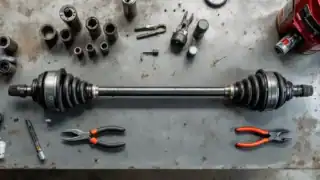
A driveshaft is the rotating shaft that transfers power from your gearbox to your wheels. On Volkswagen models, this is a precision-engineered component that works quietly in the background until something goes wrong. Volkswagen driveshaft repair is one of those jobs that’s easy to put off when the symptoms are mild, but the consequences of ignoring it range from frustrating vibrations to a vehicle that won’t move at all. At Gatton Automotive Solutions, we see driveshaft issues across the full Volkswagen range, from Golfs and Polos driven daily around the Lockyer Valley to Touaregs and Amaroks doing harder work on rural roads.
What Does a Failing Volkswagen Driveshaft Feel Like?
The symptoms of driveshaft trouble are usually hard to ignore once they start. The most common sign is a clicking or clunking noise when turning, particularly at low speed. This comes from wear in the CV (constant velocity) joint, a ball-and-socket assembly at each end of the driveshaft that allows the shaft to flex as your wheels steer and move with the road.
Beyond the clicking, drivers often notice:
- Vibrations through the floor or steering wheel that get worse as speed increases
- A shuddering feeling when accelerating from a standstill
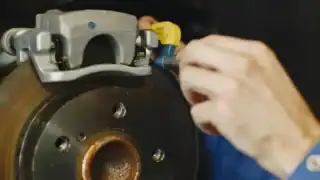
- Grease splattered on the inside of a wheel or on the surrounding suspension components (this is a sign the CV boot has torn and the joint is losing lubricant)
- A clunking sound when shifting between drive and reverse
Any one of these warrants a closer look. Left unchecked, a worn CV joint can seize completely, leaving you stranded. A torn CV boot sounds minor, but once the grease escapes and grit gets in, joint wear accelerates quickly. Catching it early usually means a boot replacement rather than a full driveshaft replacement.
How We Diagnose and Repair Volkswagen Driveshafts
Volkswagen vehicles use precise torque specifications and specific joint angles that differ from many other manufacturers. The Amarok, for example, runs a rear differential setup that requires careful attention to prop shaft alignment, while front-wheel-drive models like the Golf and Polo rely heavily on inner and outer CV joints on each front axle shaft.
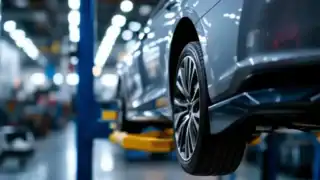
Our process starts with a road test to confirm the symptom and pinpoint which corner of the vehicle the noise is coming from. From there, we lift the car and do a hands-on inspection: checking each CV boot for cracking or tears, testing joint movement for looseness or roughness, and looking for any signs of grease contamination. On Volkswagen models, we also check the driveshaft mounting points and any flex discs or centre support bearings on rear-drive and all-wheel-drive variants.
Once we’ve identified the problem, we walk you through what needs doing before any work starts. That might be a CV boot replacement if the joint itself is still serviceable, or a full driveshaft replacement if the joint is worn beyond what a repack can fix. For Volkswagen models, we source parts to OEM specification, which matters particularly for the joint angles and shaft lengths that Volkswagen engineering relies on. An ill-fitting aftermarket shaft can introduce new vibrations or cause premature wear elsewhere in the drivetrain.
A Note on Volkswagen-Specific Driveshaft Design
Volkswagen’s MQB platform, used across a wide range of models including the Golf Mk7 and Mk8, Tiguan, and Touran, uses driveshafts with specific torsional stiffness characteristics. This affects how vibration is transmitted through the drivetrain. When replacing driveshafts on MQB-based vehicles, using parts that match Volkswagen’s specifications is more important than on older, simpler platforms. We take that into account when sourcing parts for any Volkswagen driveshaft repair or replacement job.
What Affects the Cost and Time for a Volkswagen Driveshaft Repair in Gatton?
Repair costs vary depending on a few honest factors. A CV boot replacement on a front-wheel-drive Volkswagen is generally a straightforward job. A driveshaft replacement on an all-wheel-drive or four-wheel-drive model like the Touareg or Amarok involves more labour and higher-value components. Parts pricing also depends on whether OEM-equivalent or genuine Volkswagen parts are used, and some models have better parts availability than others, which can affect how quickly the job can be turned around.
We’ll give you a clear assessment and quote before anything is authorised. No guesswork, no work started without your say-so.
Why Lockyer Valley Volkswagen Owners Come to Us
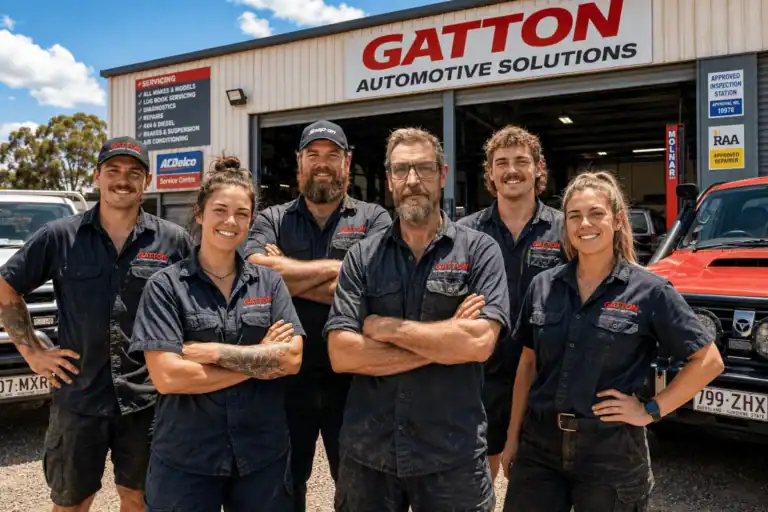
Gatton Automotive Solutions is a full-service workshop handling everything from everyday passenger cars to 4WDs, light trucks, and heavy equipment. For Volkswagen owners in Gatton and the broader Lockyer Valley, that means you’re not limited to a single-bay operator or forced to drive 45 to 80 kilometres to Ipswich or Toowoomba for specialist mechanical work.
We handle the full mechanical scope in-house: driveshaft and CV joint repairs, suspension work, tyre supply and fitting, and roadworthy certificates. Parts sourcing is managed by the workshop, so you’re not chasing suppliers yourself. Our team is straight with you about what’s needed, what can wait, and what the cost looks like. That approach has earned us five-star reviews from drivers across the region, and we’d rather keep that reputation than pad a bill.
If your Volkswagen is making noises it shouldn’t, don’t wait for the problem to ground the car. Book Your Free Inspection online or Call Us Now to talk through what you’re experiencing, and we’ll get your Volkswagen looked at by the team here in Gatton.