Limited Time: Free Windscreen Wipers With Any Service. Subject To Availability.

Locally Owned & Operated
Honest Upfront Pricing
5★ Reviews
All Makes & Models

Verified 5★ Reviews

Certified European Vehicles Driveshaft Repair In Gatton

Driveshaft issues affect how power reaches your wheels. We diagnose and repair European vehicle driveshafts locally in Gatton, keeping you on the road without the trip to Ipswich.

One-Stop Workshop

Honest Advice

5★ Reviews

European Driveshaft Experts

Book Your Free Inspection

Tell us what you need and we'll get back to you with a clear quote.

Booking Form
  • Vehicle Details
  • Confirm Vehicle
  • Services
  • Contact Details
Honest Quotes
All Vehicle Types
Local & Reliable

Why Book With Us

Book Your Free Inspection
Drop Off Your Vehicle
We Get to Work
Collect Your Car

A driveshaft is the rotating component that transfers power from your gearbox to your wheels. On European vehicles, this job demands precise engineering tolerances, and when something goes wrong, the symptoms are hard to ignore. European Vehicles Driveshaft Repair is one of the more common mechanical jobs we see at our Gatton workshop, particularly on vehicles logging up long country kilometres or working through rough rural terrain. Getting it looked at promptly keeps a manageable repair from turning into a more involved one.

What Does a Failing Driveshaft Feel Like?

Most drivers notice something is off before they know what to call it. The symptoms of driveshaft wear on European vehicles tend to be pretty distinctive once you know what you’re looking for.

  • Clunking or knocking when you accelerate or change gears – often caused by worn universal joints (U-joints) or a damaged CV joint
  • Vibration through the floor or seat at certain speeds – this can point to a driveshaft that’s out of balance or has a bent section
  • Clicking noise when turning – a classic sign of a CV (constant velocity) joint starting to fail, especially at low speed with full steering lock applied
  • Shuddering during take-off – common when the inner CV joint or centre bearing is worn
  • Grease on the inside of the wheel or underneath the vehicle – a torn CV boot allows grease to escape, which accelerates joint wear and eventually leads to driveshaft replacement rather than a simpler boot swap

If you’re experiencing any of these on your European vehicle, it’s worth getting it inspected sooner rather than later. A CV boot caught early is a straightforward job. A failed CV joint that has been running dry for months is a different story entirely.

How We Diagnose and Repair Driveshafts on European Vehicles

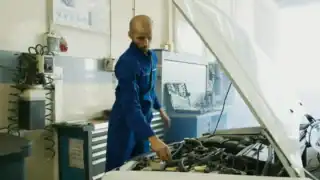
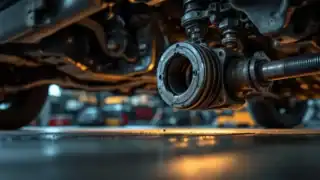
European makes including Volkswagen, Audi, BMW, Mercedes-Benz, Volvo, and Peugeot each have their own driveshaft geometry, joint configurations, and torque specifications. Our approach starts with a proper diagnosis rather than just swapping parts. We lift the vehicle, inspect the driveshaft visually and by hand, check the CV boots for cracking or splits, and assess the joints for play, roughness, or grease contamination.

On front-wheel-drive European platforms, the inner and outer CV joints are the primary focus. On all-wheel-drive and rear-wheel-drive European vehicles, we also assess the propshaft (the shaft running down the middle of the vehicle), its centre bearing, and the U-joints at each end. Some European AWD systems have complex multi-piece driveshaft arrangements, and we work through these methodically rather than treating every car the same.

One brand-specific point worth noting: many Volkswagen Group vehicles (VW, Audi, Skoda) use a tripod-style inner CV joint design that differs from the more common Rzeppa-style joints found on other makes. Correct identification matters because the service procedure, grease type, and replacement joint specification vary accordingly. Getting this wrong can mean a repair that fails prematurely.

Where only the boot has failed and the joint itself is still in good condition, we’ll replace the boot and repack the joint with the correct CV grease. If the joint is worn, pitted, or running dry, we replace the joint assembly or the full driveshaft as needed. We source parts to OEM-equivalent specification, so you’re not compromising on the fit, tolerances, or longevity that European drivetrains are designed around.

What Affects the Cost and Time of European Driveshaft Repairs in Gatton?

A few variables determine how involved the job will be. The biggest one is how far the damage has progressed. A CV boot replacement is a shorter, more straightforward job than a full driveshaft replacement. The vehicle’s drivetrain layout matters too – front-wheel-drive European vehicles tend to be more accessible than AWD or rear-wheel-drive models with propshafts and multiple joints to inspect.

Parts availability is another factor. Some European driveshaft components are available locally in quick timeframes; others need to be sourced specifically for the model and variant. We handle parts sourcing in-house, so you’re not chasing suppliers yourself. We’ll give you a clear picture of what’s needed and what’s involved before any work starts.

Why Gatton Automotive Solutions for Your European Vehicle’s Driveshaft?

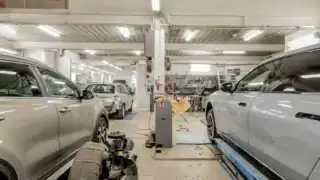
We’re a full-service workshop based in Gatton, handling everything from everyday cars and 4WDs through to trucks, heavy equipment, and agricultural machinery. That breadth matters because European vehicles sometimes need more than just a driveshaft repair – suspension components, wheel alignment, and tyres are often worth checking at the same time, and we can do all of it in one visit. There’s no need to drive to Ipswich or Toowoomba for mechanical work on your European vehicle when the capability is right here in the Lockyer Valley.

We’ve built our reputation in Gatton on honest advice and fair pricing. We don’t recommend work that isn’t needed, and we explain what we find in plain terms before we do anything. With five-star reviews from local customers, that approach seems to be working.

Roadworthy certificates are also issued on-site, which is useful if a driveshaft repair is needed to get your vehicle back up to standard for rego purposes.

If your European vehicle is knocking, vibrating, or clicking, use our online booking to Book Your Free Inspection, or Call Us Now and we’ll get it properly assessed and tell you exactly what’s going on.
Your Local Workshop for Every Vehicle

Gatton Automotive Solutions is the one-stop shop for cars, 4WDs, trucks, and heavy equipment. Honest advice and fair pricing, right here in Gatton.

Honest Pricing, No Surprises

We tell you what’s needed and what it costs before we start. No upselling, no pressure.

Everything Under One Roof

Bring your car in and we’ll inspect it, explain what we find, and quote you upfront.

European Vehicle Specialist Knowledge

We know European driveshaft designs and parts sourcing inside out.

How European Driveshaft Repair Works

From first contact to collection, your European vehicle driveshaft repair is handled professionally at every step.

Step 1

Book Your Free Inspection

Call Us Now or book your free inspection online to report vibration, noise, or handling issues with your driveshaft.

Step 2

European Driveshaft Diagnosis

We inspect the shaft, joints, and bearings using European-specification equipment to pinpoint wear or damage.

Step 3

Precision Driveshaft Repair

We replace worn joints, balance the shaft, or fit OEM-equivalent components to restore smooth power delivery.

Step 4

Quality Check and Collection

We test-drive your vehicle, verify smooth operation, then contact you when it is ready to collect.

Five-Star Rated

Verified 5★ Reviews

Quality Parts From Trusted Suppliers

We use genuine and quality aftermarket parts from reputable suppliers. You get reliable components backed by proper warranties.

Book Your Free Inspection

Tell us what you need and we'll get back to you with a clear quote.

Booking Form
  • Vehicle Details
  • Confirm Vehicle
  • Services
  • Contact Details
Honest Quotes
All Vehicle Types
Local & Reliable

Why Book With Us

Book Your Free Inspection
Drop Off Your Vehicle
We Get to Work
Collect Your Car

Frequently Asked Questions

Browse answers to common questions about our services. Can't find what you're after? Give us a call and we'll help.

A driveshaft repair involves inspecting the shaft itself, the CV joints (constant velocity joints, which allow the shaft to flex while spinning), the boots that protect those joints, and the connecting flanges. On European vehicles, this often means working with more complex multi-piece shaft assemblies and tighter engineering tolerances than you’d find on a standard Japanese or Australian-market car. We assess what’s worn or damaged and repair or replace only what’s needed rather than automatically replacing the whole assembly.

The most common sign is a clicking or clunking noise when turning, especially at low speed. You might also notice vibration through the floor or steering wheel during acceleration, or a shuddering feeling when pulling away from a stop. A torn or greasy CV boot is often visible under the car and means the joint inside is likely losing lubrication. Any of these symptoms is worth having checked promptly, since driving on a failing driveshaft can lead to more expensive damage.

Generally, no. A cracked or split CV boot leaks grease and lets in dirt, which accelerates wear on the joint itself. Once a CV joint starts failing, it can deteriorate quickly. In a worst case, a completely failed driveshaft can leave you stranded or, in rare cases, cause a sudden loss of drive at speed. If you’re hearing clicking or feeling vibration, it’s worth getting it looked at sooner rather than later.

Yes, several European brands use multi-piece or centre-bearing driveshaft designs that are more involved to work on than a simple two-piece setup. German manufacturers in particular often use tight clearances and brand-specific flange fittings, meaning parts compatibility matters more than on generic platforms. Vehicles from Volkswagen, Audi, BMW, and Mercedes-Benz can also be sensitive to imbalance in repaired shafts, so proper balancing after any repair is important. We source parts suited to the specific make and model rather than relying on generic replacements.

For a straightforward CV boot replacement or single CV joint, the work is often completable within a few hours. A full driveshaft replacement on a European vehicle can take longer depending on the drivetrain layout, whether the car is front-wheel drive, rear-wheel drive, or all-wheel drive, and how accessible the components are. We’ll give you a realistic time estimate once we’ve had a look at the vehicle, so you’re not left guessing.

The main variables are whether you need a boot replacement, a CV joint replacement, or a full shaft replacement; the drivetrain configuration (all-wheel drive systems have more shafts and complexity); and parts availability for your specific European make and model. European components can be more expensive to source than parts for common domestic or Japanese vehicles. We’ll explain what’s needed and why before any work starts, so you understand exactly what you’re paying for.

Under ACCC guidance, Australian consumers are generally not required to have their vehicles serviced exclusively at a dealership to maintain their manufacturer warranty, provided the work is carried out properly and appropriate parts are used. This is general information rather than legal advice, and we’d encourage you to check your own warranty terms if you’re unsure. For most European vehicles we service in and around Gatton, using quality OEM-equivalent or genuine parts and documenting the work is what matters most.

We source parts suited to the specific vehicle, which can mean OEM-equivalent components from reputable aftermarket suppliers or genuine parts depending on what’s available and what you prefer. For European vehicles, we’re careful about parts quality because low-grade CV joints and boots on German or French-engineered drivetrain systems often don’t last as long or fit as precisely. We’ll discuss your options before ordering anything, including any difference in cost or expected service life.

There’s no fixed interval the way there is for oil or brake pads. CV joint life depends on how intact the boots remain, driving conditions, and the age of the vehicle. A torn boot left unaddressed can wear out a CV joint within a relatively short period. On European vehicles used in regional areas, corrugated roads, river crossings, or heavy towing can accelerate wear. Checking the boots and joints during each service is the simplest way to catch problems before they become expensive.

Yes. All-wheel drive European vehicles like Audi Quattro models, BMW xDrive, and Volkswagen 4Motion have multiple driveshafts and additional components like prop shafts, centre differentials, and transfer cases that all interact with drivetrain function. We work on these systems at our Gatton workshop and can assess whether a symptom is coming from the front shafts, rear shafts, or somewhere else in the drivetrain rather than just replacing parts based on a guess.

Continue to site