Worn shock absorbers don’t always announce themselves dramatically. For many Honda owners, the signs creep in gradually — a slightly bouncier ride, a little more body sway on corners, or a vague feeling that the car isn’t sitting quite right. Honda shock absorber replacement is one of those services that makes an immediate difference once it’s done, but is easy to put off because the car still drives. If you’re noticing changes in how your Honda handles around Gatton or out on the highway, it’s worth getting the suspension inspected before the wear affects your brakes, tyres, and overall safety.
How Do You Know Your Honda’s Shock Absorbers Are Worn?
Shock absorbers – sometimes called dampers – control how your vehicle’s suspension compresses and rebounds over bumps. When they wear out, the car loses its ability to manage that movement properly. The symptoms aren’t always dramatic, but they’re worth paying attention to.
- Excessive bouncing after bumps: If the car keeps rocking after going over a dip or speed hump, the dampers aren’t doing their job.
- Nose-diving under braking: The front of the vehicle dipping sharply when you brake is a common sign of worn front shock absorbers.
- Body roll on corners: More lean than usual when turning, particularly noticeable on roundabouts or winding roads.
- Uneven tyre wear: Worn shocks cause the tyre to bounce against the road surface rather than maintain consistent contact, which shows up as patchy or cupped wear patterns.
- Knocking or clunking sounds: Often heard when going over rough ground or when the suspension compresses under load.
- Fluid leaks near the shock absorber body: Oil weeping down the damper casing is a clear indicator the seal has failed.
Honda models like the CR-V, HR-V, Civic, and Jazz are all common in the Lockyer Valley, and each has its own suspension geometry and shock absorber specification. A symptom that looks the same across models can have different causes depending on the variant and how the vehicle is used – a CR-V doing regular farm access runs handles very differently to a Jazz used for school runs in town.
What Honda Shock Absorber Replacement Involves at Our Workshop
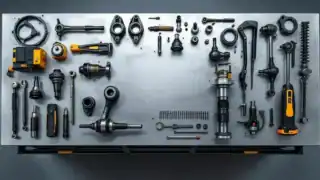
We start with a proper inspection before any parts are ordered. The shock absorbers are examined for leaks, physical damage, and wear, but we also check the associated components that are often overlooked: the top mounts (also called strut mounts), bump stops, dust boots, and spring condition. On many Honda models, particularly strut-type front suspension setups, the spring and shock absorber form a single assembly. Replacing one without checking the other can mean the new shock underperforms immediately because it’s paired with a fatigued spring.
Honda uses a range of suspension configurations across its lineup. Front MacPherson strut setups are common on Civic, Jazz, and HR-V, while the CR-V and Pilot use more complex multi-link rear arrangements. Our approach is specific to the model and year – the procedure for a Civic hatch differs from a CR-V, and the parts required are different too. We source shock absorbers to OEM specification or genuine-equivalent quality, so the new components match Honda’s original ride and handling calibration rather than introducing a mismatched feel.
After replacement, we check wheel alignment, because disturbing the suspension geometry during the job can affect how the car tracks. Alignment is especially important on Hondas, where the front toe and camber settings are tightly specified. If alignment is out after the work, we’ll let you know directly and quote the correction separately rather than leaving you to wonder why the car is pulling to one side.
What Affects the Cost and Time for This Job?
A few variables influence what Honda shock absorber replacement involves in terms of cost and time. Replacing all four corners takes longer than addressing just the fronts or rears. Corrosion on older bolts and fittings – which is less common in Gatton than in coastal areas but still occurs on higher-mileage vehicles – can add time if fasteners need to be freed carefully. The parts themselves vary depending on whether OEM or quality aftermarket components are used, and on the specific Honda model and year.
We don’t add unnecessary work to a job. If only two shock absorbers need replacement, we won’t push you toward doing all four unless there’s a genuine reason to. We’ll show you what we find and explain what we recommend, then the decision is yours.
Why Gatton Honda Owners Choose Us for Suspension Work
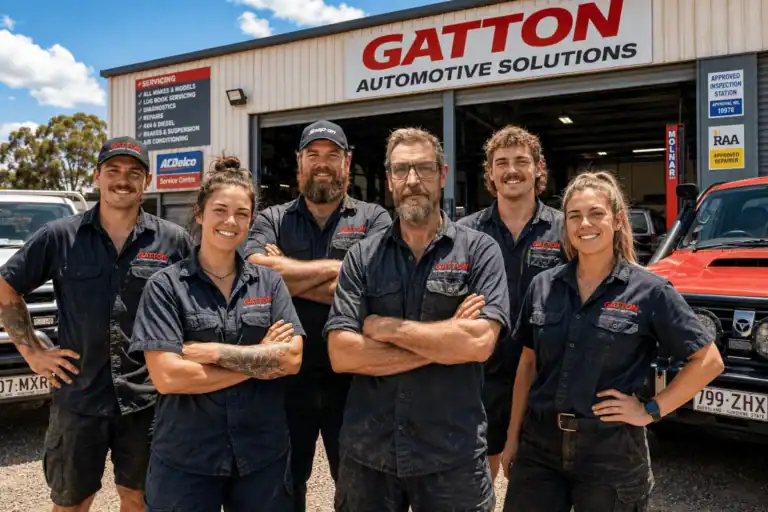
Gatton Automotive Solutions is a full-service workshop covering everything from everyday cars and 4WDs through to trucks, heavy equipment, and agricultural machinery. Suspension work sits alongside our tyre fitting, wheel alignment, roadworthy certificates, and general mechanical services – so if the inspection turns up more than just worn shocks, there’s no need to visit a second workshop or drive to Ipswich or Toowoomba for the next part of the job.
Our five-star reviews reflect the way we work: straight advice, fair pricing, and no pressure to approve work that isn’t necessary. For Honda owners across the Lockyer Valley, that means knowing what’s actually wrong before committing to anything. Parts sourcing is handled in-house, and we’ll discuss OEM versus aftermarket options honestly so you can make an informed call.
If your Honda is feeling soft over bumps, pulling on corners, or showing any of the warning signs above, Book Your Free Inspection online or Call Us Now. Gatton Automotive Solutions is here and ready to take a look.