Worn shock absorbers don’t just make your Mitsubishi ride rough — they affect how quickly your vehicle stops, how well it corners, and how much control you have when something unexpected happens on the road. Mitsubishi shock absorber replacement is one of those jobs that tends to get pushed back because the changes happen gradually, but by the time you really notice the difference, the wear has usually been there for a while. At Gatton Automotive Solutions, we see this regularly across a wide range of Mitsubishi models, from daily-driven Outlanders and ASX wagons to Triton utes that put in serious work on local roads and properties through the Lockyer Valley.
Signs Your Mitsubishi Shock Absorbers Need Replacing
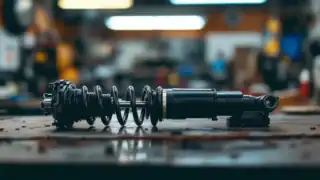
Because shock absorber wear is gradual, it can be easy to adapt to a car that’s steadily getting worse. There are some specific things worth paying attention to though. If your Mitsubishi bounces more than it used to after going over a bump or dip, that’s a clear sign the dampers are no longer controlling the spring rebound properly. A nose-dive sensation when braking, or a feeling that the rear lifts under heavy braking, also points to shock absorbers that have lost their effectiveness.
- Excessive body roll when cornering, even at moderate speeds
- A knocking or clunking sound from the suspension over rough patches
- Uneven tyre wear, particularly cupping or scalloping across the tread
- The steering feeling vague or slow to respond on winding roads
- Visible oil leaking from the shock absorber body
- The vehicle sitting lower on one corner than the others
On Mitsubishi Tritons used for towing or load carrying, the rear shocks often wear faster than on light passenger vehicles. The OEM shocks fitted to many mid-spec Triton variants are adequate for general use but can struggle under repeated heavy load cycles. If your Triton is regularly hauling, it’s worth having the rear suspension assessed even if the ride feels acceptable.
How We Approach Mitsubishi Shock Absorber Replacement in Gatton
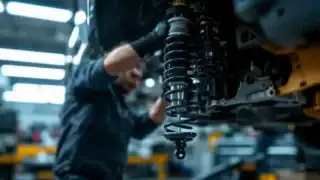
We start with a visual inspection and a hands-on assessment of the suspension. That includes checking for oil leaks, examining the shock absorber mounts and bushes, and looking at how evenly the vehicle sits. A bounce test gives us a quick read on damping performance, but we also put the vehicle on the hoist to inspect everything properly. On Mitsubishi models, we pay attention to the condition of the top mounts and strut bearings, which commonly wear alongside the shocks themselves, particularly on higher-kilometre Pajeros and Outlanders. Replacing the shocks without addressing a worn top mount is a shortcut that tends to bring a car back in sooner than it should.
For the replacement itself, we talk you through the parts options. Genuine Mitsubishi-spec or OEM-equivalent shock absorbers are our default recommendation for everyday driving, giving you performance and fitment that matches your vehicle’s original design. For Tritons or Pajeros used for off-road work or heavy towing, we can discuss upgraded absorbers suited to that application. We handle parts sourcing directly, so you’re not chasing down components yourself or waiting on external suppliers to come back to you.
After fitting, we check the wheel alignment. Shock absorber replacement doesn’t change your alignment settings directly, but if the worn shocks allowed excessive movement over time, a quick alignment check makes sense before you head off. We have tyre fitting and alignment capability in-house, so this can usually be done in the same visit.
What Affects the Cost and Time for This Job?
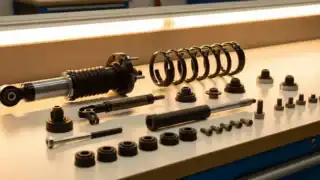
A few things influence how long the job takes and what it costs. The most straightforward scenario is replacing both rear shocks on a standard-spec Mitsubishi with good access to the mounting hardware. Things get more involved when corroded bolts need careful extraction, when top mounts or bush kits need replacing at the same time, or when an all-wheel-drive model requires additional steps to access the rear suspension geometry. Front strut replacement is generally a more labour-intensive job than rear shock replacement, because the front strut assembly on most Mitsubishi models carries the spring and requires a spring compressor to disassemble safely.
Whether you go with OEM-equivalent or performance-grade parts also affects the price. We’ll explain the options clearly and give you a straight answer on what we recommend for how you’re using the vehicle, without steering you toward more expensive parts you don’t need.
Why Gatton Automotive Solutions for Your Mitsubishi Suspension Work
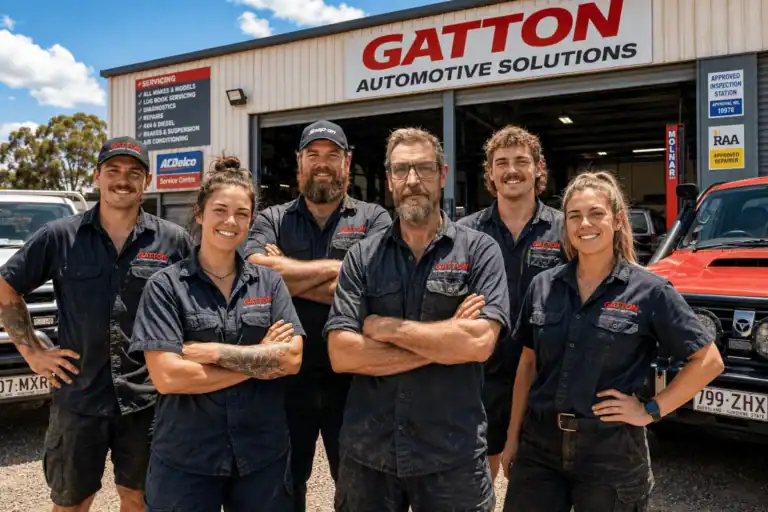
We’re a full-service workshop in Gatton covering everything from routine servicing through to suspension upgrades, tyre fitting, roadworthy certificates, and heavy vehicle work. There’s no need to drive to Ipswich or Toowoomba for mechanical work your local area can handle. Our team works on Mitsubishi vehicles regularly, from ASX and Outlander wagons to Triton utes and Pajero 4WDs, so we’re familiar with the suspension layouts and common wear points across the range. We’ve built a reputation here on doing the job right and giving people honest advice, and that’s backed by five-star reviews from customers across the Lockyer Valley.
If your Mitsubishi is showing any of the signs above, or you’re just not sure when the shocks were last looked at, we’re happy to take a look. Book Your Free Inspection online or Call Us Now and we’ll get your suspension sorted right here in Gatton.