Limited Time: Free Windscreen Wipers With Any Service. Subject To Availability.

Locally Owned & Operated
Honest Upfront Pricing
5★ Reviews
All Makes & Models

Verified 5★ Reviews

Expert Jeep Shock Absorber Replacement In Gatton

We replace worn Jeep shock absorbers to restore your suspension's comfort and control. Book Your Free Inspection and we'll assess your shocks and recommend the right solution for your vehicle.

One-Stop Workshop

Honest Advice

5★ Reviews

Jeep Suspension Experts

Book Your Free Inspection

Tell us what you need and we'll get back to you with a clear quote.

Booking Form
  • Vehicle Details
  • Confirm Vehicle
  • Services
  • Contact Details
Honest Quotes
All Vehicle Types
Local & Reliable

Why Book With Us

Book Your Free Inspection
Drop Off Your Vehicle
We Get to Work
Collect Your Car

Worn shock absorbers are one of those problems that creep up gradually, making it easy to dismiss the signs until they become hard to ignore. Jeep shock absorber replacement is something we handle regularly here in Gatton, and for good reason — Jeeps are built to go off-road, but that same capability puts real strain on the suspension system over time. Whether you’re running a Wrangler through the Lockyer Valley’s back paddocks or a Grand Cherokee on the daily commute to Ipswich, your shocks are working hard every single kilometre.

What Do Shock Absorbers Actually Do?

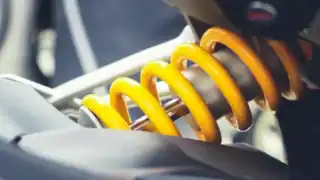
Shock absorbers, often called dampers, control how your suspension moves when it compresses and rebounds over bumps, potholes, and uneven ground. They don’t just soften the ride — they keep your tyres in contact with the road surface, which directly affects braking, steering, and stability. When shocks wear out, the whole vehicle becomes harder to control, especially in emergency situations or on loose gravel. On a Jeep with a lifted suspension or aftermarket setup, degraded shocks can create even more pronounced handling problems than on a standard passenger car.

Signs Your Jeep’s Shock Absorbers Need Replacing

Because wear happens progressively, it’s worth knowing what to look and feel for. The following symptoms are worth taking seriously rather than waiting for the next service.

  • Bouncing or wallowing after bumps: If the vehicle keeps moving up and down after hitting a dip rather than settling quickly, the damping function is compromised.
  • Nose-diving under braking: Jeeps with worn front shocks often pitch forward noticeably when you brake firmly, which can increase stopping distances.
  • Body roll through corners: Excessive lean when turning, particularly in Grand Cherokee and Commander models, can indicate shocks that are no longer controlling body movement effectively.
  • Uneven tyre wear: Cupping or scalloping on the tyre tread is a classic sign of shocks that aren’t maintaining consistent tyre contact with the road surface.
  • Oil streaks on the shock body: Hydraulic fluid leaking down the side of the shock is a direct indicator of seal failure and means replacement is overdue.
  • Vibration through the steering wheel: On rougher roads, worn shocks can allow the front axle to chatter, which feeds back through the steering.

How We Approach Jeep Shock Absorber Replacement in Gatton

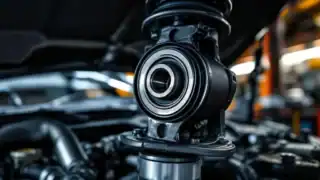
We start with a proper inspection rather than replacing parts on assumption. That means getting the vehicle on the hoist, checking the shock bodies for leaks or physical damage, assessing the mounts and bushes at both ends of each unit, and evaluating related components like sway bar links and control arm bushings. On Jeep platforms, it’s common to find that the shock mounting points or upper mounts have also deteriorated, particularly on higher-mileage Wranglers and older Cherokee models. Replacing a shock without addressing a collapsed mount means the new part will wear faster and handle worse than it should.

For Jeep vehicles, we source parts to OEM specification or quality-equivalent alternatives depending on the model and the owner’s priorities. Wrangler owners who wheel regularly often benefit from an upgrade to a heavier-duty shock rated for the load and travel range of a lifted setup, and we can discuss those options honestly. Grand Cherokee and Compass owners, on the other hand, usually want a reliable like-for-like replacement that restores the original ride character. We’ll always explain what’s available and let you decide what fits your use case and budget.

One detail that catches people out on some Jeep models, particularly the WK2 Grand Cherokee, is the electronic height control or adaptive damping system. If your vehicle has this feature, the replacement process is more involved than a standard shock swap, and the components need to be compatible with the vehicle’s management system. We factor this in from the start rather than discovering it halfway through the job.

What Affects the Cost and Time for This Service?

Several variables come into play when pricing shock absorber replacement on a Jeep. The number of shocks being replaced matters, since replacing all four at once is more efficient than doing pairs separately. The model and specification of your vehicle affects parts pricing, with Rubicon and Trackhawk variants typically requiring different components than base-spec models. If the upper mounts, bump stops, or related bushings are also due for replacement, that adds to the work but avoids a second labour charge later. Parts availability in the Lockyer Valley region can vary, but we handle our own parts sourcing and aim to keep the process moving without unnecessary delays.

Why Drivers Across the Lockyer Valley Choose Us for Suspension Work

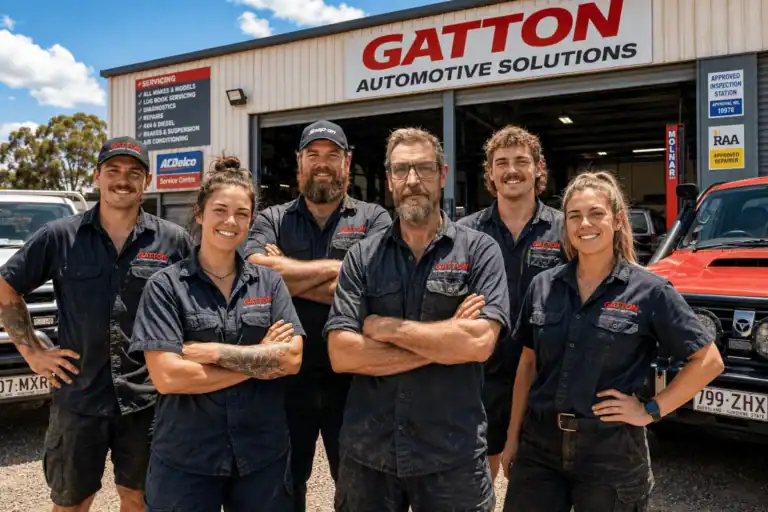
Gatton Automotive Solutions handles everything from everyday passenger cars to 4WDs, utes, trucks, and heavy equipment, all under one roof. Suspension upgrades and tyre fitting are done in-house, so if your Jeep also needs a wheel alignment or new rubber after the shock replacement, there’s no need to head to another workshop. We issue roadworthy certificates on-site as well, which is useful if worn shocks have pushed your vehicle into borderline territory. Our pricing is straightforward with no upselling, and our five-star reviews from local drivers reflect the way we work — honest advice, fair pricing, no unnecessary work. There’s no need to drive to Ipswich or Toowoomba for specialist suspension service when it’s available right here in Gatton.

If your Jeep’s ride has changed or you’ve noticed any of the symptoms above, Book Your Free Inspection online or Call Us Now. Our team in Gatton is ready to take a look and tell you exactly what’s going on before any work begins.
Other Services

Whatever your needs we have you covered, see some similar services below or click "See All Services" to explore our full service offering.

Your Local Workshop for Every Vehicle

Gatton Automotive Solutions is the one-stop shop for cars, 4WDs, trucks, and heavy equipment. Honest advice and fair pricing, right here in Gatton.

Honest Pricing, No Surprises

We tell you what’s needed and what it costs before we start. No upselling, no pressure.

Everything Under One Roof

Bring your car in and we’ll inspect it, explain what we find, and quote you upfront.

Jeep-Specific Diagnostic Tools

We use equipment calibrated for Jeep suspension geometry and ride height systems.

How Jeep Shock Absorber Replacement Works

From booking your free inspection through to collection, here's how we handle your Jeep's suspension repair.

Step 1

Book Your Free Inspection

Call Us Now or book online to arrange your Jeep shock absorber inspection and suspension assessment.

Step 2

Suspension & Shock Assessment

We inspect your Jeep's shocks, mounts, and suspension geometry, testing for noise, leaks, and uneven wear.

Step 3

Shock Absorber Replacement

We fit quality replacement shocks matched to your Jeep's specs for proper alignment and ride stability.

Step 4

Final Check & Collection

We test-drive your Jeep to confirm smooth handling and responsive suspension, then you're ready to go.

Five-Star Rated

Verified 5★ Reviews

Quality Parts From Trusted Suppliers

We use genuine and quality aftermarket parts from reputable suppliers. You get reliable components backed by proper warranties.

Book Your Free Inspection

Tell us what you need and we'll get back to you with a clear quote.

Booking Form
  • Vehicle Details
  • Confirm Vehicle
  • Services
  • Contact Details
Honest Quotes
All Vehicle Types
Local & Reliable

Why Book With Us

Book Your Free Inspection
Drop Off Your Vehicle
We Get to Work
Collect Your Car

Frequently Asked Questions

Browse answers to common questions about our services. Can't find what you're after? Give us a call and we'll help.

The most common signs are a bouncy or wallowing ride that does not settle quickly after bumps, excessive nose-dive when braking, or the vehicle feeling loose and vague through corners. You might also notice uneven tyre wear, a knocking sound over rough ground, or fluid leaking down the outside of the shock body. Jeeps driven on corrugated dirt roads or used for off-road work tend to wear shocks faster than city vehicles, so these symptoms are worth acting on sooner rather than later.

Price varies depending on which Jeep model you have, whether you are replacing just the rear or all four, and the type of replacement shock chosen. Jeep Grand Cherokees and Wranglers often use more substantial shock assemblies than smaller models, which affects parts cost. If your Jeep has been lifted or runs larger tyres, you may need extended-travel or load-rated shocks to suit the setup. We will assess what is fitted and what is needed before any work starts, so there are no surprises.

Worn shocks affect your Jeep’s ability to maintain consistent tyre contact with the road, which increases stopping distances and reduces your control in emergency situations. On straight flat roads the difference might be subtle, but on uneven surfaces or in a sudden swerve the degraded handling becomes very real, very quickly. Driving with shocks that are leaking fluid or have collapsed internals is not recommended. If you are noticing symptoms, it is worth getting them inspected rather than waiting for the next service.

Jeep Grand Cherokees, particularly those with the factory air suspension or adaptive damping systems, can present additional complexity when shocks are replaced. On these models, we check for any active suspension warning lights and verify the replacement parts are compatible with the existing system. Wranglers used for off-road driving often wear shocks unevenly depending on load and terrain. We see both models regularly and use parts suited to each specific variant, whether that is a standard factory replacement or an upgrade matched to how the vehicle is being used.

We start by lifting the vehicle and removing the wheels to access the shock assemblies. Each shock is inspected before removal to confirm the diagnosis, then the old units are unbolted and the new shocks are fitted and torqued to the manufacturer’s specification. On Jeeps with coilover setups, the spring and shock are serviced together. Once everything is reassembled, we check the ride height and inspect the surrounding suspension components for any wear that may have been concealed. Most Jeep shock replacements are completed in a single visit at our Gatton workshop.

Under general ACCC guidance, Australian consumer law does not require you to have your vehicle serviced at a dealership to maintain your manufacturer warranty, provided the work is carried out to the required standard using appropriate parts. This is general information rather than legal advice, and it is worth reviewing your specific warranty conditions if you have any concerns. We record all work completed and can note parts used for your service history. If your Jeep is still under warranty, feel free to ask us about this before booking.

In most cases the job is completed within a few hours, and many customers drop their vehicle off in the morning and collect it the same day. The actual time depends on the model, how accessible the shock mounts are, and whether any corroded or seized hardware needs extra attention. Jeeps that have seen regular off-road use can sometimes have tougher fasteners to deal with, which adds a little time. We will give you a realistic estimate when you Book Your Free Inspection so you can plan accordingly.

There is no fixed replacement interval, but shock absorbers on most vehicles begin to degrade noticeably somewhere between 60,000 and 100,000 kilometres under normal conditions. Jeeps used off-road, towing, or on rough unsealed roads will typically reach that point sooner. A good habit is to have the suspension checked at each major service so any gradual wear is caught early rather than discovered after handling has already deteriorated significantly. If you are unsure of the current condition, a visual inspection is a straightforward starting point.

We can fit genuine Jeep parts or quality OEM-equivalent aftermarket shocks depending on your preference and how the vehicle is used. For a standard daily driver being returned to factory condition, a quality equivalent part performs well and is often more cost-effective. For Jeeps that are lifted, heavily loaded, or used off-road regularly, we may recommend performance-oriented alternatives specifically rated for that application. We will talk through the options with you before any parts are ordered so you are comfortable with what is going on your vehicle.

When the shocks come off, it is a practical time to inspect the surrounding components while everything is accessible. Bump stops, dust boots, and shock mounts are common wear items that are inexpensive to replace at the same time but awkward to access separately. On Jeeps, the control arm bushes and sway bar links are also worth checking, particularly on vehicles with high kilometres or off-road history. Addressing minor wear in these components at the same visit can prevent a return trip in a short time and keeps the suspension performing as a complete system.

Continue to site