Limited Time: Free Windscreen Wipers With Any Service. Subject To Availability.

Locally Owned & Operated
Honest Upfront Pricing
5★ Reviews
All Makes & Models

Verified 5★ Reviews

Top Rated Japanese Vehicles Shock Absorber Replacement In Gatton

Worn shocks affect handling, braking distance, and comfort. We replace Japanese vehicle shock absorbers and inspect the full suspension system to get your ride smooth and safe again.

One-Stop Workshop

Honest Advice

5★ Reviews

Japanese Suspension Specialists

Book Your Free Inspection

Tell us what you need and we'll get back to you with a clear quote.

Booking Form
  • Vehicle Details
  • Confirm Vehicle
  • Services
  • Contact Details
Honest Quotes
All Vehicle Types
Local & Reliable

Why Book With Us

Book Your Free Inspection
Drop Off Your Vehicle
We Get to Work
Collect Your Car

Worn shock absorbers don’t always announce themselves dramatically. Often the signs are subtle at first – a slightly bouncier ride, a faint knocking over rough ground, or the front end dipping more than it should under braking. Japanese vehicles shock absorber replacement is one of the more common suspension jobs we see at our Gatton workshop, and it’s worth understanding what’s actually happening inside the component before deciding how to approach it.

What Do Shock Absorbers Actually Do?

The shock absorber (sometimes called a strut on front suspensions) is what controls how your wheel moves up and down over bumps and dips. The spring in your suspension absorbs the initial impact, but without the damper inside the shock, your car would keep bouncing well after the bump has passed. On Japanese-built vehicles, these components are engineered to fairly tight tolerances, and when they start to wear, the change can be gradual enough that drivers don’t notice until the degradation is significant.

Warning Signs Your Shock Absorbers May Need Replacing

Japanese vehicles tend to have long service lives, so it’s common for owners to hold onto a Hilux, Patrol, Triton, or Mazda CX series well past the 150,000 km mark. By that stage, shock absorbers may be well overdue for attention even if the car still feels driveable.

  • Excessive bounce or body sway when cornering or changing lanes, particularly on open roads or highways
  • Nose-diving under braking – the front of the vehicle pitches forward more than it should when you apply the brakes
  • Knocking or clunking noises from the suspension, especially over speed humps, railway crossings, or rough sections of road
  • Uneven tyre wear – scalloped or cupped wear patterns across the tyre tread are a classic indicator of damper fade
  • Longer braking distances – worn dampers reduce tyre contact with the road, which directly affects stopping performance
  • Visible oil leaking from the shock body – this is a clear sign the seal has failed and the damper is no longer functioning correctly

If you’re noticing any of these, a proper inspection is the right next step. Some of these symptoms can also be caused by worn bushes, strut mounts, or other related components, so accurate diagnosis matters before any parts are ordered.

How We Approach Shock Absorber Replacement on Japanese Vehicles in Gatton

Japanese manufacturers including Toyota, Nissan, Mitsubishi, Mazda, Subaru, and Honda each have their own suspension geometry, strut configurations, and mounting hardware. Some vehicles use a conventional twin-tube shock, others use a strut assembly where the shock and spring are integrated as a unit. Getting this right means knowing which type is fitted and sourcing a replacement that matches the original specification.

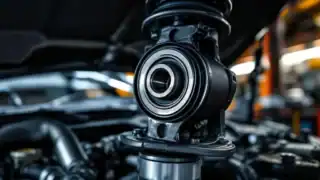
Our process starts with a visual and physical inspection – checking for leaks, measuring damper response, assessing strut mounts and top bearings, and looking at the condition of associated bushes and spring seats. On vehicles like the Nissan Navara D23 or the Toyota HiLux 79 series (both common in this part of the Lockyer Valley), we also check for any known model-specific suspension issues before recommending a course of action. For example, the D23 Navara has a documented tendency toward rear suspension stiffness and cracking, and the HiLux leaf spring setup differs significantly from the coil-over front suspension on the same vehicle – both require a different approach.

Parts are sourced to match OEM specifications. Depending on the vehicle’s age, use, and your budget, we can discuss genuine-equivalent quality components or quality aftermarket options – both of which we can arrange directly from here, without you needing to source parts separately.

What Affects the Cost and Time for This Job?

A few things influence how long a shock absorber replacement takes and what it’s likely to cost. Front strut assemblies generally take more labour than rear conventional shocks because of the spring compression work involved. On older Japanese vehicles with high kilometres, corroded fasteners and seized components can add time to the job. Whether we’re replacing one corner or all four also changes the equation.

Parts pricing varies depending on the brand, the part type, and whether OEM-specification or aftermarket components are chosen. We’ll talk you through the options honestly before anything is ordered. No work is carried out without your go-ahead.

Why Gatton Locals Bring Their Japanese Vehicles to Us

We handle everything from everyday passenger cars through to 4WDs, utes, trucks, and heavy equipment – all under one roof here in Gatton. For Japanese vehicle owners in the Lockyer Valley, that means no drive to Ipswich or Toowoomba for suspension work. We stock and fit tyres on-site, carry out wheel alignments after suspension repairs, and can issue roadworthy certificates if your vehicle needs one as part of the process.

With five-star reviews from local customers, we’ve built a straightforward reputation: honest advice, fair pricing, no unnecessary work. If your shocks are borderline but not critical, we’ll tell you that too. Our job is to keep your vehicle safe and reliable, not to manufacture repairs that don’t need doing.

If your Japanese vehicle is showing any of the symptoms above, Call Us Now or Book Your Free Inspection online. Gatton Automotive Solutions is here in Gatton and ready to take a look.

Other Services

Whatever your needs we have you covered, see some similar services below or click "See All Services" to explore our full service offering.

Your Local Workshop for Every Vehicle

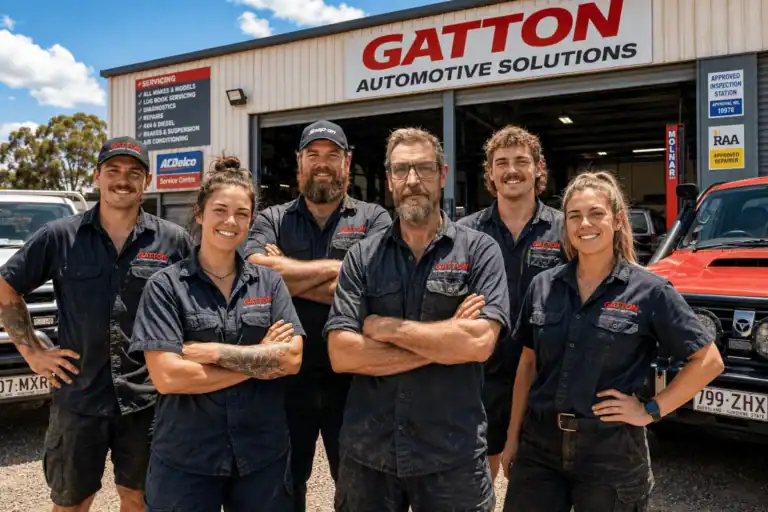
Gatton Automotive Solutions is the one-stop shop for cars, 4WDs, trucks, and heavy equipment. Honest advice and fair pricing, right here in Gatton.

Honest Pricing, No Surprises

We tell you what’s needed and what it costs before we start. No upselling, no pressure.

Everything Under One Roof

Bring your car in and we’ll inspect it, explain what we find, and quote you upfront.

Japanese Vehicle Shock Expertise

We source and fit OEM-spec shocks suited to your Japanese vehicle’s suspension.

How Japanese Shock Absorber Replacement Works

From booking to collection, we walk you through every step of replacing your shocks with precision and care.

Step 1

Book Your Free Inspection

Call Us Now or book your free inspection online to assess your shock absorbers and suspension needs.

Step 2

Japanese Suspension Inspection

We inspect bounce, handling, and leaks specific to your Japanese vehicle's suspension geometry and OEM specs.

Step 3

Precision Shock Replacement

We fit quality shocks matched to your vehicle's make and model for proper ride height and alignment.

Step 4

Test Drive and Handover

We test the suspension, confirm smooth handling and comfort, then hand back a vehicle that rides right.

Five-Star Rated

Verified 5★ Reviews

Quality Parts From Trusted Suppliers

We use genuine and quality aftermarket parts from reputable suppliers. You get reliable components backed by proper warranties.

Book Your Free Inspection

Tell us what you need and we'll get back to you with a clear quote.

Booking Form
  • Vehicle Details
  • Confirm Vehicle
  • Services
  • Contact Details
Honest Quotes
All Vehicle Types
Local & Reliable

Why Book With Us

Book Your Free Inspection
Drop Off Your Vehicle
We Get to Work
Collect Your Car

Frequently Asked Questions

Browse answers to common questions about our services. Can't find what you're after? Give us a call and we'll help.

The most common signs are a bouncy or floating ride, the car continuing to bob after going over a bump, nose-diving under braking, or uneven tyre wear. You might also notice the steering feels vague or the vehicle pulls to one side on rough roads. Japanese vehicles like Toyotas, Hondas, and Mazdas generally have well-engineered suspension, but worn shocks still affect handling and safety. If you’re noticing any of these symptoms, it’s worth having them inspected before the problem worsens.

Worn shock absorbers increase stopping distances, reduce tyre contact with the road, and make the vehicle harder to control in emergency situations. The longer you leave them, the more strain is placed on other suspension components like tyres, ball joints, and steering linkages. Driving on worn shocks isn’t an immediate breakdown risk, but it does compromise safety in a meaningful way. If you’re noticing handling issues or unusual tyre wear, we’d recommend getting them checked sooner rather than later.

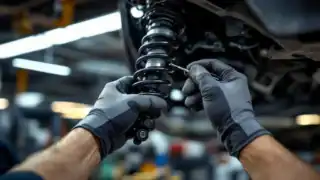
We start by lifting the vehicle and inspecting the existing shocks, struts, and surrounding suspension components. On Japanese vehicles, this often includes checking the strut mounts, bump stops, and dust boots, as these wear alongside the dampers themselves. We then remove the worn units, fit the replacement shocks, and torque everything to the manufacturer’s specifications. A basic wheel alignment check is also recommended after replacement since the suspension geometry can shift. The whole job typically takes a few hours depending on the vehicle.

Several popular Japanese models have specific suspension characteristics worth knowing about. Toyota HiLux and Prado wagons used in towing or off-road driving tend to wear rear shocks faster than city cars. Honda CR-Vs and HR-Vs can develop strut-related knocking noises as the upper mounts degrade alongside the shock itself. Mazda CX-5s are generally reliable, but rear dampers on higher-mileage examples are worth checking. For any Japanese vehicle, we source parts that match or exceed the original specification so the ride quality and handling characteristics are properly restored.

The main cost variables are the number of shocks being replaced (one, two, or all four), the specific make and model, and the grade of replacement part. Performance or heavy-duty units cost more than standard replacements. If the strut mounts, boot kits, or other components need replacing at the same time, that adds to the total. Labour time also varies, as some Japanese models have more accessible suspension layouts than others. We’ll give you a clear price before any work begins.

Under Australian consumer law, as a general matter, having your vehicle serviced or repaired by a qualified independent mechanic does not automatically void a manufacturer’s warranty. The ACCC has published guidance on this. What matters is that the work is carried out properly and that appropriate parts are used. That said, warranty conditions can vary, so it’s worth reviewing your specific warranty documents or checking with your manufacturer if you’re uncertain. We’re happy to discuss your situation when you come in.

There’s no fixed interval, but many mechanics suggest inspecting shocks every 80,000 kilometres as a starting point. Real-world wear depends heavily on driving conditions. A Japanese sedan used mainly on smooth suburban roads will last much longer than the same model doing regular gravel driving or towing. Vehicles in regional areas like Gatton that cover a mix of highway and rural roads tend to see moderate wear. Annual visual inspections and paying attention to how the car rides are the best ways to catch worn shocks before they cause secondary damage.

We source quality parts that match the original specification for the vehicle. For most Japanese makes, this means reputable aftermarket brands engineered to OEM standards, which deliver equivalent performance and longevity to genuine dealer parts. In cases where a customer specifically requests genuine manufacturer parts, we can discuss sourcing options. Either way, we won’t fit parts that compromise the ride or handling of your vehicle. If you have a preference, let us know when you Book Your Free Inspection.

Continue to site