Jeep suspension repair isn’t something to put off. Whether you’re driving a Wrangler on weekend tracks around the Lockyer Valley or a Grand Cherokee doing daily runs between Gatton and Ipswich, your suspension system takes a real beating. It’s what keeps your wheels in contact with the road, absorbs the impact of rough surfaces, and holds your vehicle stable through corners and braking. When something isn’t right, you feel it immediately, and ignoring it puts more than comfort at risk.
Warning Signs Your Jeep’s Suspension Needs Attention
Jeep owners tend to notice suspension problems in a few distinct ways. The first is usually a change in how the vehicle feels over bumps. Instead of absorbing the impact, the body bounces once, twice, or keeps moving. That’s often a shock absorber or strut starting to fail.
- Pulling to one side while driving on a straight road, which can point to a worn control arm bushing or ball joint issue
- Clunking or knocking sounds from the front or rear when going over bumps, speed humps, or rough gravel
- Excessive body roll when turning, particularly noticeable in Wranglers and Cherokees at highway speeds
- Uneven tyre wear across the contact patch, suggesting alignment or suspension geometry is out
- The nose dipping sharply under braking, which often indicates the front struts are worn beyond their effective range
- Vibration through the steering wheel or floor, especially at speed, which can involve the steering linkage, tie rods, or suspension mounts
Jeep models are also prone to a specific issue called death wobble, particularly on older Wrangler JK and TJ models. This is a violent shimmy through the front end that usually starts around 90 to 110 km/h and can feel alarming. It’s typically caused by worn track bars, ball joints, or steering dampers, and it’s not something to manage by slowing down. It needs a proper inspection and targeted repair.
How We Inspect and Repair Jeep Suspension in Gatton
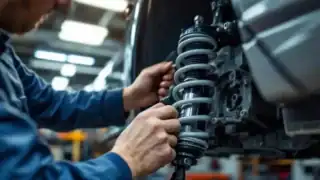
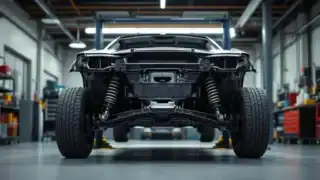
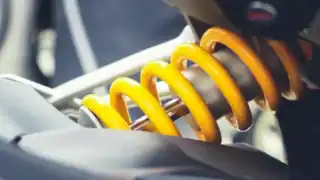
We start with a thorough visual and physical inspection before recommending any parts. That means getting the vehicle on the hoist, checking each component by hand, and identifying wear, play, or damage. For Jeeps, this includes the front and rear axle joints, control arm bushings, track bar and end links, sway bar links, shock absorbers, and coil or leaf springs depending on the model.
Jeep’s solid front axle design, used across Wrangler and older Cherokee models, behaves differently to the independent front suspension found in the Grand Cherokee and Compass. Diagnosing suspension wear correctly depends on knowing which platform you’re working with. We inspect the specific components relevant to your Jeep’s configuration rather than applying a one-size approach.
Where lift kits or aftermarket components are already fitted, we also check whether those parts are correctly matched to each other and to the vehicle’s original geometry. A poorly matched lift can actually accelerate component wear and affect steering response. If we find something like that, we’ll tell you plainly what’s going on and what your options are.
Once we’ve confirmed the fault, we’ll explain what needs to be replaced, why, and what parts we plan to use. We source OEM-equivalent or quality aftermarket parts suited to Jeep’s specifications, and we can discuss options with you if there are multiple grades available for your vehicle.
What Affects the Cost and Complexity of Jeep Suspension Work
Suspension repairs vary considerably in scope. Replacing a sway bar link on a Grand Cherokee is a straightforward job. Rebuilding the front end of a Wrangler that’s been heavily used off-road is a different matter. A few things affect how involved the work will be.
The age and model of the vehicle plays a part. Older Jeeps, particularly JK Wranglers and XJ Cherokees, can have fasteners that are corroded or seized after years of off-road exposure. That adds time. The extent of the wear also matters. If one ball joint has failed but surrounding components are close to the limit, addressing them at the same time often saves labour cost overall.
Parts selection is another factor. OEM-spec parts typically cost more upfront but tend to last longer, particularly on a vehicle that sees genuine off-road use. We’ll talk through the options honestly and let you decide what makes sense for how you use your Jeep.
Why Gatton Automotive Solutions Handles Jeep Suspension Well
We’re a full-service workshop in Gatton covering everything from everyday cars through to 4WDs, utes, trucks, and heavy equipment. Suspension upgrades and tyre fitting are part of what we do in-house, which means we’re not sending out components or relying on third parties for part of the job.
For Lockyer Valley and Darling Downs drivers, there’s no need to take a full day to travel to Ipswich or Toowoomba for suspension work on your Jeep. Gatton Automotive Solutions handles the diagnosis, the parts sourcing, and the repair locally. We also issue roadworthy certificates on-site, which matters if your Jeep needs a safety clearance after repairs.
We’ve built a reputation in Gatton for straight advice. Our five-star reviews back that up. We don’t recommend work that isn’t needed, and we don’t inflate jobs to cover margin. If your Jeep only needs one component, that’s what we’ll replace.
If your Jeep is showing any of the symptoms above, Call Us Now or Book Your Free Inspection online. We’ll get it checked properly and let you know exactly what’s going on right here in Gatton.