A worn or damaged CV axle is one of those problems that tends to get louder and harder to ignore the longer it’s left. American Vehicles CV axle replacement — whether you’re driving a Ford F-150, Dodge Ram, Jeep Wrangler, Chevrolet Silverado, or a Cadillac Escalade — follows similar principles to other makes, but there are a few quirks worth knowing about. At Gatton Automotive Solutions in Gatton, we see American vehicles come in regularly with CV axle and constant velocity joint issues, and we handle everything from boot replacement through to full CV shaft replacement in-house.
What Is a CV Axle and Why Does It Fail?
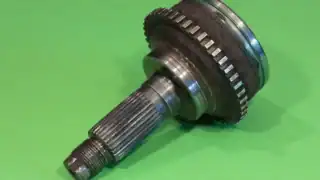
The CV axle (short for constant velocity axle) transfers power from your transmission to the wheels while allowing the suspension to move freely. Each end of the shaft connects via a constant velocity joint — essentially a ball-and-socket assembly packed with grease and sealed inside a rubber boot. When the boot splits or cracks, the grease escapes, contamination gets in, and the joint itself starts to wear. Left long enough, what started as a CV boot replacement job becomes a full CV shaft replacement.
American vehicles with independent front suspension — which covers most modern US-market trucks, SUVs, and full-size cars — rely heavily on CV axles for both driveability and safety. Four-wheel drive models like the Wrangler or F-150 4×4 add another set of front axle CVs to the mix, which means more potential failure points.
Signs Your American Vehicle CV Axle Needs Attention
The most recognisable symptom is a clicking or clunking noise when turning, especially in tight circles at low speed. This typically comes from a worn outer CV joint. A different kind of vibration through the floor or seat at highway speeds can indicate a failing inner joint or an imbalanced CV shaft.
- Clicking or popping sound during low-speed turns
- Vibration through the steering wheel or floor that changes with speed
- Grease splattered on the inside of the wheel or tyre sidewall (sign of a torn CV boot)
- Visible split or torn rubber boot on the axle shaft
- Clunking when accelerating from a stop
- Shuddering through the drivetrain under load
If you notice grease on the tyre, that’s often a sign the boot has been split for a while. Act early and you might salvage the joint with a CV boot replacement; wait too long and the joint itself needs replacing. On full-size American trucks and SUVs, those parts are not cheap, so catching it early pays off.
How We Handle CV Axle Repairs on American Vehicles in Gatton
We start with a proper inspection. The wheel comes off, the axle is checked along its full length, and both the inner and outer joints are assessed for play, wear, and grease contamination. If the boot is the only issue and the joint itself is still in good condition, a CV boot replacement may be all that’s needed. More often on American vehicles with age or high kilometres, the entire CV shaft is replaced as a unit rather than rebuilding individual joints — this is standard practice for most modern US-spec drivetrains.
For four-wheel drive American vehicles, we also inspect the front differential flanges and any intermediate shafts that connect to the front axle. Some older Dodge and Ford four-wheel drive systems have specific U-joint and CV hybrid setups that differ from Japanese or European platforms, and we’re familiar with those differences.
Parts for American vehicles can sometimes take a day or two longer to source than common Japanese makes, particularly for less common models. We manage parts sourcing directly, so you’re not chasing suppliers yourself. We’ll let you know upfront what’s available locally and what might need to be ordered, and we’ll give you a clear picture of the job before any work begins.
What Affects the Cost and Timeframe?
A few things influence the final scope of the job. First, whether you need a single boot replacement or a full axle shaft replacement. Second, whether it’s a front or rear axle, and whether the vehicle is two-wheel or four-wheel drive. Third, parts availability for your specific model.
American full-size trucks and large SUVs often have heavier-duty components than smaller vehicles, which can affect parts cost. OEM-equivalent parts are generally the right choice for American drivetrains in terms of fit and longevity — we’ll advise on what’s appropriate for your vehicle and usage. For working utes, tow vehicles, or anything used off-road, fitment quality matters more than saving a few dollars on a cheaper part.
Why Gatton Drivers Bring Their American Vehicles to Us
We’re a full-service workshop handling cars, 4WDs, trucks, and heavy equipment — all under one roof in Gatton. That means you don’t need to drive to Ipswich or Toowoomba to get your American vehicle properly seen to. We handle the diagnostic work, the parts sourcing, the mechanical repair, and if your vehicle needs a roadworthy certificate after significant driveline work, we can issue that on-site too.
Our approach is straightforward: we assess the problem, explain what we’ve found in plain terms, and quote you honestly before we start. No unnecessary work, no upselling. With five-star reviews, the feedback from drivers in Gatton and across the Lockyer Valley speaks for itself.
If you’ve noticed a clicking or clunking noise when turning, or you’ve spotted grease on the inside of a wheel, don’t put it off. Call Us Now to describe what you’re hearing, or Book Your Free Inspection online and let us take a proper look.