American vehicles brake repair covers a range of jobs that go well beyond a basic pad swap. Whether you’re driving a Ford F-150, a Chevrolet Silverado, a Dodge RAM, or a Jeep Wrangler, the braking systems on these vehicles are built to different specifications than most Australian-market cars. Here in Gatton, we work on all of them. From rotor resurfacing and caliper rebuilds through to ABS diagnostics and brake fluid flushes, our team handles the full scope of brake work these vehicles need.
Why American Vehicle Brakes Need Specific Attention
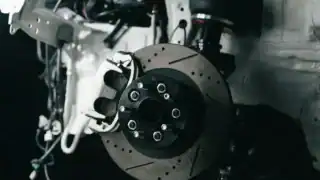
American-market vehicles tend to run larger brake hardware than comparable Australian or Japanese-market alternatives. That means bigger rotors, heftier calipers, and in many cases, dual-piston or four-piston front caliper setups that generate more stopping force for heavier kerb weights. It also means parts that aren’t always sitting on the shelf at the nearest generic auto shop. Sourcing brake pads and rotors to the correct OEM spec for a RAM 1500 is a different process than ordering parts for a locally sold Hilux. We handle the parts sourcing directly, so you don’t have to chase down suppliers yourself.
American trucks and SUVs also commonly feature rear drum-and-disc combinations, electronic parking brake actuators, and in newer models, integrated brake controllers for towing. If a brake component is replaced without accounting for these systems, the result can be uneven braking, warning lights, or a parking brake that won’t calibrate correctly. That’s why make-aware diagnostics matter before any parts are ordered.
Warning Signs You Shouldn’t Ignore
Brake problems rarely disappear on their own. The signs below are worth taking seriously, especially if your vehicle is regularly used for towing or loaded up with gear on Queensland roads.
- Squealing or grinding when braking — worn brake pads contacting the rotor surface directly
- Pulling to one side under braking — often a seized caliper or uneven pad wear, common on trucks with high towing use
- A pulsing or vibrating brake pedal — typically indicates warped or unevenly worn rotors
- A soft or spongy pedal feel — air in the brake lines or a failing master cylinder
- Longer stopping distances than usual — degraded pad material, contaminated fluid, or brake fade from overheating
- The brake warning light staying on — could indicate low fluid, a sensor fault, or a hydraulic system issue that needs proper diagnosis
Any of these symptoms on a vehicle this size is a reason to get it looked at promptly. The heavier the vehicle, the longer the stopping distance, and the more margin you want in your braking system.
What Our Brake Inspection and Repair Process Looks Like
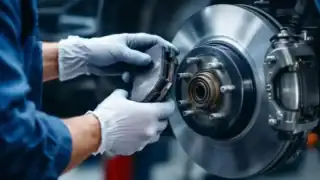
We start with a full visual inspection of the brake system before we recommend anything. That includes measuring pad thickness on all four corners, checking rotor thickness and surface condition against manufacturer minimum specifications, inspecting calipers for leaks or seized slide pins, and assessing brake lines and hoses for wear or deterioration. On American vehicles with electronic parking brake actuators, we also check that the actuator is operating correctly and that it’s within calibration range.
If the vehicle has an ABS or stability control fault code, we read the fault codes directly with workshop diagnostics rather than guessing at the cause. A lot of brake-related warning lights on American trucks and SUVs trace back to wheel speed sensor issues rather than the brakes themselves. Getting the diagnosis right the first time saves you money and avoids replacing parts that don’t need replacing.
Where rotors are within serviceable limits, we resurface rather than replace automatically. Where pads and rotors are replaced, we fit parts to OEM or equivalent specification for your vehicle’s model and year. We’ll always talk you through what we’ve found and what actually needs doing before any work begins.
What Affects the Cost and Time Involved?
A straightforward front pad and rotor replacement on a Ford Ranger or Jeep Grand Cherokee will take considerably less time than a full four-wheel brake overhaul on a heavy-duty RAM 2500 with rear drum brakes and an integrated trailer brake controller. Parts availability is a real factor with American-market vehicles. Some components need to be ordered in, particularly for less common models or older build years. We’ll give you a clear picture of lead times before any work is confirmed.
The use of OEM-spec or quality aftermarket parts also affects pricing. We’ll give you honest options and explain the differences so you can decide what suits your situation and budget. We don’t push unnecessary work, and if something can wait, we’ll tell you that too.
Brake Repair for American Vehicles in Gatton
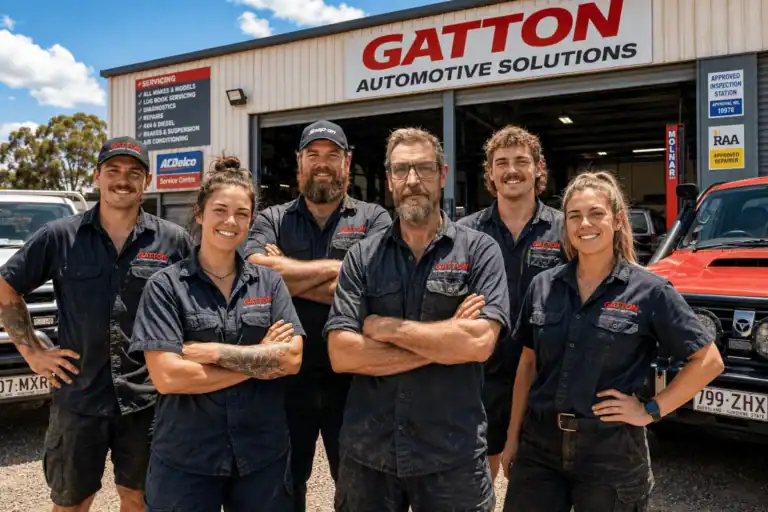
One of the genuine advantages of bringing your American-spec vehicle to Gatton Automotive Solutions is that we’re a full-service workshop covering cars, 4WDs, trucks, and heavy equipment all under one roof. If your Silverado needs new brake pads and a wheel alignment at the same time, we can handle both without you booking two separate appointments at two different places. Suspension work, tyre fitting, roadworthy certificates, and parts sourcing are all done in-house. There’s no need to drive to Ipswich or Toowoomba for a brake job we can do right here in Gatton.
We’ve built a strong local reputation in the Lockyer Valley for straight advice and fair pricing. No upselling, no unnecessary work, no runaround. Our five-star reviews reflect the way we work, not a marketing campaign.
If your American vehicle is due for a brake inspection or you’ve noticed any of the warning signs above, Call Us Now or Book Your Free Inspection online. Our team is ready to help drivers across Gatton and the Lockyer Valley get their vehicles back to safe, reliable condition.