The timing chain is one of the most critical components inside an Audi engine. Unlike a rubber timing belt, which is a wear item designed to be replaced at set intervals, a timing chain is built from hardened steel and is intended to last the life of the engine — provided it receives the right care. When it doesn’t, the consequences can be severe. Audi timing chain replacement is a job our team at Gatton Automotive Solutions takes seriously, because the cost of ignoring a failing chain is almost always greater than the cost of fixing it early.
Why Audi Timing Chains Fail Earlier Than Expected
Audi’s reputation for engineering precision is well-earned, but a number of their four-cylinder and V6 petrol engines produced through the 2000s and into the 2010s developed a known weakness: the timing chain tensioner and guide rails would wear prematurely, allowing the chain to stretch or rattle under load. The 2.0 TFSI engine, found in a wide range of Audi A4, A5, and Q5 models, is particularly well-documented for this issue. The root cause is often a combination of chain stretch, worn tensioner pistons, and low oil pressure reaching the tensioner, which is why oil service intervals matter more on these engines than most people realise.
A stretched or slack cam chain does not just make noise. It affects camshaft and crankshaft timing, which controls when valves open and close relative to piston movement. When that timing drifts, the engine runs rough, efficiency drops, and in serious cases, the valves can contact the pistons, causing internal engine damage that goes well beyond the chain itself.
Signs Your Audi’s Timing Chain Needs Attention
The symptoms of a failing timing chain are worth knowing. Catching them early is the difference between a planned repair and an emergency.
- Rattling on cold start: A metallic rattling noise from the front of the engine in the first few seconds after starting, which settles once oil pressure builds, is one of the most common early signs of chain or tensioner wear.
- Check engine light with camshaft position codes: Fault codes relating to camshaft timing correlation, such as P0016 or P0017, often point directly to chain stretch affecting cam-to-crank synchronisation.
- Rough idle or misfires: When chain wear causes valve timing to shift outside tolerance, you may notice an uneven idle, hesitation under acceleration, or misfires at low engine speeds.
- Increased oil consumption: Not a direct symptom, but worth noting as the 2.0 TFSI engines prone to chain wear also commonly consume oil, and low oil levels accelerate chain wear further.
- Engine feels sluggish: Loss of power or a general lack of responsiveness, particularly at highway speeds, can be linked to timing that is no longer accurate.
What Audi Timing Chain Replacement Involves at Our Workshop
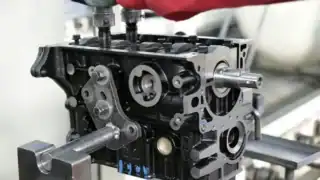
This is not a simple job, and we will not pretend otherwise. Accessing the timing chain on most Audi longitudinal and transverse engine layouts requires removing a significant amount of ancillary equipment from the front of the engine. Our technicians are familiar with the process specific to the TFSI and FSI engine families.
We start with a diagnostic scan to confirm the fault codes and rule out other causes of the symptoms. Once the timing chain is confirmed as the culprit, the work typically includes removing the front timing cover, inspecting the chain itself, replacing the tensioner (which is almost always done as part of this job), and replacing the guide rails if they show wear. We also inspect the oil control valve and sump pickup for blockage, because restricted oil flow to the tensioner is frequently what started the problem in the first place.
Parts used are sourced to OEM-equivalent or OEM specification. The Audi cam chain replacement kits we use include the chain, tensioner, and associated hardware. We do not cut corners on a job this involved. After assembly, the engine timing is verified before the vehicle is cleared for road test.
What Affects the Cost and Time for This Job in Gatton?
A few variables influence what you will pay and how long the job takes. The engine variant in your Audi matters. A 2.0 TFSI is a different job from a 3.0 V6, and some models require more dismantling to access the front of the engine than others. Whether the tensioner has already allowed the chain to jump a tooth changes the scope of work; in that situation, we check valve-to-piston clearance carefully before proceeding.
Parts availability for Audi components in regional Queensland can vary. We handle parts sourcing directly, so you do not need to track anything down yourself. We will give you a clear picture of what is needed and what it will cost before any work begins, with no surprises when the invoice arrives.
Keeping Your Audi in the Lockyer Valley Without Travelling to the City
Drivers in Gatton and across the Lockyer Valley should not have to travel to Ipswich or Toowoomba for complex Audi mechanical work. Gatton Automotive Solutions is a full-service workshop covering everything from everyday servicing and diagnostics through to major engine repairs. Our five-star reviews reflect the way we work: honest advice, straight pricing, and no unnecessary work recommended. We see all vehicle types here, from daily drivers and farm utes to commercial vehicles and heavy equipment, so whatever you are driving, we are equipped to help.
If your Audi is rattling on start-up, throwing timing-related fault codes, or you just want it inspected before a problem develops, Book Your Free Inspection online or Call Us Now. We are right here in Gatton and ready to help.