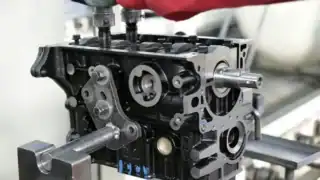
A Hyundai timing chain replacement is one of the more involved engine jobs we carry out here in Gatton, and it’s one worth understanding before you find yourself stranded on the side of the road. The timing chain is a critical internal engine component that keeps the crankshaft and camshaft rotating in precise sync. When it stretches, wears, or fails, the engine can skip a beat, literally, and in serious cases that mistiming can cause significant internal damage. Unlike a timing belt, which has a fixed replacement interval, a chain is designed to last the life of the engine, but on a number of Hyundai models it doesn’t always manage that.
Why Hyundai Timing Chains Are Worth Paying Attention To
Hyundai has produced some excellent, long-lived engines over the years, but certain models have a well-documented history of timing chain issues. The 1.6-litre and 2.0-litre GDI engines found in vehicles like the i30, Elantra, Tucson, and ix35 have been flagged for premature timing chain wear, particularly when servicing intervals were stretched or oil quality was inconsistent. The Lambda V6 engines used in the Santa Fe and Sonata have also shown chain-related symptoms on higher-kilometre examples.
If you drive one of these models, it’s not a reason for alarm, but it is a reason to pay attention to what your engine is telling you. Chain wear tends to be gradual, and catching it early makes a real difference to the cost and complexity of the repair.
Signs Your Hyundai’s Timing Chain Needs Attention
The symptoms of a worn or stretched timing chain can come on gradually or appear suddenly, depending on the severity. Here’s what to watch for:
- Rattling noise on cold start — a metallic rattling from the front of the engine during the first few seconds after starting, which may settle or disappear once oil pressure builds. This is one of the most common early signs of chain or tensioner wear.
- Check Engine light with timing-related codes — particularly P0016, P0017, P0018, or P0019 codes, which indicate a camshaft-to-crankshaft correlation fault. These codes are a direct signal that the chain timing is off.
- Rough idle or engine hesitation — if the chain has stretched enough to alter valve timing, the engine may idle unevenly or feel sluggish under acceleration.
- Poor fuel economy or reduced performance — late or early valve timing disrupts the combustion cycle, which shows up as a drop in efficiency before other symptoms become obvious.
- Engine won’t start or stalls unexpectedly — in advanced cases, a failed chain or jumped sprocket can prevent the engine from running at all.
If you’re hearing that cold-start rattle, don’t wait. A worn tensioner or stretched chain that’s left too long can allow the chain to jump a tooth on the sprocket, and that changes the repair from a straightforward replacement to something much more involved.
What Happens During a Hyundai Timing Chain Replacement in Gatton
We start with a proper diagnostic before anything comes apart. Using our scan tools, we check for stored and pending fault codes, look at live camshaft and crankshaft position data, and listen to where the noise is coming from. On Hyundai’s GDI engines, we pay close attention to the variable valve timing (VVT) actuators, which work directly with the chain and are a common source of related fault codes.
Once we confirm a chain replacement is the right call, we disassemble the front of the engine to access the timing components. A complete Hyundai cam chain replacement job typically involves the chain itself, tensioners, guides, and the chain sprockets. We source parts to OEM specification, which matters on these engines because aftermarket tensioners of variable quality are part of why some Hyundais develop repeat issues after a first repair elsewhere.
After installation, we reset the valve timing to factory specification, verify timing marks are correctly aligned, and run the engine through a warm-up cycle to confirm the rattle is gone and no fault codes return. On GDI engines we also check oil control valve function, since these feed the VVT system and can accelerate chain wear if they’re restricted.
What Affects the Cost and Time Involved
Timing chain work on Hyundai engines varies depending on the model and engine variant. A four-cylinder i30 or Elantra is a more straightforward job than a V6 Santa Fe, which has chains on both banks. The condition of the surrounding components also matters: if the oil control valves, VVT actuators, or front seals are worn, it’s sensible to address them while everything is already apart rather than revisit the job later.
Parts choice plays a role too. We’ll walk you through OEM-spec versus quality-equivalent aftermarket options so you can make an informed decision. We don’t push unnecessary work, but we will flag anything that would be much more expensive to fix once the engine is reassembled.
Servicing Hyundai Vehicles in the Lockyer Valley
Gatton Automotive Solutions handles everything from everyday Hyundai passenger cars to Hyundai SUVs and commercial vehicles, all from our fully equipped workshop in Gatton. There’s no need to drive to Ipswich or Toowoomba for engine work like this. We’re a full-service workshop with the tools, parts sourcing, and diagnostic capability to carry out Hyundai timing chain replacement properly, alongside everything else your vehicle might need, from logbook servicing and roadworthy certificates to suspension, tyres, and smash repairs.
Our five-star reviews reflect the kind of work we aim to deliver every time: straight answers, fair pricing, and no unnecessary extras. If you’re hearing a rattle on start-up or your check engine light has come on, Call Us Now or Book Your Free Inspection online and we’ll take a look at what’s going on with your Hyundai right here in Gatton.