Limited Time: Free Windscreen Wipers With Any Service. Subject To Availability.

Locally Owned & Operated
Honest Upfront Pricing
5★ Reviews
All Makes & Models

Verified 5★ Reviews

Tried & Trusted Audi Brake Specialist In Gatton

We inspect, diagnose, and repair Audi braking systems in Gatton with expert care and transparent pricing. Book your free inspection today.

One-Stop Workshop

Honest Advice

5★ Reviews

Audi Brake Diagnostics

Book Your Free Inspection

Tell us what you need and we'll get back to you with a clear quote.

Booking Form
  • Vehicle Details
  • Confirm Vehicle
  • Services
  • Contact Details
Honest Quotes
All Vehicle Types
Local & Reliable

Why Book With Us

Book Your Free Inspection
Drop Off Your Vehicle
We Get to Work
Collect Your Car

Audi brake repair is not a job to defer. Your brakes are the single most important safety system on your vehicle, and Audi models demand precise diagnostic work and parts that match factory specification. If you’ve noticed a soft pedal, warning lights on the dashboard, grinding sounds, or longer stopping distances in your Audi, you need a thorough inspection straight away. We service Audi vehicles regularly here in Gatton, and we understand the specific requirements of their brake systems, from the early A4 and A6 models through to current generation vehicles.

What causes Audi brake problems?

Audi brake systems are well engineered, but like any braking system, they wear and can develop faults. Common warning signs include:

  • Soft or spongy brake pedal that sinks lower than usual
  • Brake warning light showing on the dashboard or instrument cluster
  • Grinding, squealing, or metallic noise when braking
  • Vibration or pulsing through the pedal under hard braking
  • Vehicle pulling to one side when you brake
  • Longer stopping distance than normal, even with firm pedal pressure
  • Brake fluid leaks visible under the vehicle or around wheel areas

These symptoms can point to worn brake pads, damaged rotors, brake fluid contamination, caliper problems, or issues with the electronic braking assist systems that Audi models use. Ignoring any of these warning signs puts you and your passengers at real risk. Brake failure can happen quickly, and a vehicle that doesn’t stop reliably is unsafe on the road.

How we diagnose your Audi’s brakes

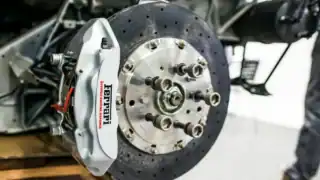
We start every Audi brake repair with a full diagnostic inspection. This isn’t a quick visual glance — we put the vehicle on the hoist and examine the complete brake system from the master cylinder through to each wheel.

Our process includes measuring brake pad thickness to see how much material remains, inspecting rotors for scoring, warping, or uneven wear, checking brake fluid condition and looking for leaks in hoses and cylinders, testing the braking feel and response, and running a full scan of the electronic brake control systems using Audi-compatible diagnostic equipment. Audi models, particularly from the 2010s onwards, rely heavily on electronic stability control, ABS, and brake assist functions. If the warning light is on, the fault code needs to be read accurately to identify whether the problem is mechanical (pads, rotors) or electronic (sensors, module failure).

Once we’ve completed the inspection, we’ll explain exactly what we’ve found and what needs to be done. We won’t recommend parts or work you don’t actually need. If your pads still have life left, we’ll tell you. If only one component is failing, we’ll fix that, not replace the whole system.

Audi brake repair — parts and specifications

Audi brake components are precision manufactured and vary by model year and engine specification. We source the right parts for your exact vehicle, whether that’s OEM-equivalent pads and rotors that match Audi’s original engineering, or quality aftermarket parts that meet or exceed factory standards. We’re familiar with the brake specifications across common Audi models in the Lockyer Valley, and we handle the sourcing directly rather than having you chase suppliers or dealerships in Ipswich or Toowoomba.

Your brake fluid also matters. Audi systems use DOT 4 or higher specification fluid, and we use the correct grade to maintain the system’s performance and prevent fluid degradation, which can lead to soft pedal feel and reduced braking efficiency over time.

What affects the cost and time for your repair

The scope of your brake repair depends on what the inspection reveals. If you need new brake pads and the rotors are still within specification, the cost and time are straightforward. If rotors are scored or warped and need resurfacing or replacement, or if you have caliper issues or brake line damage, the work becomes more involved and the cost increases accordingly.

We’ll give you a clear breakdown of what’s needed and what it costs before we start work. We don’t upsell. If your vehicle needs extensive work, we’ll explain why each component is necessary. Parts availability can affect timing — genuine Audi components sometimes take longer to source than aftermarket equivalents, but the quality and fit are worth the wait for a safety-critical system like brakes.

Why choose us for Audi brake repair in Gatton

We’re a full-service workshop that handles everything from general mechanical work through to heavy vehicle and equipment servicing. That breadth means we’ve built genuine expertise across vehicle types and systems, not just brakes. We’re locally owned and operate right here in Gatton — no need to travel to Ipswich or Toowoomba for a brake specialist.

We approach every brake repair with the seriousness it deserves. Your safety and the safety of everyone sharing the road depends on honest, accurate diagnosis and quality workmanship. We use diagnostic equipment that reads Audi fault codes correctly, we source parts that meet specification, and we test the system thoroughly before we hand your vehicle back to you. You’ll get straight pricing with no hidden charges or unnecessary work suggested.

If you’ve noticed any brake warning signs or your brakes aren’t feeling right, don’t wait. Call us now to discuss what you’ve experienced, or book your free inspection online so we can give your Audi a proper diagnostic check.

Other Services

Whatever your needs we have you covered, see some similar services below or click "See All Services" to explore our full service offering.

Your Local Workshop for Every Vehicle

Gatton Automotive Solutions is the one-stop shop for cars, 4WDs, trucks, and heavy equipment. Honest advice and fair pricing, right here in Gatton.

Honest Pricing, No Surprises

We tell you what’s needed and what it costs before we start. No upselling, no pressure.

Everything Under One Roof

Bring your car in and we’ll inspect it, explain what we find, and quote you upfront.

Audi-Trained Brake Specialists

We know Audi brake systems inside out, from standard to sport setups.

How Audi Brake Repair Works

From your first call to driving away with safe, reliable brakes, here's what to expect at Gatton Automotive Solutions.

Step 1

Book Your Free Inspection

Call us or book your free inspection online to get your Audi's brakes assessed by our technicians.

Step 2

Audi Brake System Inspection

We measure pad thickness, rotor condition, and brake fluid health using Audi-specific diagnostics and precision tools.

Step 3

Precision Brake Repair

We replace pads, resurface or swap rotors, and service all components to Audi specifications for safe braking.

Step 4

Test Drive & Handover

We test your brakes on the road, walk you through the work done, and confirm everything's smooth and safe.

Five-Star Rated

Verified 5★ Reviews

Quality Parts From Trusted Suppliers

We use genuine and quality aftermarket parts from reputable suppliers. You get reliable components backed by proper warranties.

Book Your Free Inspection

Tell us what you need and we'll get back to you with a clear quote.

Booking Form
  • Vehicle Details
  • Confirm Vehicle
  • Services
  • Contact Details
Honest Quotes
All Vehicle Types
Local & Reliable

Why Book With Us

Book Your Free Inspection
Drop Off Your Vehicle
We Get to Work
Collect Your Car

Frequently Asked Questions

Browse answers to common questions about our services. Can't find what you're after? Give us a call and we'll help.

Yes, we work on the full Audi range, from older A-series models through to current Q-series SUVs and everything in between. Audi braking systems vary across generations, with some models using more complex multi-piston callipers, electronic parking brake actuators, or integrated brake-by-wire setups. Our technicians are familiar with these differences and source parts suited to each model’s specifications, so you’re not getting a one-size-fits-all approach.

The most common signs are squealing or grinding when you apply the brakes, a pulsing feeling through the brake pedal, the car pulling to one side under braking, or a longer stopping distance than usual. Some Audi models also have a brake wear indicator light that will appear on the dashboard. Any of these signs mean the brakes should be inspected promptly. Ignoring them can lead to rotor damage or, more seriously, reduced stopping ability in an emergency.

It depends on which light is showing. A brake pad wear indicator light usually means you have a short window before metal-on-metal contact starts. A red brake system warning light is more serious and can signal low brake fluid, a hydraulic fault, or an ABS issue. In either case, we’d recommend getting the car inspected as soon as possible rather than waiting. Driving on compromised brakes is a genuine safety risk, not just a maintenance concern.

We start by removing each wheel to inspect the brake pads, rotors (also called discs), callipers, brake lines, and fluid condition. On Audi models with electronic parking brakes, we use a compatible scan tool to retract the calliper motor before replacing rear pads. Once the inspection is done, we talk you through what we found and what genuinely needs replacing versus what can wait. No work gets started without your go-ahead.

Under ACCC guidance, Australian consumer law generally allows you to have your vehicle serviced by a qualified independent workshop without voiding the manufacturer warranty, provided the work is carried out to the required standard and documented correctly. This is general information only, so we’d suggest checking your specific warranty terms if you’re unsure. We keep clear records of all brake work carried out, which supports your service history regardless of where future servicing happens.

A few patterns come up regularly across the Audi range. Front brake pads tend to wear faster than rear pads on many models due to brake bias. Audi Q7 and Q5 variants can develop calliper slide pin corrosion, which causes uneven pad wear and a dragging sensation. On models with electronic parking brakes, the rear pad replacement process requires a scan tool to retract the motor, which a general workshop without the right equipment may struggle with. We see these issues often enough to know what to look for.

A straightforward pad and rotor replacement on an Audi typically takes one to two hours once the vehicle is on the hoist. More involved work, such as calliper replacement or brake line repairs, can take longer depending on what’s needed. If you’re coming in from Gatton or the surrounding Lockyer Valley area, we can give you a realistic time estimate when you book so you’re not left guessing. We offer while-you-wait servicing for jobs that suit it.

Several factors come into play: which axle needs attention, whether the rotors need replacing alongside the pads, the specific Audi model and its parts availability, and whether any calliper or brake fluid work is required. Performance-oriented Audi models like the S and RS lines use larger, more expensive brake components than standard variants. We don’t quote until we’ve had a proper look, and we’ll always explain what’s needed and why before any work begins. No surprises on the invoice.

As a general guide, having your brakes inspected at least once a year or every 15,000 kilometres is a reasonable habit, though driving style and conditions play a big role. Stop-start city driving wears pads faster than highway driving. Audi’s own service intervals include brake checks, but if you notice any changes in braking feel or hear unusual noises between services, it’s worth getting them looked at sooner rather than waiting for the next scheduled visit.

We use quality OEM-equivalent parts that meet Audi’s specifications, which are suitable for the vast majority of repairs and offer reliable performance at a more accessible price point than dealer-supplied genuine parts. If you have a preference for genuine Audi components, we can discuss that option when you book. Either way, we’ll be upfront about what we’re fitting and why, so you can make an informed decision before any work begins.

Continue to site