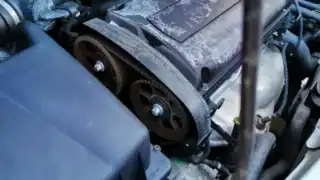
A timing chain is one of those components most drivers never think about until something goes wrong. Unlike a timing belt, which is a rubber-and-fibre part designed to be replaced at set intervals, a timing chain is a metal link chain built to last the life of the engine, provided the vehicle is properly maintained. Japanese Vehicles Timing Chain Replacement becomes necessary when that chain stretches, wears, or the tensioners and guides that support it begin to fail. At Gatton Automotive Solutions, we see this service across a wide range of Japanese makes, and catching the problem early is what separates a straightforward repair from a very costly one.
Why Japanese Vehicles Are Particularly Worth Watching
Japanese manufacturers like Toyota, Honda, Nissan, Mitsubishi, and Mazda have built some of the most reliable engines in the world, and many of their designs rely on timing chains rather than belts. That is generally good news. But reliable does not mean maintenance-free. Engines in this group that see inconsistent oil changes, extended drain intervals, or poor-quality oil are significantly more prone to chain wear. Oil is what lubricates and cleans the chain, guides, and tensioners. When it breaks down or drops low, those components start wearing faster than they should.
Certain models have well-known vulnerabilities. The Nissan Navara D40 and Pathfinder R51 with the VQ40 engine have a documented history of timing chain and guide wear, often presenting relatively early in the vehicle’s life. Several Toyota engines in the 1KD and 2KD diesel range used in Hilux and HiAce applications have also shown premature chain tensioner wear when service intervals are stretched. If you own one of these vehicles and have not had the chain system inspected, it is worth knowing the signs.
Warning Signs the Timing Chain Needs Attention
The symptoms of a worn or stretched timing chain are specific enough that they should not be dismissed as general engine noise or a tune-up issue. Here is what to watch for:
- Rattling on cold start that fades once the engine warms up, then begins staying longer as wear progresses
- Rough idle or misfires caused by the chain stretching enough to throw off camshaft timing
- Check Engine light with cam or crank position error codes stored in the ECU
- Loss of power or poor fuel economy when timing is no longer accurate
- Metallic debris in the oil, sometimes visible during an oil change or reported by a mechanic
- Oil warning light coming on if the chain tensioner relies on oil pressure and pressure has dropped
Any one of these on its own warrants investigation. A rattle on cold start in particular should never be left to sort itself out. The longer a worn chain is run, the more likely it is that the guides, tensioners, or even the upper engine will also need attention.
What Happens During a Timing Chain Service
We start by reading any stored fault codes from the vehicle’s ECU, then run a physical inspection of the accessible parts of the timing system. Depending on the engine design, we will check tensioner pressure and operation, inspect for guide wear, and assess chain stretch against manufacturer tolerances. On Japanese engines, this often involves specific procedures tied to the firing order and cam positioning for that particular engine family.
Where replacement is confirmed, we replace the full timing chain kit rather than individual components. This typically includes the chain itself, tensioner, guides, and sprockets if they show wear. We use OEM-specification or OEM-equivalent parts suited to the engine in question. Fitting aftermarket parts that do not meet the original specification is a false economy on a job like this. We also carry out an oil change as part of the service, since fresh oil is critical to the new chain system bedding in correctly.
How Long and How Much Does a Timing Chain Replacement Take?
Timing chain replacement on Japanese engines varies in complexity. A straightforward chain replacement on a four-cylinder petrol engine is a different scope to the same job on a twin-cam V6 or a transverse-mounted diesel. Parts availability for popular Japanese models in and around the Lockyer Valley is generally good, but for less common variants or performance derivatives, sourcing genuine-spec parts may add some lead time. We will be upfront about what is involved and what the job is likely to cost before any work begins. No surprises.
Keeping Your Japanese Vehicle Serviced Locally in Gatton
Gatton Automotive Solutions is a full-service workshop handling everything from everyday Japanese hatchbacks and SUVs through to utes, vans, and light commercial vehicles. There is no need to drive to Toowoomba or Ipswich for mechanical work on your Toyota, Nissan, Mazda, Honda, or Mitsubishi. Parts sourcing, diagnostic work, and the full repair are all handled in-house. Our five-star reviews reflect what local drivers and fleet operators in the Lockyer Valley have experienced, and we back that up with honest advice and straight pricing. If a chain only needs tension adjustment and not full replacement, we will tell you that.
If you have noticed a rattle on start-up or your check engine light has come on, do not put it off. Call Us Now or Book Your Free Inspection online, and we will get your Japanese vehicle looked at here in Gatton.