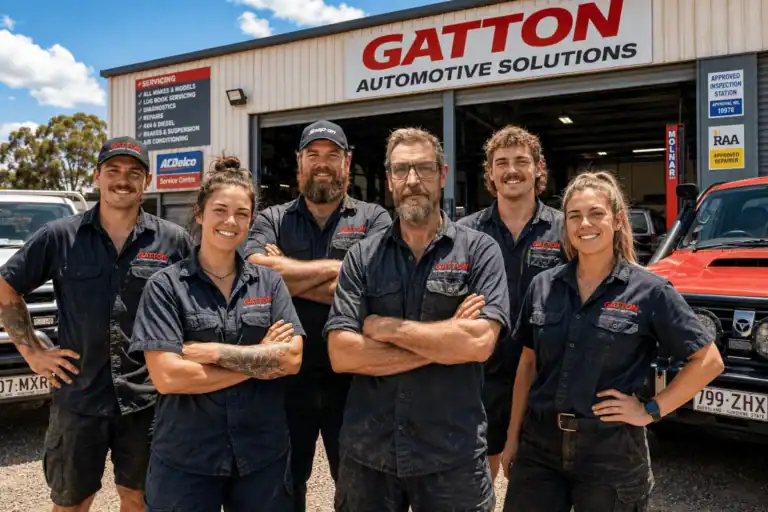
A worn or failing clutch is one of those problems that rarely fixes itself. For Audi owners in Gatton, getting Audi clutch repair done properly means working with mechanics who understand how these vehicles are built and what they expect from their drivetrain components. Audi’s manual and dual-clutch transmissions are engineered to tighter tolerances than many other brands, and that has real implications for how clutch work is diagnosed, what parts are used, and how the system is reassembled. Getting it right the first time saves significant time and money down the road.
What Are the Warning Signs That Your Audi Clutch Needs Attention?
Clutch wear tends to announce itself gradually, which means many drivers live with early symptoms longer than they should. The most common sign is clutch slip, where the engine revs rise but the car doesn’t accelerate in proportion. You might notice this most when pulling onto a highway or when carrying a load. It can feel like the vehicle is hesitating or losing power for no obvious reason.
Other signs worth paying attention to include:
- A spongy, soft, or high-riding clutch pedal that doesn’t feel like it used to
- Difficulty selecting gears, or a grinding sensation when you change gears
- Shuddering or juddering through the pedal when moving off from a standstill
- A burning smell after driving in heavy traffic or on hilly roads
- The clutch pedal sticking to the floor or returning more slowly than normal
On Audi models fitted with a Direct Shift Gearbox (DSG) or S tronic dual-clutch transmission, symptoms can look slightly different. Hesitation or a rough kick when pulling away from rest, unexpected gear hunting at low speeds, or a shudder during slow-speed manoeuvring can all point to clutch pack wear or mechatronic issues within the transmission unit. These systems require specific diagnostic steps that differ from a conventional manual clutch inspection.
How We Approach Audi Clutch Diagnostics and Repair
We start with a proper road test and visual inspection before any parts are recommended. For manual clutch systems, we check the hydraulic circuit, including the master and slave cylinders, for fluid condition and operation. A clutch that slips may have a faulty cylinder rather than a worn friction disc, and recommending a full clutch kit without checking the hydraulics first is a quick way to miss the actual problem.
For Audi vehicles with a DSG or S tronic unit, we connect to the vehicle’s diagnostic system to read fault codes and monitor live transmission data. These gearboxes have specific adaptation procedures, and any clutch-related repair on a DSG unit typically involves resetting the clutch kiss-point values so the transmission relearns engagement behaviour after new components are fitted. Skipping this step often leaves the driver with a gearbox that still feels wrong, even after a full repair.
On manual-transmission Audis, a full clutch replacement typically involves the friction disc, pressure plate, and release bearing as a matched set, along with a flywheel inspection. Audi flywheels, particularly the dual-mass flywheel (DMF) found across many petrol and diesel models, wear alongside the clutch. If the DMF shows signs of excessive movement or rattling, replacing it at the same time as the clutch avoids having to pull the gearbox again in the short term.
We source parts to OEM-equivalent or genuine specification for Audi vehicles. Audi drivetrains are sensitive to component quality, and a budget friction disc that doesn’t meet the correct clamping force or torque rating can shorten the lifespan of a new clutch significantly.
What Affects the Cost and Time Involved in Clutch Repair?
Several factors determine how involved a clutch repair becomes. The main variables are the type of transmission fitted (manual, DSG, or S tronic), the model and year of the vehicle, and whether additional components such as the flywheel or hydraulic cylinders also need replacing. Labour time increases substantially on all-wheel-drive Audi models like the A4 Quattro or Q5, where the drivetrain layout requires more disassembly to access the transmission.
Parts costs vary depending on whether you’re fitting genuine Audi components, OEM-equivalent parts from Audi’s supply chain, or quality aftermarket alternatives. We’ll talk you through the options honestly and let you decide what suits your situation and budget. There’s no pressure and no unnecessary add-ons.
Does Location Matter for Audi Clutch Work in Gatton?
For Lockyer Valley drivers, the alternative to having clutch work done locally is a 45 to 80 kilometre trip to Ipswich or Toowoomba, often without knowing in advance how long the vehicle will be off the road. We handle all of this in-house at Gatton Automotive Solutions. Parts sourcing is managed by the workshop, and we’ll give you a clear picture of what’s needed before any work begins.
Gatton Automotive Solutions is a full-service workshop covering everything from everyday passenger vehicles and 4WDs through to trucks and heavy equipment, with smash repairs, custom paintwork, suspension work, and tyre fitting all handled under one roof. Whether you drive an older Audi A3 or a newer S-line model, we’re set up to look after it properly. With five-star reviews, our local reputation is built on honest advice and straight pricing.
If your Audi’s clutch is showing any of the signs described above, Call Us Now or Book Your Free Inspection online. We’re here to give you straight answers and get your vehicle back to driving the way it should, right here in Gatton.