A starter motor is the electric motor that cranks your engine to life every time you turn the key or press the start button. When it fails, your car simply won’t start — and for European vehicles in particular, a fault here can be harder to diagnose than it looks. European Vehicles Starter Motor Replacement is one of the more common electrical repairs we handle at our Gatton workshop, and getting it done right means understanding the specific electrical architecture these vehicles use, not just swapping parts and hoping for the best.
Signs Your European Vehicle’s Starter Motor May Be Failing
Starter motor faults don’t always announce themselves with a single clear symptom. Sometimes it’s gradual. Other times the car just won’t start one morning with no warning at all. Here’s what to watch for:
- A single click when you turn the key – often a seized or shorted starter motor, or a faulty solenoid
- Repeated rapid clicking – this can point to a battery issue, but also to a starter draw problem where the motor isn’t engaging properly
- The engine cranks slowly then doesn’t fire – especially on cold mornings, this can indicate a starter that’s drawing too much current as internal brushes or bearings wear down
- Intermittent starting issues – the car starts fine three times, then nothing on the fourth attempt; common on starter motors with worn commutator rings
- Grinding or whirring sounds when starting – the Bendix drive (the small gear that engages the flywheel) may be failing to engage or retract properly
- Smoke or a burning smell near the engine bay – can indicate an overheating starter motor from prolonged cranking attempts
These symptoms overlap with battery and alternator faults, which is exactly why accurate diagnosis matters. Replacing a starter motor that doesn’t need replacing is an unnecessary expense, and missing a starter fault by assuming it’s the battery means the real problem keeps coming back.
How We Diagnose and Replace Starter Motors on European Vehicles
European vehicles – from Volkswagen and Audi to BMW, Mercedes-Benz, Peugeot, and Renault – often integrate the starter motor more tightly into the engine management system than you’d find on a Japanese or American vehicle. Many modern European models use a start-stop system, where the starter motor is engaged far more frequently than in a conventional vehicle. This means the starter on a European car can wear considerably faster, and it also means the replacement unit needs to be rated for start-stop duty cycles if the vehicle is equipped with that system.
We start with a full electrical diagnostic before touching the starter motor itself. This includes testing battery voltage and cold cranking amps, checking the alternator charge rate, and measuring the starter motor’s current draw under load. Many European models also have fault codes stored in the body control module or engine ECU related to starter circuit faults – we read those codes as part of the process, not as an afterthought. This rules out wiring faults, relay failures, and clutch switch or brake switch issues that can mimic starter problems.
Once we’ve confirmed the starter motor is the cause, we source a replacement that matches your vehicle’s specifications. For start-stop equipped European models, this is particularly important – a standard replacement starter motor in a vehicle designed for start-stop duty will wear out quickly. We handle parts sourcing in-house, which means we’re not sending you somewhere else while the car sits.
What Affects the Cost and Time of Starter Motor Replacement?
A few variables genuinely affect how long the job takes and what it costs. Starter motor accessibility varies significantly across European models. On some vehicles it’s a straightforward remove-and-replace. On others – certain BMW inline-six and V8 engines, for instance, or some transversely-mounted turbocharged four-cylinders – the starter motor is buried under intake manifolds, heat shields, or wiring looms, and the labour time reflects that. Parts cost also varies: a starter for a common Volkswagen Polo or Renault hatchback sits in a very different price bracket to one for a high-output Mercedes-AMG or a late-model Audi with a mild-hybrid system.
We’ll give you a clear picture of what’s involved before any work begins. No surprises mid-job. If we open things up and find a related fault – a corroded terminal, a faulty starter relay, worn wiring at the starter connection – we’ll tell you what we found and what it would cost to fix, and you decide from there.
Why Get Your European Vehicle Serviced in Gatton?
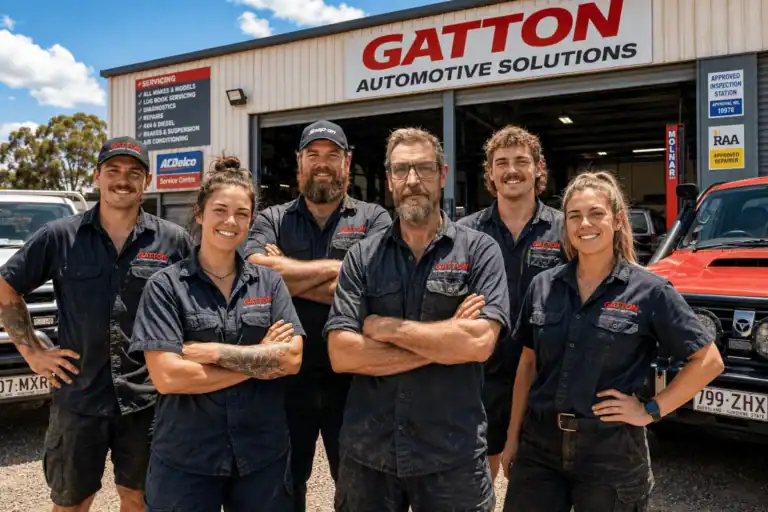
Travelling to Ipswich or Toowoomba for electrical repairs on a European car isn’t always practical, especially if the car isn’t reliably starting. Gatton Automotive Solutions handles everything from European starter motor repair to logbook servicing, tyres, suspension, and roadworthy certificates under one roof. We work on cars, 4WDs, trucks, and heavy equipment, so no job is too straightforward or too involved for our team. Parts sourcing is handled by the workshop, which keeps things moving without you needing to chase down components yourself.
With five-star reviews from drivers across the Lockyer Valley, we’ve built our reputation on straight advice and doing the work properly the first time. No unnecessary upselling, no work done without your go-ahead.
If your European vehicle is giving you trouble starting, don’t leave it until the battery gets blamed for a third time. Call Us Now or Book Your Free Inspection online – our team in Gatton will diagnose the fault accurately and get you back on the road.