Limited Time: Free Windscreen Wipers With Any Service. Subject To Availability.

Locally Owned & Operated
Honest Upfront Pricing
5★ Reviews
All Makes & Models

Verified 5★ Reviews

Trusted European Vehicles Cooling System Repair In Gatton

European cooling systems need specialist attention. We diagnose overheating issues, repair leaks, and keep your engine running at the right temperature. Call Us Now or Book Your Free Inspection today.

One-Stop Workshop

Honest Advice

5★ Reviews

European Cooling Experts

Book Your Free Inspection

Tell us what you need and we'll get back to you with a clear quote.

Booking Form
  • Vehicle Details
  • Confirm Vehicle
  • Services
  • Contact Details
Honest Quotes
All Vehicle Types
Local & Reliable

Why Book With Us

Book Your Free Inspection
Drop Off Your Vehicle
We Get to Work
Collect Your Car

European vehicles cooling system repair is one of those services that sits at the intersection of routine maintenance and potential catastrophe. Get it right, and your BMW, Mercedes, Audi, or Volkswagen runs cool and reliable for years. Ignore early warning signs, and you’re looking at engine damage that costs far more than a timely repair. We see cooling system issues regularly here at Gatton Automotive Solutions, and we’ve learned that European marques often have their own quirks when it comes to how their cooling systems age and fail.

How do you know your European vehicle’s cooling system needs attention?

The most obvious signs are hard to miss. If your temperature gauge climbs into the red, steam rises from under the bonnet, or you spot coolant pooling under your car in the driveway, the cooling system is failing and you should not drive the vehicle. But plenty of issues start quietly, and catching them early means avoiding a hot breakdown or worse.

  • Temperature gauge running higher than normal, even on cool days or during short city drives.
  • Coolant level dropping noticeably between services, with no visible leaks underneath.
  • Sweet or pungent smells coming from the engine bay or exhaust.
  • Radiator or heater fans running constantly, or running when they should not be.
  • Rough idling or hesitation, sometimes caused by a thermostat stuck open and coolant temperature too low.
  • Visible rust, corrosion, or discoloration inside the radiator filler cap.
  • Overheating when sitting in traffic or climbing hills, but running fine on the open road.

European vehicles, particularly German models, often use aluminium radiators and alloy engine blocks that react sensitively to water quality and coolant pH. If you’re running the wrong coolant type or if the fluid hasn’t been changed on schedule, the cooling system can corrode from the inside out – sometimes without obvious external leaks.

What happens during a European vehicles cooling system repair?

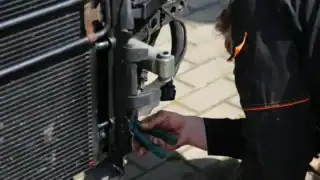
Cooling system diagnostics start with a visual inspection. We look for leaks at hose connections, the radiator, heater matrix, and water pump. We check coolant colour and condition, because European coolant specifications are strict. A pink or blue fluid that has turned brown or murky tells us that internal corrosion is happening. We also feel hoses for soft spots or cracks that indicate the rubber is degrading.

If the temperature gauge is climbing or the system is losing coolant without a visible leak, we run a pressure test. A cooling system pressure tester isolates where fluid is escaping. Sometimes it’s a small weep at the water pump shaft seal. Sometimes it’s a fine crack in the radiator that only shows under pressure. The test gives us the exact diagnosis instead of guessing.

For European vehicles, we pay close attention to the thermostat and expansion tank. Many BMW, Audi, and Mercedes models use electrically controlled thermostats that fail in ways a mechanical thermostat never would. An expansion tank can develop an internal failure that looks fine from outside but can’t hold pressure. We inspect both during diagnosis.

Once we know what needs repair, the work might be a simple hose replacement, a coolant flush and refill, or a full radiator replacement. We use OEM-specification coolant for European marques – the right fluid type matters far more than it does for domestic vehicles. If the radiator needs replacing, we source either genuine OEM or high-quality equivalent radiators that meet the original specifications.

What affects repair cost and timeframe?

A radiator hose and coolant refill can be completed while you wait. A radiator replacement or water pump repair takes longer because of how the system is packaged in European vehicles, especially in compact engine bays where access is tight. Some models require pulling air filters, intake manifolds, or engine covers just to reach the water pump.

Parts availability plays a role. Genuine European radiators and thermostats sometimes need to be sourced, especially for older or less common models. We handle parts sourcing in-house, so you don’t have to chase suppliers yourself. Aftermarket alternatives are usually faster to obtain and cost less, but we’ll advise you on the choice so you can decide what suits your vehicle and budget.

Coolant type is also a cost factor. European vehicles have different coolant specifications – G11, G12, G13 for various Volkswagen Group vehicles, for example. Using the wrong specification can trigger warning lights or cause premature corrosion. We make sure the correct fluid goes in.

Why choose Gatton Automotive Solutions for European cooling system repair?

We’re a full-service one-stop workshop with the tools and knowledge to diagnose and repair cooling systems across all European makes. From general mechanical work for everyday drivers, through suspension upgrades and tyre fitting, to roadworthy certificates issued on-site, we handle it all locally in Gatton. You don’t need to travel 45 kilometres to Ipswich or over an hour to Toowoomba for specialist work. We source parts locally and work efficiently, so you’re back on the road without unnecessary delays.

We give you straight advice and straight pricing. If a coolant flush will sort the problem, we’ll tell you that. If the radiator genuinely needs replacing, we’ll show you the pressure test results and explain why. No upselling, no pushing you toward parts you don’t need. With five-star reviews, we’ve built our reputation on honest service and getting the job done right the first time.

Get your European vehicle’s cooling system inspected in Gatton

If you’ve noticed temperature gauge creep, coolant loss, or overheating symptoms, the cooling system needs professional inspection. Call Us Now to discuss what you’re seeing, or Book Your Free Inspection online. We’ll diagnose the issue and let you know exactly what’s needed before we start work.
Other Services

Whatever your needs we have you covered, see some similar services below or click "See All Services" to explore our full service offering.

Your Local Workshop for Every Vehicle

Gatton Automotive Solutions is the one-stop shop for cars, 4WDs, trucks, and heavy equipment. Honest advice and fair pricing, right here in Gatton.

Honest Pricing, No Surprises

We tell you what’s needed and what it costs before we start. No upselling, no pressure.

Everything Under One Roof

Bring your car in and we’ll inspect it, explain what we find, and quote you upfront.

European-Spec Diagnostics & Parts

OEM-spec parts and European diagnostics get cooling repairs right first time.

How European Cooling System Repair Works

From diagnosis to a reliably cool engine, here's how we handle European vehicle cooling repairs in Gatton.

Step 1

Book Your Free Inspection

Book your free inspection to identify cooling system faults and understand what your European vehicle needs.

Step 2

Cooling System Diagnostic

We pressure test the system, inspect hoses and connections, scan for fault codes, and identify leaks or failures.

Step 3

Precision Cooling Repair

We replace failed components with OEM-spec parts, repair leaks, flush the system, and refill with correct coolant.

Step 4

System Test & Handover

We run a full cooling system test, verify temperature stability, and hand over your vehicle ready for the road.

Five-Star Rated

Verified 5★ Reviews

Quality Parts From Trusted Suppliers

We use genuine and quality aftermarket parts from reputable suppliers. You get reliable components backed by proper warranties.

Book Your Free Inspection

Tell us what you need and we'll get back to you with a clear quote.

Booking Form
  • Vehicle Details
  • Confirm Vehicle
  • Services
  • Contact Details
Honest Quotes
All Vehicle Types
Local & Reliable

Why Book With Us

Book Your Free Inspection
Drop Off Your Vehicle
We Get to Work
Collect Your Car

Frequently Asked Questions

Browse answers to common questions about our services. Can't find what you're after? Give us a call and we'll help.

European vehicles cooling system repair covers diagnosis and repair of the components that keep your engine at a safe operating temperature. That includes the radiator, thermostat, water pump, coolant hoses, expansion tank, and the coolant itself. On European vehicles, these systems often involve additional sensors, electric cooling fans, and pressure-sensitive caps that require specific diagnostic tools to assess properly. We identify the fault first, then explain what needs fixing before any work begins.

No. A rising temperature gauge is a sign your cooling system is struggling, and continuing to drive risks serious engine damage including warped cylinder heads or a blown head gasket. Pull over safely, turn off the engine, and let it cool before doing anything else. These repairs are costly to fix after the fact. If you are in or around Gatton, give us a call and we can advise whether the car should be driven in or towed.

European vehicles, particularly German and French makes, often use plastic coolant reservoirs, composite thermostat housings, and rubber coolant hoses that can become brittle over time. Many models also run higher operating temperatures and tighter tolerances than Japanese or Australian-market vehicles, which means a small leak or failing thermostat has a bigger impact on engine performance. Coolant additives in European vehicles can also deplete faster, leaving the system more vulnerable to corrosion if servicing intervals are missed.

It depends on what needs fixing. A thermostat or hose replacement is typically done in a few hours. A water pump or radiator replacement generally takes longer, especially on European vehicles where access is more involved. We will not give you a firm time estimate without knowing what the fault is. After diagnosis, we will tell you what is needed and give you a realistic timeframe so you can plan your day.

The main factors are which component has failed, the accessibility of that component on your specific model, and whether OEM-quality parts are required. European vehicles often need brand-specific coolant types and higher-grade parts than generic alternatives, which affects pricing. Labour time also varies significantly between models. Some European cars have water pumps driven off the timing chain, which means the job is considerably more involved than on simpler engine layouts.

Under ACCC guidance, Australian consumer law generally does not require you to use a dealership for servicing or repairs to maintain your new car warranty, provided the work is carried out to the manufacturer’s specifications. This is general information rather than legal advice, so it is worth checking your specific warranty terms if you are unsure. We use appropriate parts and document all work completed, which supports your service records regardless of where your car was purchased.

Most European manufacturers recommend a coolant flush every two to four years or at specific kilometre intervals, but this varies by make and model. European long-life coolants can last longer under ideal conditions, but heat cycling, minor leaks, and contamination all shorten that lifespan. Degraded coolant becomes acidic and can corrode alloy components and water pump seals from the inside. Checking your logbook schedule is the best starting point, and our team here in Gatton can advise based on your car’s service history.

A pressure test tells us a lot. If the radiator has a single crack or pinhole in an accessible location, a repair may be viable. But if the core is corroded, the tanks are brittle, or there are multiple failure points, replacement is the more reliable fix. On many European vehicles, plastic end-tanks are bonded rather than bolted, which limits repairability. We will inspect the radiator and give you an honest assessment of whether repair or replacement makes more sense for your situation.

Common signs include coolant pooling under the car, a sweet smell from the engine bay, the temperature gauge sitting higher than usual, white smoke from the exhaust, or the heater blowing cold air when it should be warm. On European vehicles, a dashboard warning light related to coolant temperature or low coolant level is also worth taking seriously straight away rather than waiting for the next scheduled service.

We use OEM-equivalent or better quality parts suited to the specific European make and model we are working on. For cooling system components, using parts that meet the original specification matters because European vehicles often require coolant hoses, thermostats, and water pump seals built to tighter tolerances. Using inferior parts can lead to repeat failures or compatibility issues with the vehicle’s engine management and temperature monitoring systems. We will always tell you what parts we are using before the job starts.

We start with a visual inspection of hoses, the radiator, and the expansion tank, then carry out a pressure test to check for leaks that are not immediately visible. We also check coolant condition and concentration, inspect the thermostat operation where possible, and scan for any fault codes related to engine temperature. On European vehicles, this process often involves brand-compatible diagnostic equipment to read live temperature data and fan operation. You will get a clear explanation of findings before we recommend any repairs.

Yes. Coolant that enters the combustion chamber through a failing head gasket can cause internal engine damage and white exhaust smoke. Leaks onto belts or electrical components can create secondary faults. Low coolant levels also affect the cabin heater on most vehicles. European vehicles cooling system repair done promptly prevents minor leaks from becoming much more expensive engine repairs. A small external hose leak left unattended can leave you stranded if the coolant level drops far enough to trigger thermal shutdown.

Continue to site