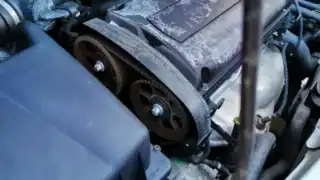
A starter motor is a small but essential electric motor that cranks your engine to life every time you turn the key or push the ignition button. When it fails, you’re not going anywhere. Japanese Vehicles Starter Motor Replacement is one of the more common electrical repairs we handle here in Gatton, particularly across high-kilometre Toyotas, Hondas, Nissans, Mitsubishis, and Mazdas that have spent years doing hard work on regional roads and properties throughout the Lockyer Valley.
Signs Your Japanese Vehicle Starter Motor Is Failing
Starter motors rarely fail without warning. Most drivers notice something’s off for days or even weeks before the car refuses to start entirely. The tricky part is that a weak battery, a failing alternator, and a worn starter motor can all produce similar symptoms, which is why accurate diagnosis matters more than just swapping parts.
Watch for these specific warning signs:
- A single click when you turn the key, with no engine crank. This is often a relay or solenoid issue within the starter assembly.
- Grinding or whirring noises when starting, which usually point to worn starter motor teeth or a faulty Bendix drive (the gear that engages the flywheel).
- Intermittent starting, where the car starts fine most mornings but occasionally nothing happens. Heat-related failure is common in Lockyer Valley summers.
- Slow cranking that gets progressively worse, especially first thing in the morning.
- The starter motor spinning but not engaging, producing a high-pitched whine rather than a crank.
Japanese vehicles, particularly older Toyota HiLuxes and LandCruisers used on farms and properties around Gatton, can develop starter issues from dust ingress and vibration over rough terrain. Mazda CX-5 and Mazda 3 models occasionally show starter relay faults before the motor itself fails. Nissan Patrol GU owners sometimes find the starter solenoid is the culprit rather than the motor body. Getting the diagnosis right saves money.
How We Diagnose and Replace Starter Motors on Japanese Vehicles
We don’t replace a starter motor just because someone said it might be the problem. Our first step is a proper electrical diagnostic, which includes testing the battery voltage and cold cranking amps, checking the starter circuit for voltage drop, and testing the solenoid and starter relay independently. This process rules out a flat battery, poor earth connection, or ignition switch fault before any parts are ordered.
If the starter motor is confirmed faulty, we source a replacement that meets the OEM specification for your specific model and build year. Japanese manufacturers are precise about starter motor specs, including torque ratings, solenoid voltage requirements, and mounting configurations. Fitting an undersized or generic unit to a diesel HiLux or a turbo Subaru Forester can cause ongoing problems. We match the part to the application.
The replacement process involves safely disconnecting the battery, removing the starter motor from the engine bay (on some Japanese models this means working around the intake manifold or exhaust heat shield), fitting and torquing the new unit correctly, and performing a post-installation test to confirm the system is drawing the right current and engaging cleanly.
OEM-Quality Parts for Japanese Makes
For Toyota, Mazda, Honda, Nissan, Mitsubishi, Subaru, and other Japanese brands, we use genuine-equivalent or OEM-spec starter motors from reputable suppliers. These parts are manufactured to the original engineering tolerances and come with supplier warranty coverage. We’re transparent about parts options and will walk you through the choice if more than one is available for your vehicle.
What Affects Cost and Time for Starter Motor Replacement in Gatton
A few factors influence how long the job takes and what it costs. Access is the biggest variable. On some Japanese vehicles, the starter motor sits in a straightforward position at the front of the engine. On others, particularly V6 models or vehicles with the starter mounted low near the gearbox, access requires more time and disassembly. Diesel engines in HiLux and Patrol applications often require more labour than their petrol equivalents.
Parts availability matters too. Common Japanese models are well supported with local parts supply, so most jobs can be turned around without extended delays. Less common variants or older models may need parts sourced from the southeast Queensland distribution network, which we handle directly. We don’t send you off to sort parts yourself.
We’ll give you a clear quote before any work begins, with no surprises added after the job is done.
Why Choose Gatton Automotive Solutions for Your Japanese Vehicle
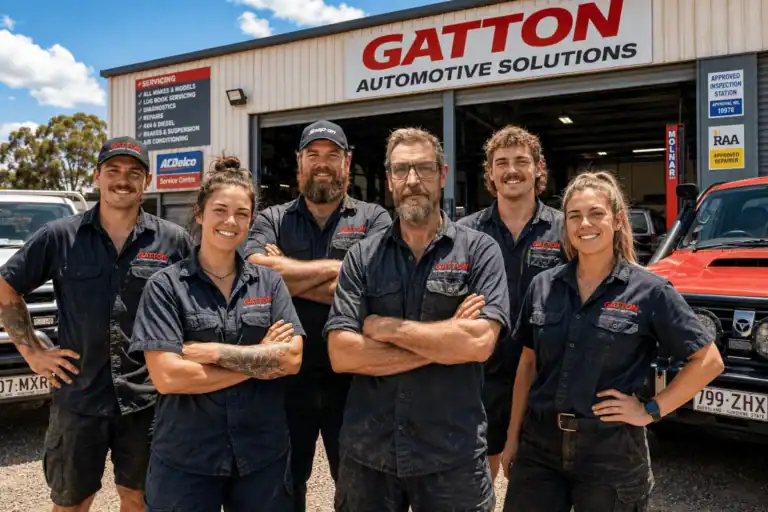
Gatton Automotive Solutions is a full-service workshop covering everything from everyday passenger cars through to 4WDs, utes, trucks, and heavy equipment. If you drive a Japanese vehicle in the Lockyer Valley, whether it’s a daily commuter, a farm ute, or a fleet vehicle, you don’t need to make the trip to Ipswich or Toowoomba for quality mechanical work. We handle Japanese vehicles engine starter repair and starter motor replacement alongside the full range of mechanical, electrical, and body work in the one place.
Our reputation across Gatton and the surrounding region is built on straight advice and fair pricing. We won’t recommend a new starter motor if the real issue is a corroded earth strap. We see a lot of repeat customers because of that, and it’s something we take seriously. With five-star reviews behind us, the feedback speaks for itself.
If your Japanese vehicle is struggling to start or you’ve already had a no-start event, Book Your Free Inspection online or Call Us Now to speak with our team. We’re ready to sort it out for you right here in Gatton.