European vehicles are engineered with braking systems that prioritise precision and feel, and that same engineering makes them more sensitive to wear than many drivers expect. Whether you’re driving a Volkswagen Golf, a BMW 3 Series, a Mercedes-Benz C-Class, or an Audi Q5, the brake components fitted to these vehicles are calibrated to tight tolerances. European vehicles brake repair isn’t simply a matter of swapping parts – it requires an understanding of how these systems are designed, what they expect in terms of part quality, and how the vehicle’s electronics interact with the physical hardware. At Gatton Automotive Solutions, we work on European vehicles regularly and we’re set up to handle brake repairs properly without you having to drive to Ipswich or Toowoomba to get it done.
Warning Signs Your European Vehicle’s Brakes Need Attention
European brake systems tend to be vocal when something is wrong, partly by design. Many models are fitted with brake wear sensors that trigger a dashboard warning light well before the pads reach a critical point. If you’ve seen that light illuminate, treat it seriously – ignoring a wear indicator on a European vehicle can mean the difference between a routine pad swap and a rotor replacement job.
Beyond the warning light, there are physical signs worth paying attention to:
- A squealing or squeaking noise when applying the brakes, particularly in the first few stops of the day
- A grinding sensation through the brake pedal or steering wheel, which often means pad material has worn through and metal-to-metal contact is occurring
- The vehicle pulling to one side under braking, which can indicate a sticking calliper or uneven pad wear
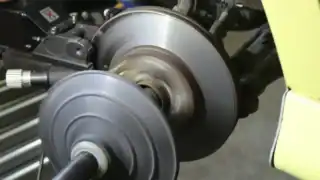
- A pulsing or vibrating pedal during normal braking, commonly caused by rotor runout (where the rotor surface is no longer perfectly flat) or thermal stress cracking on vehicles with larger discs
- Longer stopping distances than you’d normally expect from the vehicle
On some European models, particularly VAG group vehicles (Volkswagen, Audi, Skoda, SEAT) and BMW, the brake wear sensor circuit is monitored by the vehicle’s onboard systems. A fault in that circuit, even without actual pad wear, can trigger a warning. Our diagnostic process accounts for both scenarios rather than assuming one cause.
What Happens During a European Brake Inspection and Repair in Gatton
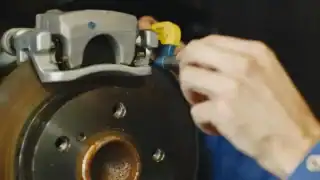
We start every brake job with a full inspection before any parts are ordered. That means measuring rotor thickness and runout, checking calliper operation and slide pin condition, examining brake hose integrity, and inspecting the handbrake mechanism where applicable. On European vehicles with electronic parking brakes, which are common across Mercedes-Benz, BMW, Audi, and Volkswagen, the rear callipers cannot be compressed manually the way conventional callipers can. They require scan tool access to retract the calliper piston through a service function. We have the equipment to perform this correctly, which matters both for the repair and for protecting the calliper from damage during the process.
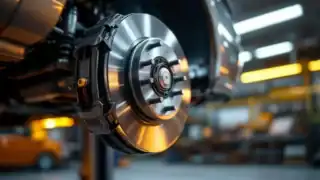
Parts quality is a genuine consideration on European vehicles. OEM-specification brake pads and rotors are matched to the braking characteristics the manufacturer intended. Fitting lower-grade components can result in increased dust, premature noise, or inconsistent pedal feel. We source parts that meet the vehicle’s original specifications and we’ll walk you through the options if there’s a choice to be made between OEM-equivalent and aftermarket grades. We don’t push parts you don’t need, and we won’t recommend a full rotor replacement if a pad swap is what the vehicle actually requires.
What Affects the Cost and Time Involved
Brake work on European vehicles varies in scope depending on what’s found during the inspection. A straightforward front pad and rotor replacement is a different job to rear brake work on a vehicle with an integrated electronic parking brake or to a calliper overhaul caused by a seized slide pin. Parts availability plays a role too. Some European models use components that aren’t stocked locally, and we handle all parts sourcing from the workshop so you’re not chasing suppliers yourself.
Vehicles that have sat for extended periods, or that have accumulated significant kilometres in stop-start conditions like the school run or Warrego Highway commuting, often have rotor surfaces that look acceptable but have developed hard spots or glazing that affects pedal feel. We’ll tell you honestly what we find rather than recommending replacement based on age alone.
Why Gatton Automotive Solutions Handles European Brakes Well
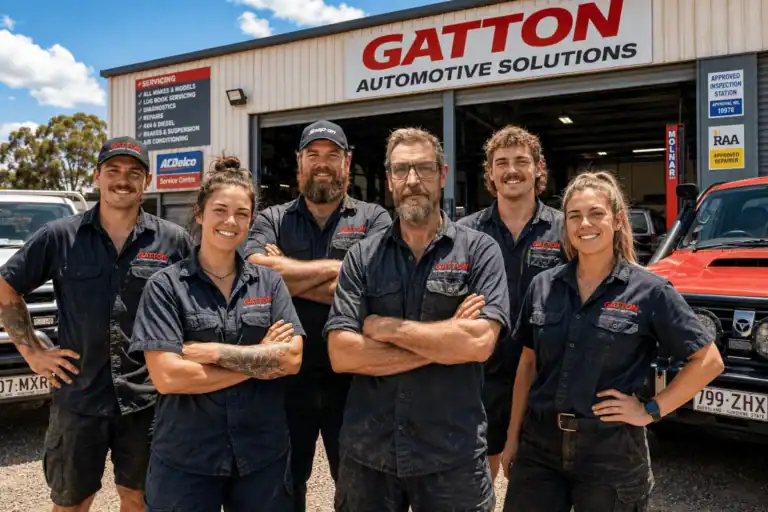
We’re a full-service workshop covering cars, 4WDs, trucks, and heavy equipment. That breadth means we’re not limited to one vehicle type or one type of job. We have the scan tool capability to work with European vehicle electronics, the experience to read brake system faults in context, and the parts sourcing connections to get the right components without extended wait times. We also issue roadworthy certificates on-site, so if your brake repair is part of a pre-sale inspection or a rego renewal, we can handle both without a separate trip.
With five-star reviews, the feedback we hear most is that we’re straight with people. We tell you what’s needed, explain why, and let you make the call. No unnecessary work, no pressure.
If your European vehicle is showing brake wear symptoms or a warning light, Book Your Free Inspection online or Call Us Now. We’re here in Gatton and ready to sort it out.