Regular oil changes are one of the most straightforward ways to protect an engine, yet they’re also one of the most commonly delayed services. For Great Wall owners in Gatton, keeping up with oil and filter changes means your engine stays clean, well-lubricated, and running at the temperature it’s designed for. Fresh oil reduces friction between moving parts, carries heat away from the engine, and prevents the sludge build-up that quietly shortens engine life over time. A Great Wall oil change might seem routine, but skipping it has compounding consequences that aren’t always visible until serious damage is done.
Signs Your Great Wall Is Due for an Oil Change
Great Wall models use oil life based on both distance and driving conditions. Hard-working engines in stop-start traffic, towing, or dusty rural environments consume oil quality faster than highway cruising. If your Great Wall hasn’t had an oil and filter change in a while, there are a few signs worth paying attention to.
- Dark or gritty oil on the dipstick – fresh oil is amber and translucent; old oil turns dark brown or black and may feel gritty between your fingers
- Engine running louder than usual – a ticking or tapping noise, especially on start-up, can indicate the oil is no longer providing adequate lubrication between components like the valve train
- The oil warning light or service reminder is on – Great Wall vehicles, including the Steed ute and the older V200 and V240 models, have built-in service interval reminders that should not be dismissed
- A burning smell from under the bonnet – degraded oil can start to burn when it loses its viscosity and thermal protection
- Oil level dropping between services – some consumption is normal, but if you’re regularly topping up, it’s worth having the system properly checked at the same time as your next change
If you’ve noticed any of these, the best step is to bring your vehicle in rather than top up and wait. Old oil doesn’t recover, and continuing to run on degraded oil accelerates wear on the very components it’s supposed to protect.
What’s Involved in a Great Wall Oil and Filter Change
Great Wall vehicles, particularly the ute-based models that have proven popular with tradies and farming operations around the Lockyer Valley, use diesel engines that respond well to quality oil matched to their specific requirements. Getting the specification right matters as much as the change itself.
When you bring your Great Wall in to us, we don’t just drain the old oil and refill. We check the manufacturer’s specification for your exact model and year to confirm the correct viscosity grade and oil type, whether that’s a semi-synthetic or full-synthetic blend suited to the engine. The oil filter is replaced at the same time, not just the oil, because a blocked or worn filter defeats the purpose of the whole service.
As part of the oil change service we also take a few minutes to check fluid levels including coolant and brake fluid, inspect for any visible leaks around the sump plug and filter housing, and reset the service reminder if your vehicle has one. It’s a quick process done properly rather than rushed, and most Great Wall oil changes can be completed while you wait.
What Affects the Cost and Time of a Great Wall Engine Oil Change?
A few variables influence how long a service takes and what it costs. The biggest factor is the oil specification your engine needs. Great Wall’s diesel engines, particularly the 2.0-litre turbodiesel and the 2.4-litre petrol variants used across different models and years, have different oil capacity and viscosity requirements. Using the wrong oil grade can reduce protection rather than improve it, so we confirm the spec before we start.
Whether you choose an OEM-equivalent oil or a quality aftermarket alternative also affects the price. We’ll always tell you what the options are and what each one means for your engine before any work begins. There are no surprises added at the end of the job. The Steed, for example, often requires a diesel-specific oil with a particular additive package, so we source parts and fluids that match what the engine was designed to run on.
Servicing Your Great Wall in Gatton Without the Drive to Ipswich or Toowoomba
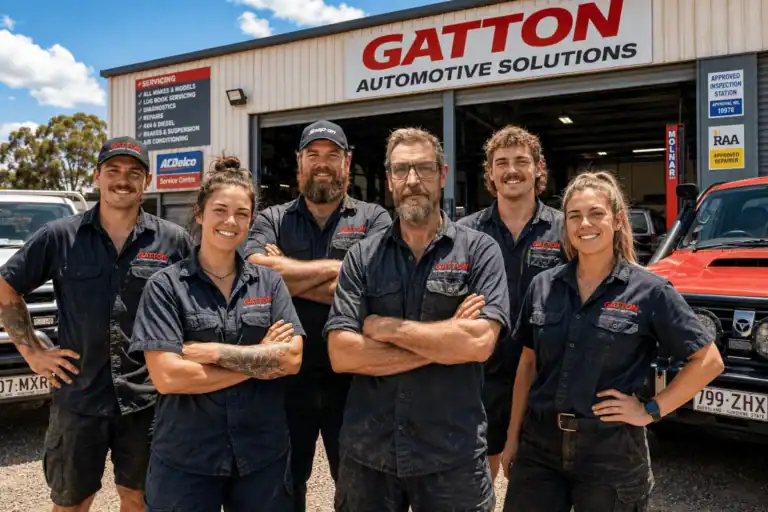
One of the practical realities of owning a vehicle in a regional area is that specialised servicing often means a 45 to 80 kilometre drive each way. Gatton Automotive Solutions was built to change that. We handle everything from everyday passenger cars and farm utes to heavy equipment and trucks, all under one roof in Gatton. For Great Wall owners, that means you can get your oil and filter changed, ask about suspension work, sort a tyre, or pick up a roadworthy certificate without leaving the Lockyer Valley.
We’re locally owned, we stock or source the parts we need without delay, and we don’t recommend work that isn’t needed. Our five-star reviews reflect what we’re told most often: straight answers and a fair price. Fleet operators and tradespeople running Great Wall utes as work vehicles are welcome, and we can accommodate multiple vehicles where scheduling allows.
If your Great Wall is due for an oil change, or you’re not sure when it was last done, Call Us Now or use the online booking to arrange a Book Your Free Inspection. We’re here in Gatton and happy to help you stay on top of it.