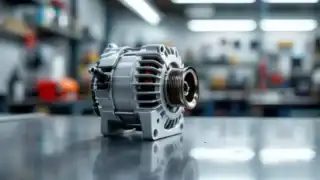
A drive belt does a job most drivers never think about until it stops doing it. On Great Wall vehicles, the serpentine drive belt (sometimes called the accessory belt) transfers power from the engine’s crankshaft to the alternator, power steering pump, air conditioning compressor, and water pump. When it fails, those systems fail with it. Great Wall drive belt replacement is one of those services that’s far easier to plan for than to deal with on the side of the road, and we handle it regularly here in Gatton for Great Wall owners across the Lockyer Valley.
Signs Your Great Wall’s Drive Belt Needs Attention
Drive belt wear rarely happens overnight. Most of the time, there are clear warnings if you know what to look for. Ignoring them tends to turn a straightforward belt replacement into a more involved repair.
- Squealing or chirping from the engine bay – particularly on startup or when the air conditioning is switched on. This is often the first sign the belt is glazed, cracked, or slipping on its pulleys.
- Visible cracking or fraying – if you can see the belt from above the engine and it looks dry, cracked along the ribs, or has chunks missing, it’s overdue.
- Battery warning light – a slipping or broken belt means the alternator isn’t charging properly, which triggers the battery light even when the battery itself is fine.
- Power steering suddenly heavy – on Great Wall models with hydraulic power steering, the belt drives the steering pump. A failing belt makes the wheel noticeably harder to turn, especially at low speeds.
- Engine overheating – if the belt also drives the water pump (which varies by engine configuration), a broken belt can quickly cause the engine to overheat.
- Air conditioning cutting out – the A/C compressor is belt-driven. If the system stops cooling without an obvious refrigerant fault, the belt is worth inspecting.
Great Wall’s older petrol engines, particularly those found in the V200, V240, and early Steed models, used timing arrangements and accessory configurations that mean belt inspection should be part of every major service. If your Great Wall is approaching higher kilometres and the belt history is unknown, it’s worth having it checked before the next long run.
What We Do During a Great Wall Drive Belt Replacement in Gatton
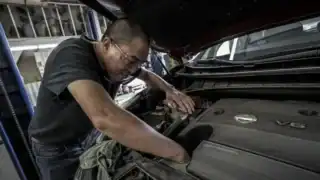
We start with a visual inspection of the belt and the components it drives. This means looking at the belt’s condition across all its ribs, checking for glazing, edge wear, or cracking, and running the engine briefly to listen for any belt-related noise patterns specific to how that Great Wall engine behaves under load.
After the belt itself, we inspect the tensioner and idler pulleys. These are the components that keep the belt running at the correct tension and routing. On many Great Wall models, a worn tensioner will cause premature belt failure even after a fresh replacement. We test the pulleys for bearing roughness, check that the tensioner spring is functioning correctly, and look for any signs of oil or coolant contamination that might indicate a leak affecting belt longevity.
Replacement uses a belt matched to the OEM specification for your Great Wall’s engine size and configuration. We source genuine-equivalent parts where OEM belts are available, and we’ll talk you through the options honestly if there are differences worth knowing about. Once the belt is fitted, we check the alignment across all pulleys and run the engine to confirm correct operation before the vehicle leaves.
What Affects the Cost and Time Involved
Drive belt replacement on most Great Wall models is a relatively straightforward job, but a few things affect how involved it becomes. Access varies between engine bays. On some configurations, surrounding components need to be moved to reach the belt and tensioner properly. If the tensioner or one of the idler pulleys is worn and needs replacing alongside the belt, that adds parts and time.
Parts availability for Great Wall vehicles has improved significantly in Australia over recent years, but some older or less common models may require sourcing. We handle parts sourcing directly, so you don’t need to track anything down yourself. Using the correct specification matters with drive belts, as an incorrect length or rib profile will affect tension and can cause premature wear on belt-driven components.
Most straightforward belt replacements can be turned around efficiently, and for Great Wall owners coming in from Laidley, Forest Hill, Withcott, or further out in the valley, we aim to make the trip worth the run.
Why Gatton Automotive Solutions for Your Great Wall
We’re a full-service workshop handling everything from passenger cars and 4WDs through to trucks, heavy equipment, agricultural machinery, smash repairs, and custom paintwork. All of it under one roof, right here in Gatton. For Great Wall owners in the Lockyer Valley, that means no unnecessary trip to Ipswich or Toowoomba for a service that can be done locally by people who know these vehicles.
We’re honest about what your car needs and what it doesn’t. Our five-star reviews reflect the way we work: straight advice, fair pricing, no unnecessary upselling. If a belt inspection finds nothing wrong, we’ll tell you that too.
Fleet operators running Great Wall utes or commercial vehicles can also talk to us about scheduled maintenance to keep their vehicles on the road rather than off it. Minimising downtime matters, and we’re set up to handle fleet work without the runaround.
If your Great Wall is making noise from the engine bay, or if you just want the belt checked as part of a service, Call Us Now or Book Your Free Inspection online. Gatton Automotive Solutions is here in Gatton and ready to help.