A slipping or grinding clutch is one of those problems that tends to get worse the longer it’s left alone. For Great Wall owners in Gatton, getting Great Wall clutch repair sorted early means the difference between a straightforward fix and a job that involves pulling apart considerably more of the drivetrain. Great Wall vehicles, including the Steed ute and older V-Series wagons that are still common across the Lockyer Valley, have their own clutch system characteristics, and a mechanic who understands how these vehicles are built will diagnose the problem faster and more accurately than one working from generic assumptions.
Warning Signs Your Great Wall Clutch Needs Attention
Clutch problems rarely announce themselves all at once. Most Great Wall drivers notice something is off weeks before the clutch actually fails, which is exactly the window where action saves money. Here’s what to watch for:
- Slipping under load: You press the accelerator and the engine revs climb, but the vehicle doesn’t accelerate in proportion. This is especially noticeable when towing or pulling away from a stop on a hill.
- High engagement point: The clutch only catches near the top of the pedal travel rather than mid-range. This usually means the clutch disc is worn thin.
- Difficulty selecting gears: Crunching or resistance when changing gears, even with the clutch fully depressed, points to a worn or sticking clutch fork, a faulty release bearing, or a hydraulic issue in the master or slave cylinder.
- Burning smell after hills or town driving: A sharp, acrid smell after driving in traffic or on inclines is a sign the clutch facing is overheating, either from slipping or from a driver habit issue that a worn disc makes worse.
- Clutch pedal vibration or shudder on takeoff: A shuddering sensation as you release the clutch often points to contamination on the clutch disc, a warped flywheel, or a worn pressure plate.
If you’re noticing any of these, it’s worth having the clutch inspected before you’re stuck somewhere between Gatton and the highway with a clutch that’s given up entirely.
How We Approach Great Wall Clutch Diagnostics and Repair
Great Wall vehicles, particularly the Steed dual-cab utes, use a hydraulically-operated clutch system rather than a cable-operated setup. That means the diagnosis starts with the hydraulics. We check the clutch master cylinder and the slave cylinder for fluid leaks, pressure loss, and correct operation before we consider pulling the gearbox. There’s no point replacing the clutch disc if the root cause is a failed slave cylinder that will contaminate a new disc within months.
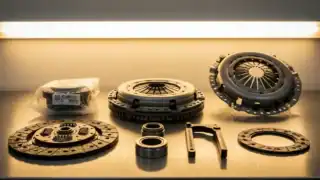
Once we’ve confirmed the hydraulics are sound, or identified and addressed any issues there, we move to the clutch assembly itself. This involves removing the gearbox to access the pressure plate, clutch disc, and flywheel directly. On the Steed, the gearbox is heavy and the process benefits from the right lifting equipment, which we have on site. When the clutch cover comes off, we inspect the pressure plate for wear and heat cracking, measure the clutch disc thickness, check the release bearing for wear and noise, and assess the flywheel surface for scoring or heat damage.
For Great Wall models, we source parts to OEM specification or quality-equivalent aftermarket parts that meet the load ratings for the vehicle. The Steed is often used as a workhorse ute, and fitting a light-duty clutch kit to a vehicle that regularly hauls a load or tows a trailer is a false economy. We’ll discuss the right parts choice with you based on how you actually use the vehicle.
What Affects the Cost and Time Involved?
Clutch repairs vary depending on what’s found when we get into the job. A straightforward clutch kit replacement on a Steed ute is a known scope of work. The variables that affect cost include whether the flywheel needs resurfacing or replacement, whether the hydraulic components need work, and whether there’s any gearbox-related damage to address at the same time. Resurfacing a flywheel rather than replacing it is often the better value option if the surface condition allows it, and we’ll give you a clear picture of what we’ve found before any work proceeds.
Parts availability for Great Wall vehicles is more variable than for high-volume Japanese or Korean brands, so we handle parts sourcing directly from our end. We’ll confirm what’s available and at what lead time before you’re committed to anything.
Why Gatton Drivers Choose Gatton Automotive Solutions for This Work
Gatton Automotive Solutions is a full-service workshop handling everything from everyday passenger cars and 4WDs through to trucks, heavy equipment, and agricultural machinery. That breadth matters for a job like clutch repair on a working ute. We have the equipment to handle heavier drivetrains properly, and we’re not turning away work because a vehicle is too big or too unusual for the bay.
Our approach is straightforward: we diagnose properly, explain what we’ve found, and give you an honest picture of what needs doing and what can wait. There’s no benefit to us in recommending work that isn’t needed, and our five-star reviews reflect that approach. As a locally owned and operated workshop, we also issue roadworthy certificates on-site and handle smash repairs, suspension upgrades, and tyre fitting without sending you elsewhere. For Lockyer Valley drivers, having this kind of capability locally means no trip to Ipswich or Toowoomba for a repair that can be done right here in Gatton.
If your Great Wall is showing clutch symptoms, Call Us Now or Book Your Free Inspection online. We’ll assess the situation clearly and get your vehicle back to reliable working order.