A slipping, grinding, or hesitant clutch is one of those problems you notice every single time you drive. For Hyundai owners around Gatton, Hyundai clutch repair is something we handle regularly across a wide range of models, from everyday Excels and i30s to Tucson SUVs and iLoad vans. The clutch is the mechanical link between your engine and gearbox, and when it starts to fail, it doesn’t just make the car unpleasant to drive, it can leave you stranded or cause secondary damage to components that are far more expensive to fix.
Signs Your Hyundai Clutch Needs Attention
Clutch wear is gradual, which is why many drivers adapt to the early warning signs without realising something is wrong. By the time the problem becomes obvious, the clutch disc, pressure plate, or flywheel may already be significantly worn.
Watch for these symptoms in your Hyundai:
- Slipping under load – the engine revs rise but the car doesn’t accelerate to match, especially when pulling away uphill or under a load
- High bite point – the clutch engages right at the top of the pedal travel instead of mid-range, which is a common early indicator of wear
- Difficulty selecting gears – grinding or crunching when changing gear, or gears that are hard to select even with the clutch fully depressed
- Clutch pedal feels spongy or heavy – changes in pedal feel can point to hydraulic issues in the master or slave cylinder, which are separate from the friction components but equally important
- Burning smell after a hill start or heavy traffic – a sharp, acrid smell indicates the clutch disc is being overheated from slipping
- Shudder on take-off – a juddering sensation when you release the clutch from a standstill can suggest a contaminated or glazed clutch disc
If you’re noticing one or more of these in your Hyundai, it’s worth getting it looked at before a manageable repair becomes a larger one.
How We Diagnose and Repair Hyundai Clutches
Clutch work on Hyundai vehicles requires a clear understanding of how the brand’s hydraulic actuation systems and dual-mass flywheel setups differ across model lines. Many Hyundai models, particularly those from the mid-2000s onward, use a hydraulic clutch release system rather than a cable-operated one. This means that a clutch complaint might trace back to a failing master cylinder, a leaking slave cylinder, or air in the hydraulic line rather than worn friction components.
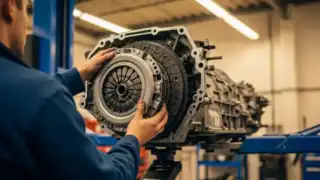
We start with a road test to confirm the symptoms, then lift the vehicle to inspect the clutch hydraulics and check for any fluid leaks or contamination. If the hydraulic system checks out, the gearbox is removed to access the clutch assembly directly. At that point, we inspect the condition of the clutch disc, pressure plate, release bearing, and flywheel. On many Hyundai models, including the i30 and Tucson, the flywheel is a dual-mass flywheel (DMF), which absorbs vibration and engine pulses. A worn or rattling DMF should be replaced at the same time as the clutch kit, because the labour to access it is already done and leaving a marginal flywheel in place often means the job needs to be repeated sooner than it should.
We source OEM-specification or genuine-equivalent parts suited to your specific Hyundai model and engine variant. The friction material, spring configuration, and torque ratings in the clutch kit need to match your vehicle’s spec, not just fit in the bellhousing.
What Affects the Cost and Time of a Clutch Repair?
Clutch repair costs vary depending on a few honest variables. The biggest factor is whether the flywheel needs to be replaced alongside the clutch kit. On older Hyundai models with a solid flywheel, resurfacing is often an option and reduces the overall cost. On models with a dual-mass flywheel, replacement is generally the right call once the DMF shows signs of wear or noise.
The model also matters. A Hyundai Accent involves less labour to access the clutch than a 4WD-spec Santa Fe or an iLoad van with a longer drivetrain. Parts availability for Hyundai is generally good in Australia, which keeps lead times reasonable for most models. We’ll give you a clear picture of what’s involved before any work begins, so there are no surprises.
Clutch Repair for Hyundai Commercial Vehicles in Gatton
If you run a Hyundai iLoad for work or operate a small fleet of commercial vehicles, clutch wear tends to happen faster due to the nature of stop-start delivery and trade work. We service commercial vehicles alongside passenger cars, so getting your work vehicle back on the road without a trip to Ipswich or Toowoomba is straightforward.
Why Gatton Automotive Solutions for Your Hyundai Clutch Repair
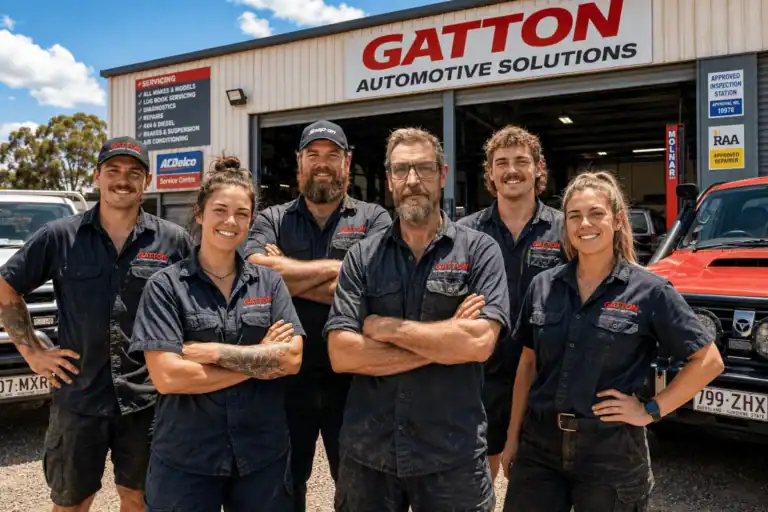
We’re a locally owned workshop in Gatton that handles everything from everyday passenger cars through to 4WDs, trucks, and heavy equipment, all under one roof. That breadth matters for Hyundai owners, because clutch work sometimes uncovers related issues like worn engine mounts, gearbox oil leaks, or prop shaft problems that need attention at the same time. We don’t send you somewhere else for the secondary work.
Honest advice is a straightforward part of how we operate. If your clutch has life left in it and doesn’t actually need replacing, we’ll tell you. If it does need replacing, we’ll explain exactly what’s required and why, and we’ll source the right parts without unnecessary upsells. Our five-star reviews reflect that approach.
Ready to get your Hyundai looked at? Book Your Free Inspection online or Call Us Now to talk through what you’re experiencing. We’re here for drivers across Gatton and the Lockyer Valley.