The clutch is what puts your power to the road. In Japanese vehicles especially, the clutch system is engineered to tight tolerances, and when it starts to wear, the signs show up well before the thing actually fails. Japanese vehicles clutch repair is one of the more common jobs we handle at Gatton Automotive Solutions, covering everything from daily-driver Toyotas and Mazdas to work-spec Nissan utes and Mitsubishi vans. Getting on top of a clutch issue early means the difference between a planned repair and an unplanned tow.
How Do You Know Your Clutch Is Worn?
Clutch wear tends to be gradual, which means drivers often adapt to the changes without realising how far things have deteriorated. Some signs are harder to miss than others.
- Slipping under load: The engine revs rise but the vehicle doesn’t accelerate to match. This is especially noticeable pulling out of an intersection or towing.
- High bite point: The clutch only engages near the top of pedal travel. In many Japanese vehicles, this is an early indicator that the friction disc is thinning out.
- Grinding or crunching when changing gears: Often points to a worn or damaged clutch release bearing or a pressure plate that isn’t fully disengaging.
- Shuddering on take-off: A judder or vibration as you pull away from a standstill can indicate contamination on the friction disc, often from a leaking rear main seal.
- Burning smell after hill starts or heavy traffic: That sharp, acrid smell means the clutch is slipping under load and generating heat it shouldn’t be.
If you’re noticing any of these in your Hilux, Navara, BT-50, Triton, or any other Japanese make, it’s worth getting it looked at before the repair scope grows.
What We Check and Replace During a Japanese Clutch Repair in Gatton
A clutch replacement isn’t just swapping the friction disc. The clutch system is made up of several components that wear together, and replacing only part of the assembly often leads to problems down the track.
When your vehicle comes in, we start by confirming the fault. For some Japanese vehicles, clutch slip or shudder can be related to hydraulic issues in the master or slave cylinder rather than the friction components themselves. We work through this before pulling anything apart, so you’re not paying for parts you don’t need.
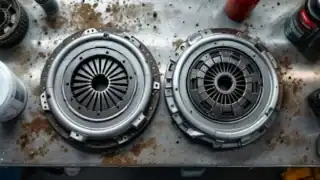
If a full clutch replacement is required, we remove the gearbox and replace the clutch kit, which typically includes:
- The friction disc (the main wearing component)
- The pressure plate assembly
- The release (or throw-out) bearing
- The pilot bearing where applicable
We also inspect the flywheel at this point. On higher-mileage Japanese vehicles, particularly those used for towing or in stop-start traffic, the flywheel face can develop heat cracks or become glazed. A resurfaced or replaced flywheel gives the new clutch the best possible surface to bed in against. Cutting corners here is a common reason clutch jobs fail prematurely.
For vehicles with a hydraulic clutch system, we check the master and slave cylinders for leaks, fluid contamination, and correct pedal feel. A new clutch kit won’t last as it should if the hydraulics are soft or seeping.
Parts selection matters for Japanese vehicles. We work with OEM-specification or genuine-equivalent parts that meet the tolerances these vehicles are built to. Cheaper non-spec kits can result in different pedal feel, premature wear, or fitment issues. For Isuzu, Mitsubishi, and Nissan trucks in particular, using the correct spec clutch for the application and load rating is something we pay close attention to.
What Affects the Cost and Time Involved?
Clutch repairs vary in scope. A smaller Japanese hatchback or sedan is a more straightforward job than a 4WD, a dual-cab ute, or a light commercial van, simply because of the gearbox size and access involved. The condition of the flywheel is another variable – if it needs machining or replacement, that adds parts and time to the job.
Hydraulic clutch components are an additional consideration if the system has been neglected. And on some older or less common Japanese models, parts availability and sourcing lead times can affect how quickly we can get the vehicle back to you. We handle our own parts sourcing in-house, which keeps things moving, and we’ll give you a clear picture of what’s involved before any work begins.
Why Drivers Across the Lockyer Valley Use Our Workshop
Gatton Automotive Solutions is a full-service workshop. Cars, 4WDs, trucks, light commercial vehicles, and heavy equipment – we work across the lot. You won’t need to travel to Ipswich or Toowoomba for a clutch repair, and you won’t be dealing with a one-person operation that has to turn away complex jobs or unusual vehicles.
Our customers give us five-star reviews, and that comes down to one thing: honest advice and work done properly the first time. We don’t recommend parts or repairs that aren’t needed, and we’ll walk you through what we found and why before we proceed.
Whether you’re a tradie who relies on your ute every day, a local family getting more life out of a well-used Corolla, or a fleet manager keeping Japanese-brand commercial vehicles on the road across the Lockyer Valley, we treat every job the same way. From general mechanical work for everyday drivers through to heavy vehicle servicing, roadworthy certificates, smash repairs, custom paintwork, suspension upgrades, and tyre fitting – it’s all handled right here under one roof.
If your clutch is showing signs of wear, Call Us Now or Book Your Free Inspection online. We’re based right here in Gatton and ready to help.