American vehicles suspension check is one of those services that doesn’t always feel urgent until something goes wrong on the road. Your suspension system works quietly in the background, absorbing bumps, keeping your tyres planted, and making sure your steering feels responsive. When wear creeps in, you might not notice it immediately, but the consequences stack up fast. A proper suspension check catches problems early, keeps your vehicle safe, and saves you from expensive damage down the track. In Gatton, we’ve seen everything from worn struts on Dodge trucks to failing control arms on Jeep 4WDs, and every time we find problems early, it makes a real difference to how the vehicle handles and costs.
Warning signs your American vehicle needs a suspension check
Your suspension talks to you if you listen. The trick is knowing what to listen for. Here are the real warning signs that bring people into our workshop.
- Bouncing or nose-diving when you brake or accelerate
- Clunking or rattling sounds from under the car, especially over bumps
- One corner of the vehicle sitting noticeably lower than the others
- Uneven tyre wear, particularly on the inner or outer edges
- Steering wheel pulling to one side even on straight roads
- A soft or spongy feeling in the brake pedal
- Visible fluid leaking near the wheels
- Harsh, jarring ride quality over small bumps
American vehicles, especially trucks and larger SUVs, can mask suspension problems for a while because they’re built heavier and absorb movement differently. That’s exactly why a methodical suspension check matters. You might feel something’s not quite right, but without a proper inspection, you won’t know whether it’s a worn control arm, a failing strut, a collapsed spring, or worn bushings causing it.
What a thorough American vehicles suspension check includes
When you bring your American vehicle to us for a suspension check, we’re not just looking at one component. We inspect the entire system as a connected whole because suspension components work together, and failure in one area often affects others.
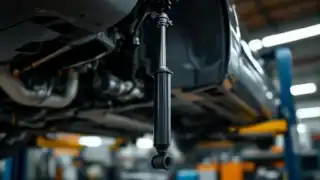
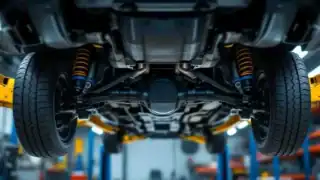
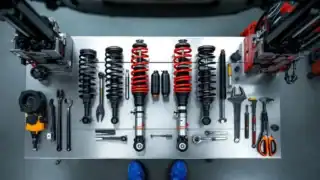
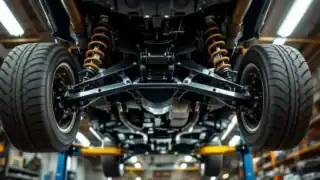
We start by putting your vehicle on the hoist and visually inspecting all suspension components for obvious wear, damage, or leaks. That includes struts and shocks, springs, control arms, sway bar links, bushings, and tie-rod ends. We’re looking for cracking, corrosion, bent parts, and fluid seepage. American vehicles often run specific suspension geometries, particularly in the F-150, Silverado, Ram, and Jeep ranges, so we know what to look for and where problems commonly develop on those models.
Next, we perform a hands-on inspection. Our technicians grasp components and check for play and movement. A small amount of movement is normal. Excessive play signals worn bushings or ball joints. We also check ride height and compare side-to-side, because a sagging spring or worn shock absorber will lower one corner and throw off your alignment.
We test the steering response and suspension dampening by moving the vehicle through its range and noting how it settles. A vehicle with good shocks and struts returns to rest quickly. One with worn dampers will bounce or wallow. We also spin the tyres and check them for uneven wear patterns, which directly tell us what the suspension is doing wrong.
Finally, we measure or visually assess suspension geometry where it’s visible without additional equipment. American trucks especially often get modified or lifted, so understanding the current setup helps us identify whether wear is normal for the vehicle’s use or accelerated by misalignment or component failure.
What affects the cost and time for your suspension check
A suspension check itself is straightforward and usually takes 45 minutes to an hour. The time and cost variables come into play if we find problems.
If parts need replacing, the extent of wear determines what you’ll need. A single worn control arm is a smaller job than replacing both sides plus struts plus bushings. American vehicles often use larger, heavier-duty components than smaller imports, which can affect availability and lead times. If parts aren’t in stock locally, we can source genuine or equivalent aftermarket parts quickly, but that may add a day or two.
Vehicle type matters too. A Dodge Durango suspension job differs from a Jeep Wrangler, which differs from a Ford F-250. Truck suspensions can be more complex, particularly if they’ve been lifted or heavily modified. We factor in the specific model’s service manual and OEM specifications to ensure we’re doing the job right.
We always show you exactly what we’ve found and what fixing it will involve before we start. No surprises, no upselling. If a component can last another few months safely, we’ll tell you that instead of pushing a replacement you don’t need yet.
Why choose Gatton Automotive Solutions for your American vehicles suspension check
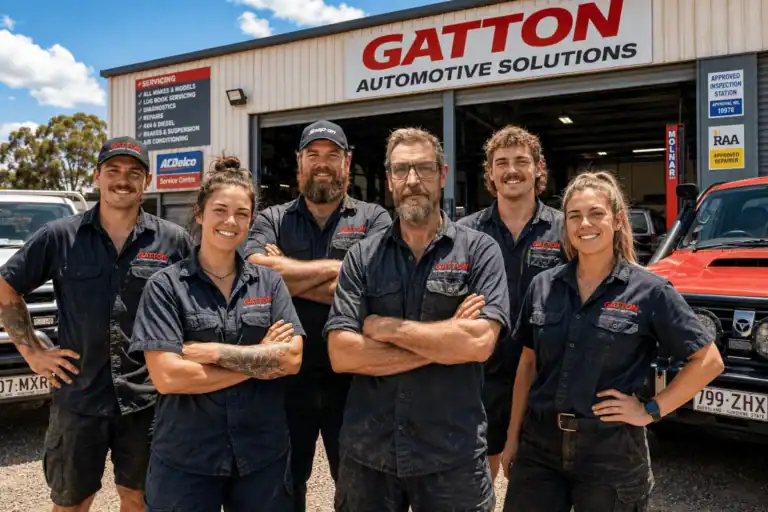
We’re a full-service workshop that handles everything from general maintenance to heavy suspension work, all in one place. We work on American vehicles regularly, whether that’s family trucks, utes, or 4WDs. You don’t need to travel to Ipswich or Toowoomba for suspension work when we can do it here locally and get you back on the road fast.
We stock parts and handle sourcing in-house, which cuts down waiting time and keeps costs honest. We also offer suspension upgrades if you’re keen to improve your vehicle’s handling or ground clearance. Whether you need a standard check, replacement parts, or a lift kit, we manage it all without sending you elsewhere.
Our customers trust us because we explain what we find in plain language, we don’t push unnecessary work, and we price fairly. With five-star reviews, that reputation matters to us.
Next steps for your suspension check in Gatton
If your American vehicle is bouncing, clunking, or just feels different, book your free inspection online or call us now. We’ll get you in, run a thorough check, and give you honest advice about what your suspension needs.