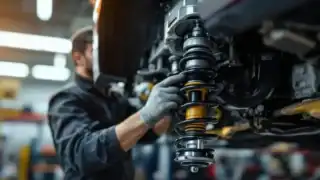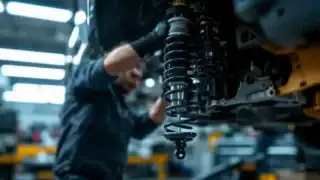
Your Hyundai’s suspension system is doing more than just smoothing out the bumps. It holds your wheels in contact with the road, keeps your steering responsive, and carries the full weight of the vehicle through every turn and stop. A Hyundai suspension check looks at all of this, from the struts and shock absorbers down to the lower control arms and sway bar links, to find wear before it becomes a safety issue. For drivers in and around Gatton, getting that check done locally means you’re not making a 45-minute run to Ipswich or Toowoomba for something we can handle right here.
Signs Your Hyundai Suspension Needs Attention
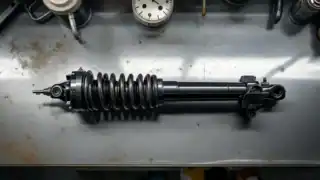
Suspension wear rarely announces itself with a single dramatic symptom. More often, a few small things start adding up. You might notice your Hyundai pulling slightly to one side, or that the front end dips quite far forward when you brake. A bouncy, unsettled feeling on unsealed roads or rail crossings is a common one too. That bounce, where the car keeps moving after a bump rather than settling quickly, often points to worn shock absorbers or struts.
Other symptoms worth paying attention to include:
- Clunking or knocking sounds over speed humps or uneven ground, which often trace to worn ball joints, tie rod ends, or rubber bushings
- Uneven tyre wear, where one edge of the tread is significantly more worn than the other, suggesting misalignment linked to a suspension component
- A pulling sensation when steering straight on a flat, even road
- Vibration through the steering wheel at highway speeds, which can be suspension-related or tied to wheel balance issues sitting downstream of a worn component
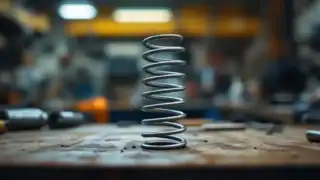
- The car sitting lower on one corner, which can indicate a collapsed spring
If you’re driving on rural roads around the Lockyer Valley regularly, your suspension components are working harder than those on a Hyundai that only sees urban streets. Gravel driveways, uneven surfaces, and loaded-up trips put real wear on bushings and dampers faster than smooth metro driving.
What a Hyundai Suspension Check Involves
We approach Hyundai suspension checks with the knowledge that different models have different weak points. The Tucson and Santa Fe, for instance, tend to see front strut wear and lower control arm bushing deterioration earlier than some other models, particularly on higher-kilometre examples. The i30 is generally well-built through the suspension, but rear beam axle bushings and front strut mounts can fatigue over time. The i20 and Accent, being lighter city cars, are less likely to show heavy suspension wear but are not immune to tie rod and steering rack issues, especially as they age.
Our inspection covers both the front and rear suspension circuits. We check strut condition and shock absorber performance, assess spring integrity, inspect all rubber bushings and mounts for cracking or collapse, and check ball joints for play. We also look at the sway bar links, which are a common and relatively inexpensive wear item that can cause a surprising amount of noise and looseness when they fail. Steering components, including tie rod ends and the rack itself, are assessed at the same time because they’re mechanically connected to how the suspension behaves.
Where Hyundai-specific parts are needed, we source components that meet OEM specifications. Genuine or OEM-equivalent parts matter here because they’re engineered to the correct tolerances for your model, which keeps your wheel geometry and ride characteristics where they should be.
How Long It Takes and What Affects the Cost
The inspection itself does not take long. If we find work that needs doing, the time and cost depend on what’s involved. Replacing sway bar links on a Hyundai i30 is a different job to replacing front struts and doing a wheel alignment on a loaded Santa Fe. Parts availability for most Hyundai models is strong, so sourcing is not usually a delay. The age of the vehicle matters too; older Hyundais with heavily corroded components can take longer because seized fasteners add time. We’ll always walk you through what we’ve found and what the options are before any work starts.
OEM vs Aftermarket Parts for Hyundai Suspension
For most Hyundai models, quality aftermarket brands are a practical choice and we’ll tell you honestly if there’s a significant cost difference between OEM and equivalent aftermarket parts for your specific vehicle. In some cases, genuine Hyundai components are worth it for ride quality and longevity. We’ll give you both options where they exist and let you decide.
Why Gatton Drivers Choose Gatton Automotive Solutions
Gatton Automotive Solutions is a full-service workshop handling everything from everyday passenger cars through to 4WDs, trucks, and heavy equipment. Suspension work is paired with our in-house tyre fitting and wheel alignment capability, which means if your inspection turns up alignment issues or worn tyres, we can sort both in the same visit. Roadworthy certificates are issued on-site, which matters if suspension wear has put your vehicle close to a compliance threshold.
Our pricing is straightforward. We don’t find problems that aren’t there, and we don’t recommend work your Hyundai doesn’t need. With five-star reviews behind us, the people of Gatton and the Lockyer Valley know what to expect when they bring a vehicle in.
If your Hyundai is showing any of the symptoms above, or if it’s been a while since anyone has looked at the suspension properly, Call Us Now or Book Your Free Inspection online. We’re here in Gatton, ready to help.