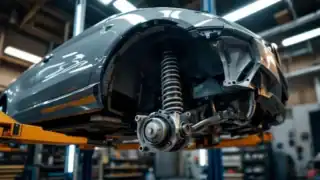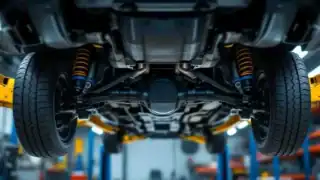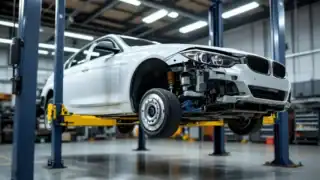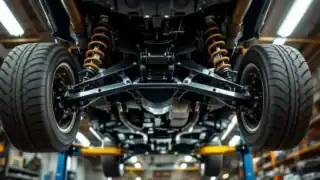
Your Holden’s suspension does more than smooth out the bumps — it keeps the tyres in contact with the road, maintains steering control, and protects every other component from unnecessary stress. A proper Holden suspension check looks at the full system: shock absorbers, struts, springs, control arms, bushes, and ball joints. If something in that system is wearing out or already failed, you’ll notice it in the way the car handles — and sometimes in ways you might not expect. For Holden owners in Gatton and across the Lockyer Valley, we carry out these checks on everything from Commodores to Colorado utes and Captivas.
Warning Signs Your Holden’s Suspension Needs Attention
Suspension problems don’t always announce themselves with a loud noise. Sometimes the signs are subtle, and they get worse gradually until something fails entirely. Here’s what to watch for:
- Bouncing after bumps: If your Holden keeps rocking after hitting a dip or rough patch, the shock absorbers (also called dampers) are likely worn. A car in good condition should settle quickly.
- Pulling or drifting during cornering: Worn control arm bushes or a failing ball joint can cause the wheel to shift slightly out of alignment mid-corner, making the steering feel vague or unpredictable.
- Clunking or knocking sounds: A single knock over bumps usually points to a worn bush or loose component. A repetitive clunk can mean a ball joint is failing — which is a safety concern and needs prompt inspection.
- Uneven tyre wear: Cupping (scalloping across the tread) often indicates worn shock absorbers. Wear on one edge can point to an alignment issue caused by a suspension component that’s moved out of spec.
- The nose dips heavily under braking: This is a tell-tale sign that front struts or shock absorbers are past their useful life. It also extends your stopping distance.
- A rough, jarring ride on roads that weren’t previously an issue: Rural roads around the Lockyer Valley aren’t always kind on suspension components. If familiar stretches of road suddenly feel worse, the suspension should be checked rather than blamed on the road.
How We Carry Out a Holden Suspension Check
We start with a visual inspection of the suspension geometry — looking at ride height, tyre wear patterns, and any obvious signs of damage or corrosion. Holden vehicles, particularly older Commodores and Cruzes, are prone to premature bush wear at the rear control arms and front lower arms. We check these specifically, along with the sway bar (anti-roll bar) links and end bushes, which are a common wear point on higher-kilometre Holdens.
From there, we move through the steering linkages, checking tie rod ends and rack boots for wear or damage. We physically test each ball joint and bush for play — small amounts of movement that indicate the component is no longer within tolerance. On Holden Colorados and Captivas, we also check the rear leaf spring hangers and shackles if applicable, as these are working vehicles that often carry loads.
Where shock absorbers or struts are being assessed, we look for oil leaking from the body of the unit — a sign the internal seal has failed. We also test the damping response by pressing down on each corner of the vehicle. A good shock absorber will push back firmly and settle without bouncing.
Parts and Specifications for Holden Vehicles
Holden vehicles are no longer produced, which means parts supply relies on aftermarket manufacturers and remaining stock. We source quality replacement components that meet or exceed OEM specifications — which matters because a budget bush or ball joint on a Commodore can wear out far sooner than one that matches the original tolerances. We’ll advise you on the parts we’re using and why before any work is approved.
What Affects the Cost and Time of a Suspension Check?
A suspension inspection itself is a straightforward process. Where the time and cost vary is in what we find. Replacing a set of front lower control arm bushes on a Holden Commodore is a different job to replacing a pair of front struts on a Holden Captiva — different complexity, different parts, different labour time. The age and condition of fasteners also plays a role; corroded bolts on an older vehicle take longer to remove safely.
If your Holden needs suspension work following the check, we’ll walk you through exactly what’s required and what can wait versus what needs to be done now. No unnecessary work gets approved without your say-so — that’s just how we operate.
Why Gatton Automotive Solutions for Your Holden?
We’re a full-service workshop handling everything from everyday passenger cars to 4WDs, utes, trucks, and heavy equipment — all under one roof in Gatton. That means if your Holden’s suspension check uncovers a need for a wheel alignment, tyre replacement, or roadworthy certificate, we can handle all of it here without sending you somewhere else. Drivers from Laidley, Forest Hill, Plainlands, and across the Lockyer Valley make the trip to us specifically because they don’t have to make the longer drive to Ipswich or Toowoomba for work their local workshop can’t complete.
We’ve built our reputation on straight advice and fair pricing — five-star reviewed by locals who keep coming back reflects that. If your Holden needs suspension attention, we’ll tell you what’s genuinely needed and give you an honest picture of the job before we start.
Book a Holden Suspension Check in Gatton
If your Holden is showing any of the signs above, or it’s been a while since the suspension was last looked at, Call Us Now or use the online booking to Book Your Free Inspection. We’re here to keep your Holden safe and sorted — whether it’s a quick check or a full suspension rebuild for drivers across the Gatton area.