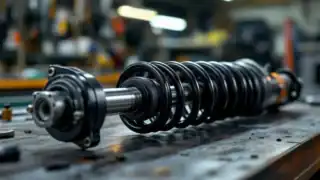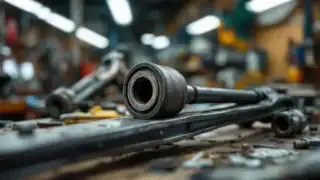
Your Great Wall’s suspension does more than smooth out a rough road — it keeps your tyres in contact with the ground, holds your steering accurate, and directly affects how safely your vehicle stops and corners. A Great Wall suspension check is the process of inspecting every component in that system: springs, shock absorbers, control arms, ball joints, tie rod ends, and associated bushes. For drivers in Gatton and across the Lockyer Valley, where a mix of sealed highways, gravel service roads, and farm tracks puts real load on suspension components, catching wear early is worth doing.
Warning Signs That Your Great Wall Needs a Suspension Inspection
Suspension problems don’t always announce themselves with a dramatic failure. More often, they show up as a slow change in how the vehicle feels or handles. If you’re noticing any of the following, it’s worth having the suspension looked at before the issue gets worse.
- Bouncy or wallowing ride after going over a bump or dip, which often points to worn shock absorbers (the component that controls how quickly your suspension compresses and extends)
- Vehicle pulling to one side when you’re driving straight, which can indicate worn tie rod ends or uneven suspension wear affecting wheel alignment
- Clunking or knocking sounds from the front or rear when you go over rough ground or turn at low speed, a classic sign of worn ball joints or loose control arm bushes
- Uneven tyre wear, where one edge of a tyre is wearing faster than the other, often caused by suspension components that are no longer holding the wheel at the correct angle
- Nose-diving under braking or leaning heavily through corners, both of which suggest shock absorbers are no longer doing their job properly
- Steering that feels vague or disconnected, particularly on unsealed roads
Great Wall models including the Steed ute and the V80 van are often used for genuine work purposes, such as towing, carrying loads, and running across properties. That kind of use accelerates wear on suspension components faster than urban driving would. If your vehicle is used that way, it’s worth factoring that into how often you have things checked.
What a Great Wall Suspension Check Involves
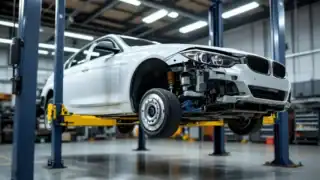
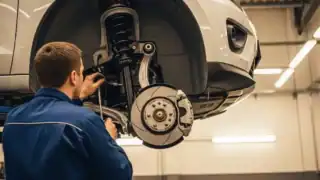
A proper inspection goes beyond a quick look underneath. Our technicians raise the vehicle and work through the suspension system methodically, checking each component for play, wear, and damage.
Front Suspension and Steering Components
We inspect the front struts or shock absorbers for oil leaks and loss of damping (damping is the force that stops your suspension from bouncing uncontrollably). Ball joints are checked for excessive movement, as a ball joint that has worn beyond its tolerance can separate without warning at speed. Tie rod ends, which connect your steering rack to the wheel hub, are tested for play that would cause loose or imprecise steering. Control arm bushes, which are the rubber or polyurethane sleeves that cushion the control arm’s movement, are examined for cracking, collapse, or excessive deflection.
Rear Suspension
Rear leaf springs on ute variants like the Steed are checked for cracked or broken leaves, worn spring shackles, and u-bolt condition. Coil-sprung rear arrangements on other models are assessed for spring sag (where the spring has settled and lost ride height) and shock absorber condition. Rear lateral links and trailing arms are inspected for bush wear and any signs of impact damage.
Ride Height and Alignment Indicators
We also check that both sides of the vehicle are sitting at the correct ride height. A difference from one side to the other often indicates a collapsed spring or a shock absorber that has fully worn out. While a full four-wheel alignment is a separate service, we’ll identify during the suspension check whether alignment is likely to be affected and advise you accordingly.
What Affects the Cost and Time of a Suspension Check in Gatton
The inspection itself is straightforward. What varies is what we find. If the check turns up minor wear on a couple of bushes, the repair is simple and parts are generally available. If ball joints or shock absorbers need replacing, parts sourcing for Great Wall vehicles can take a little longer than for high-volume brands, but we handle all parts sourcing from the workshop, so you’re not chasing suppliers yourself.
Whether OEM-equivalent or quality aftermarket parts are the right call depends on the component and the vehicle’s age. We’ll explain the options clearly and let you decide. There’s no pressure toward unnecessary work, and if something doesn’t need replacing yet, we’ll tell you that too.
Why Lockyer Valley Drivers Bring Their Great Walls to Us
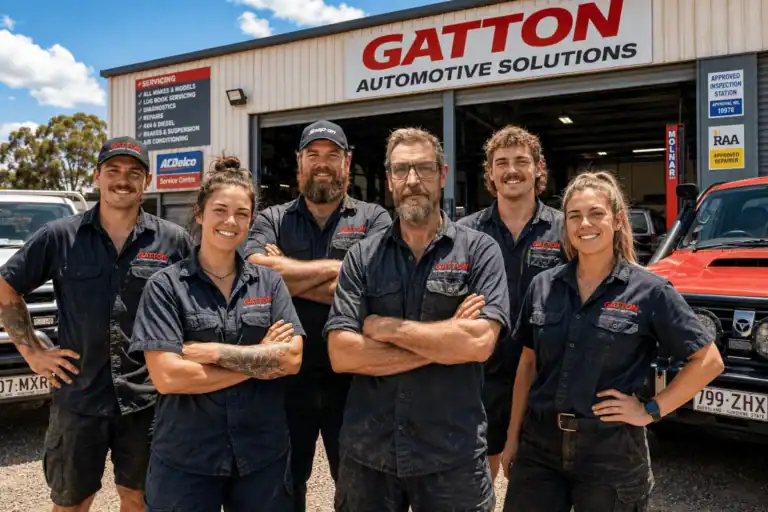
Gatton Automotive Solutions is a full-service workshop covering cars, 4WDs, utes, trucks, and heavy equipment, all under one roof. Suspension checks and suspension repairs are part of the same operation here, so if we find something during the inspection, we can usually address it without you needing a second appointment somewhere else. We also fit tyres and issue roadworthy certificates on-site, which matters if worn suspension components have triggered uneven tyre wear or a compliance concern.
For Lockyer Valley drivers, the alternative to a local workshop is a 45 to 80-kilometre trip to Ipswich or Toowoomba. That’s a significant inconvenience for something that can be handled right here in Gatton. With five-star reviews and a reputation built on straight advice and fair pricing, we’re the workshop people in the region come back to.
If your Great Wall is showing any of the signs above, or it’s been a while since the suspension was looked at, Call Us Now or Book Your Free Inspection online. We’re here and ready to help.