A Japanese vehicles suspension check is one of the most important inspections you can do to keep your car safe and predictable on the road. Your suspension system controls how your vehicle sits, handles cornering, absorbs bumps, and stays stable during braking. Japanese manufacturers like Toyota, Nissan, Mazda, Mitsubishi, and Subaru engineer their suspensions to be durable and responsive, but even well-built systems wear over time. Whether you’re driving a Corolla, Pulsar, CX-5, Outlander, or Forester around Gatton and the Lockyer Valley, a Japanese vehicles suspension check helps you catch wear before it becomes unsafe or expensive.
Common Signs Your Japanese Vehicle Suspension Needs Inspection
Some suspension problems announce themselves loudly. Others creep up gradually, and you only notice when the car no longer feels right. Here are the warning signs that should bring you in for a suspension check:
- Bouncing or wallowing after hitting a bump, especially if it takes several seconds for the car to settle
- Clunking or knocking sounds from underneath when turning, going over bumps, or accelerating
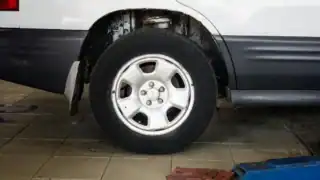
- The car sits noticeably lower on one side, or appears tilted when parked on level ground
- Increased body roll when cornering, or the feeling that the car leans too much in turns
- Uneven or excessive tyre wear, particularly on the inner or outer edges of the tyre
- A harsh or stiff ride that feels like you’re driving on concrete, even on smooth roads
- The front end dipping excessively during hard braking
- Wandering or pulling to one side, even after a wheel alignment
- Creaking or squeaking sounds, especially when the car is parked and you press down on the bonnet or boot
Japanese vehicles are known for longevity, but suspension components don’t last forever. Shock absorbers and struts typically wear gradually, which is why many drivers don’t notice the problem until they compare their ride to a newer car or have an inspection done.
What a Japanese Vehicles Suspension Check Includes
Our suspension check goes beyond a quick look underneath. We follow a systematic process tailored to Japanese vehicle design and common wear patterns specific to models from Toyota, Nissan, Mazda, Mitsubishi, and Subaru.
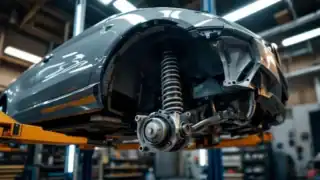
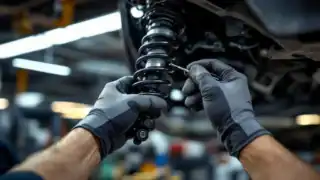
Visual inspection of key components: We examine shock absorbers and struts for leaks, damage, or corrosion. Leaking fluid is a clear sign the shock has failed internally and can no longer control the suspension movement properly. We check all bushings (rubber and polyurethane components that connect suspension parts) for cracks, splits, or deterioration. On Japanese vehicles, these bushings often last 80,000 to 120,000 kilometres, but roads, weather, and driving style affect wear rate.
Spring and coil inspection: We look for cracks in coil springs or sagging leaf springs. A cracked spring won’t break immediately, but it affects ride height and handling. We measure ride height at each corner to detect uneven wear.
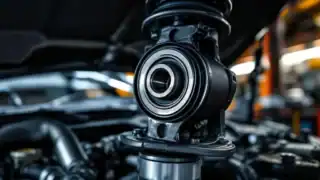
Link and arm checks: Suspension control arms, tie rods, and stabiliser links are tested for play and movement. These components wear and develop slack over time, causing that clunking noise or vague steering feel. Japanese vehicles often have lower control arms and strut braces that need individual attention.
Wheel alignment assessment: Suspension wear directly affects alignment. We check camber, caster, and toe angles to see if suspension damage is causing tyre wear patterns.
Brake and steering integration: Because suspension, steering, and brakes all work together, we assess how suspension condition affects stopping and handling response. A worn suspension can mask or worsen steering and brake feel.
The entire check is non-invasive and takes 30 to 45 minutes. We’ll show you any wear we find and explain what it means for safety and longevity.
What Affects the Cost and Timeline for Suspension Repairs
After a suspension check, you might need anything from no repairs to a full rebuild, depending on what we find. Several factors shape the final cost and time required.
Severity of wear: A single worn shock absorber is a simpler, faster repair than a control arm, ball joint, and bushings all in one visit. We’ll prioritise safety-critical items (anything affecting steering or braking stability) before cosmetic issues.
Parts availability: Japanese vehicle parts are generally easy to source, and we can often supply genuine OEM components or quality equivalent parts that meet Japanese manufacturer specifications. We handle parts sourcing in-house, so you don’t have to chase suppliers yourself.
Vehicle type and suspension design: A Toyota sedan will have a different suspension layout than a Subaru Forester or Mitsubishi Outlander 4WD. 4WDs and lifted vehicles sometimes require specialised parts or additional work to maintain geometry after repairs.
Whether both sides need attention: Suspension wear often appears on both sides of the vehicle, even if one side feels worse. Replacing just the left shock and ignoring the right side usually means the customer returns in a few months for the right. We’ll recommend paired repairs where they make sense.
We don’t rush suspension work, and we won’t recommend repairs you don’t need. Our approach is honest: we tell you what’s worn, what’s safe, what’s urgent, and what can wait.
Why Bring Your Japanese Vehicle to Gatton Automotive Solutions
As a full-service workshop in Gatton, we work on cars, 4WDs, trucks, and heavy equipment all under one roof. That breadth means we see Japanese vehicles constantly and understand their unique suspension characteristics. We’re not sending you to Ipswich or Toowoomba for suspension work you can get done locally.
Our technicians use honest advice and straight pricing. We don’t upsell unnecessary work, and we don’t charge you to find out what needs repair. A suspension check is free, and you’ll know exactly what we recommend before we touch anything.
We stock suspension parts or source them quickly, and because we do suspension upgrades and modifications in-house, we’re also equipped to handle more complex jobs like lift kits or performance suspension setups if that’s what you want down the track.
We’re locally owned and operate in Gatton, where our reputation depends on doing the work right and treating people fairly. If you’ve had a suspension check somewhere else and want a second opinion, we’re happy to discuss what you’ve been told.
Book Your Free Inspection for Japanese Vehicles Suspension in Gatton
If you’ve noticed any of the warning signs above, or if you simply want to know whether your suspension is in good shape, Book Your Free Inspection with us. Call Us Now or use our online booking system to pick a time that suits your schedule. We’ll give you a full picture of your suspension’s condition and clear advice on what needs to happen next.