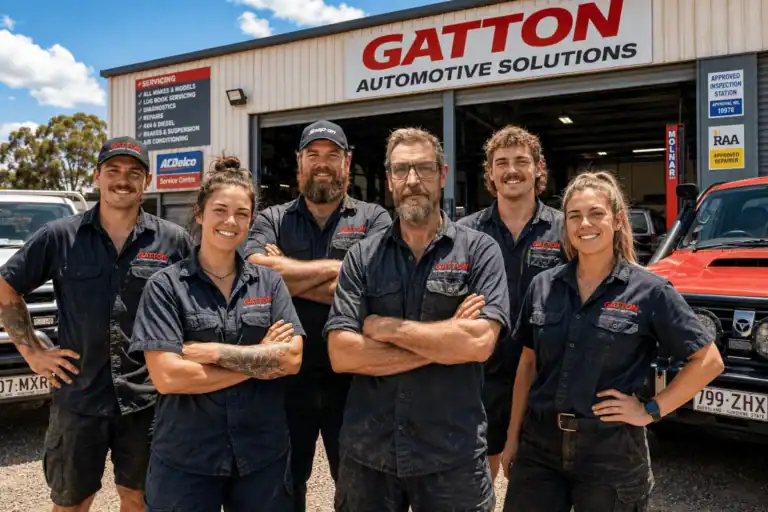
Your Toyota’s suspension system is doing a lot of quiet work every time you drive. It absorbs the impact of uneven roads, keeps your tyres in proper contact with the surface, and helps you steer with confidence. A Toyota suspension check is the process of inspecting all of these components together so any wear, damage, or misalignment is caught before it turns into a bigger problem. If you’re noticing something off with how your vehicle rides or handles, bringing it into Gatton Automotive Solutions for a proper inspection is the right first step.
Warning Signs Your Toyota’s Suspension Needs Attention
Suspension wear rarely happens overnight, but the symptoms can build up gradually until something suddenly feels very wrong. Because Toyota owners in the Lockyer Valley often cover significant distances on a mix of sealed roads, gravel tracks, and paddock access routes, the suspension system works harder than it might in a purely urban environment.
Watch for these specific signs that something may need investigating:
- A bouncy or floating ride after bumps, often caused by worn shock absorbers or struts that are no longer dampening properly
- Pulling to one side when driving on a straight road, which can point to worn control arm bushes, a bent component, or alignment that has shifted due to suspension wear
- Clunking or knocking sounds from under the vehicle, particularly over speed humps or rough surfaces, often linked to worn ball joints or sway bar links
- Uneven tyre wear across the tread, which is frequently a symptom of alignment or suspension geometry issues rather than just a tyre problem
- Nose-diving under braking or squatting heavily when accelerating, both pointing to shock absorber condition
- Steering that feels vague or delayed, where the vehicle doesn’t respond as directly as it used to
Toyota models like the HiLux, LandCruiser, Prado, Fortuner, and RAV4 each have their own suspension geometry and known wear patterns. A HiLux used for towing or loaded work will place different stresses on its leaf springs and shock absorbers compared to a RAV4 used primarily on suburban roads. Our inspection takes the specific model and its use into account rather than treating every Toyota the same way.
What a Toyota Suspension Check Involves
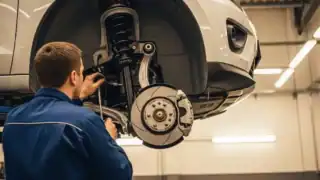
We carry out a methodical, component-by-component inspection rather than a quick look underneath. The goal is to give you an accurate picture of what’s actually happening with your suspension, not to recommend work that isn’t needed.
What we inspect
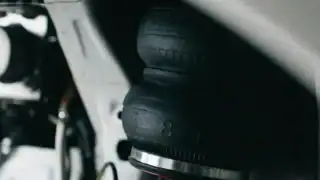
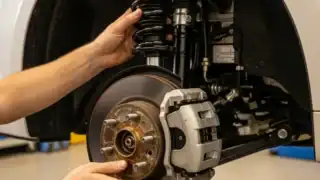
- Shock absorbers and struts, checked for oil leaks, physical damage, and response under compression
- Coil springs and leaf springs for cracks, settlement, or visible damage
- Ball joints, which connect the wheel hubs to the control arms and are safety-critical components on any Toyota
- Control arm bushes and sway bar links, often the source of knocking noises and handling changes
- Steering rack and tie rod ends for play or wear
- Wheel bearing condition, which works closely with suspension geometry
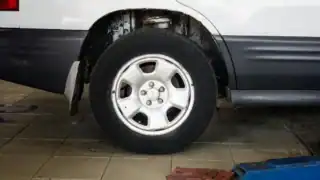
- Suspension geometry, including a visual assessment of ride height and component positioning
For Toyota 4WD models such as the LandCruiser 200 Series, 300 Series, or Prado 150 Series, we also pay attention to the front differential drop, known wear areas around the upper control arms on lifted vehicles, and the condition of any aftermarket suspension components that may have been fitted previously. These are details specific to how Toyotas are commonly modified and used in regional Queensland.
What Affects How Long It Takes and What It Costs
A suspension inspection itself is straightforward. The time and cost involved in any follow-up work depends on what’s found. A vehicle with worn sway bar links and front control arm bushes will need more attention than one with a single leaking shock absorber. The age of the vehicle matters too. Older Toyotas, particularly those with high kilometres, may have fasteners that are corroded and harder to access, which adds to labour time.
Parts availability is another variable. For common Toyota models, most suspension components are readily available. We handle parts sourcing directly, which means we can advise you on OEM-spec or quality aftermarket options and what each means for your vehicle’s long-term performance. We won’t recommend the most expensive option by default, and we won’t suggest parts that aren’t warranted by what we actually find.
Why Gatton Drivers Bring Their Toyotas to Us
Gatton Automotive Solutions is a full-service workshop, which means a suspension inspection doesn’t have to be just the start of a long process. If the check identifies worn components, we can carry out the repair here. If your Toyota needs a wheel alignment after suspension work, we handle that in-house. If a tyre has been damaged by suspension issues, we supply and fit tyres on-site. You don’t need to travel to Ipswich or Toowoomba and split the job between multiple workshops.
We work on everything from everyday Corollas and RAV4s to HiLux fleets and LandCruiser Troop Carriers used in rural and agricultural settings. Roadworthy certificates are issued on-site, which is useful if a suspension inspection reveals something that affects your vehicle’s roadworthy status. Our five-star reviews reflect a straightforward approach: we tell you what we find, explain what it means, and let you make the call.
If your Toyota doesn’t feel quite right, or if it’s been a while since anyone has properly looked at the suspension system, Book Your Free Inspection online or Call Us Now. We’re here to help Gatton and Lockyer Valley drivers get a straight answer about what their vehicle actually needs.