Limited Time: Free Windscreen Wipers With Any Service. Subject To Availability.

Locally Owned & Operated
Honest Upfront Pricing
5★ Reviews
All Makes & Models

Verified 5★ Reviews

Local Subaru Drive Belt Replacement In Gatton

Drive belt replacement in Gatton keeps your Subaru running reliably and helps prevent costly engine damage. We replace with quality parts and test everything on-site before you leave.

One-Stop Workshop

Honest Advice

5★ Reviews

Subaru Belt Experts

Book Your Free Inspection

Tell us what you need and we'll get back to you with a clear quote.

Booking Form
  • Vehicle Details
  • Confirm Vehicle
  • Services
  • Contact Details
Honest Quotes
All Vehicle Types
Local & Reliable

Why Book With Us

Book Your Free Inspection
Drop Off Your Vehicle
We Get to Work
Collect Your Car

The drive belt on a Subaru does a lot of quiet, unnoticed work. It connects the engine’s crankshaft to accessories like the alternator, power steering pump, and air conditioning compressor, keeping them all spinning whenever the engine is running. When that belt starts to wear, crack, or slip, those systems stop working properly. Subaru drive belt replacement is one of those jobs that tends to get pushed aside until something more obvious goes wrong, but getting ahead of it saves a lot of trouble. At our Gatton workshop, we see this job regularly across the Subaru range, from older Foresters and Outbacks to more recent Liberty and XV models.

Signs Your Subaru Drive Belt Needs Attention

Subaru owners don’t always know a drive belt is the culprit until a related symptom points them in the right direction. The belt wears gradually, so the signs can be easy to dismiss at first.

  • A high-pitched squealing from the engine bay, particularly on start-up or when the air conditioning kicks in. This often points to a belt that has glazed over or is beginning to slip.
  • Visible cracking or fraying on the belt surface. If you can see the belt and it looks dry or has small cracks across the ribs, it’s overdue for replacement.
  • The battery warning light coming on even though the battery itself is fine. If the belt has slipped or snapped, the alternator stops charging, and the battery warning is the first thing you’ll see on the dash.
  • The air conditioning suddenly stops cooling while everything else seems normal. Loss of drive to the AC compressor is a common early failure sign.
  • Overheating, in some configurations, where the belt also drives the coolant pump. This is less common in modern Subarus but worth understanding.

Subaru’s horizontally opposed (boxer) engine layout means the belt routing and tensioner arrangement can differ from more conventional engines. This is worth knowing because belt wear patterns on a boxer engine don’t always behave the same way as on an inline four, and a technician unfamiliar with the layout can miss early tensioner wear that accelerates belt deterioration.

What We Do During a Subaru Engine Drive Belt Replacement

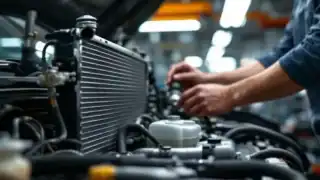
We start by inspecting the existing belt and all the components it runs across. That means checking belt tension, surface condition, and rib wear, but also looking closely at the automatic tensioner and any idler pulleys. On many Subaru models, a worn tensioner is what causes a belt to fail prematurely, so replacing the belt without inspecting the tensioner is short-sighted work we won’t do.

The pulleys themselves get checked for bearing roughness and side-to-side play. A seized or rough idler pulley puts extra strain on a new belt straight away. We also inspect the driven accessories, particularly the alternator and power steering pump, for any signs of bearing wear or fluid leaks that could contaminate the new belt.

Once we’ve assessed everything, we’ll walk you through what needs doing before any work starts. Parts are sourced to OEM specification or genuine-equivalent for Subaru, so belt width, rib count, and material rating all match what the vehicle was designed to run. Fitting an undersized or off-spec belt on a Subaru boxer engine can cause premature slippage and noise, which is why we don’t cut corners on parts selection.

What Affects the Cost and Time for a Subaru Belt Replacement in Gatton?

The main variables are the specific Subaru model and engine, whether the tensioner and idler pulleys need replacing at the same time, and parts availability. On most common Subaru models sold in Australia, parts are readily available and the job can often be done while you wait.

Replacing the tensioner and idler pulleys alongside the belt adds to the cost, but it makes sense to do them together since labour time overlaps significantly. It’s the same logic as replacing cam belt idlers during a timing belt service. Doing each item separately ends up costing more overall.

OEM-specification parts are priced appropriately for a Subaru, and we’ll always explain what we’re recommending and why. There’s no upselling here and no work done without your go-ahead first.

Why Choose Gatton Automotive Solutions for Your Subaru Belt Service

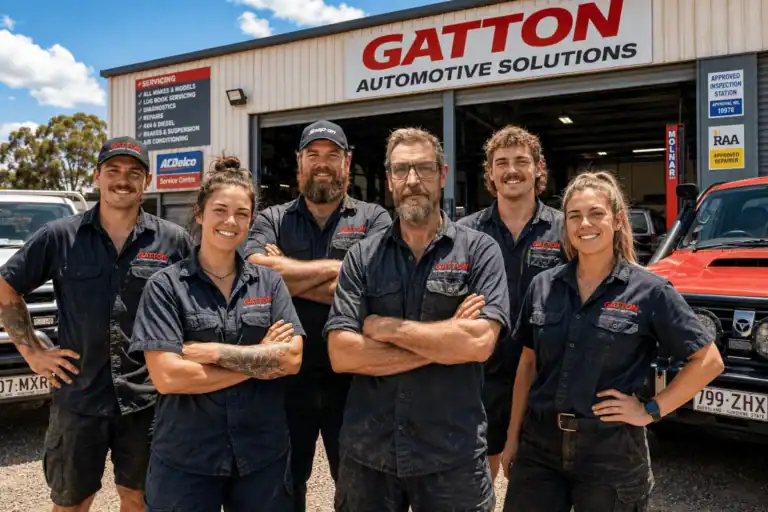
Gatton Automotive Solutions is a full-service workshop based in Gatton, handling everything from everyday passenger cars and 4WDs through to trucks, heavy equipment, and farm machinery. That breadth means our technicians are comfortable working across a wide range of vehicles and engine configurations, including the Subaru boxer layout that trips up less experienced workshops.

Subaru is a popular choice across the Lockyer Valley, particularly the Outback and Forester among families and people who want a practical all-wheel drive without the size of a large 4WD. We know these vehicles well and we stock or can quickly source parts for most common models in the range.

Driving to Ipswich or Toowoomba for a Subaru serpentine drive belt replacement is an hour or more out of your day. We handle this job locally, with honest advice, straight pricing, and no unnecessary extras. Alongside mechanical work, we also offer roadworthy certificates, suspension upgrades, tyre supply and fitting, smash repairs, and parts sourcing, all under one roof. Our five-star reviews reflect the way we work, not just the work we do.

If your Subaru is due for a belt inspection or you’ve noticed any of the symptoms above, use the Book Your Free Inspection button to lock in a time online, or Call Us Now to speak with the team. We’re right here in Gatton and we’ll get you sorted without the trip.
Your Local Workshop for Every Vehicle

Gatton Automotive Solutions is the one-stop shop for cars, 4WDs, trucks, and heavy equipment. Honest advice and fair pricing, right here in Gatton.

Honest Pricing, No Surprises

We tell you what’s needed and what it costs before we start. No upselling, no pressure.

Everything Under One Roof

Bring your car in and we’ll inspect it, explain what we find, and quote you upfront.

Subaru Drive Belt Specialists

We source the right belt for your Subaru model and fit it to manufacturer specs.

How Subaru Drive Belt Replacement Works

From booking to collection, here's how we handle your Subaru's drive belt replacement professionally and efficiently.

Step 1

Book Your Free Inspection

Call Us Now or book your free inspection online to get your Subaru's belt condition assessed and a clear plan.

Step 2

Belt Condition Assessment

We inspect your Subaru's drive belt for wear, cracking, and tension using Subaru-specific procedures and measurements.

Step 3

Drive Belt Replacement

We replace the belt with OEM-spec parts, checking correct tension and alignment for your Subaru's engine setup.

Step 4

Final Check & Collection

We verify smooth operation and proper belt tension, then your Subaru is ready to collect and drive with confidence.

Five-Star Rated

Verified 5★ Reviews

Quality Parts From Trusted Suppliers

We use genuine and quality aftermarket parts from reputable suppliers. You get reliable components backed by proper warranties.

Book Your Free Inspection

Tell us what you need and we'll get back to you with a clear quote.

Booking Form
  • Vehicle Details
  • Confirm Vehicle
  • Services
  • Contact Details
Honest Quotes
All Vehicle Types
Local & Reliable

Why Book With Us

Book Your Free Inspection
Drop Off Your Vehicle
We Get to Work
Collect Your Car

Frequently Asked Questions

Browse answers to common questions about our services. Can't find what you're after? Give us a call and we'll help.

The most common signs are a squealing or chirping noise from the engine bay, especially on cold starts or when you turn on the air conditioning. You might also notice the battery warning light come on, the power steering feeling heavy, or the engine running hotter than usual. A cracked, frayed, or glazed belt is another clear indicator. Subarus with the EJ and FB series engines can be prone to belt glazing over time, particularly in stop-start driving conditions. If you notice any of these symptoms, it is worth getting the belt inspected before it fails completely.

A failed drive belt will immediately knock out everything it powers, including the alternator, power steering pump, air conditioning compressor, and in many Subarus, the water pump. That means the battery stops charging while you are driving, the engine can overheat, and steering becomes significantly heavier. In short, the car becomes unreliable and potentially unsafe to drive. Catching a worn belt early is far cheaper than dealing with a roadside breakdown or a secondary repair caused by the belt letting go.

Subaru’s horizontally opposed boxer engine layout means the belt runs at a slightly different angle compared to conventional engines, which can cause uneven wear if the tensioner or idler pulley is not in good condition. We always inspect those components alongside the belt itself. On older EJ-series Subarus, the belt tensioner spring can weaken over time, allowing belt slip that shows up as noise or poor accessory performance even when the belt itself looks serviceable. Treating these parts as a set keeps the repair from becoming a repeat job.

For most Subaru models, the job takes around one to two hours. If we are replacing the tensioner and idler pulleys at the same time, which we usually recommend, allow a bit more time. We offer while-you-wait servicing at our Gatton workshop for straightforward jobs like this, so in many cases you can drop the car off and head into town while we get it done. We will let you know upfront if the job is going to take longer once we have had a look at the vehicle.

The main variables are the number of belts your Subaru has, whether we are replacing the tensioner and idler pulleys at the same time, and the parts specification you choose. Some Subaru models run a single serpentine belt while others use a separate belt for the alternator or air conditioning. Using quality OEM-equivalent parts matters here because cheaper belts can wear faster or slip, especially on a boxer engine with its specific belt geometry. We will go over exactly what is needed and what it will cost before any work starts.

Under ACCC guidance, Australian consumer law generally does not require you to use a dealer or manufacturer-authorised workshop to maintain your new car warranty, provided the service is carried out correctly and with appropriate parts. This is general information rather than legal advice, and we would recommend checking your specific warranty terms if you are unsure. We stamp logbooks and use quality parts that meet manufacturer specifications, so your service history stays accurate and complete. For specific warranty questions about your Subaru, it is worth reading your warranty booklet or contacting Subaru Australia directly.

Most Subaru models call for a drive belt inspection every 40,000 to 60,000 kilometres and replacement somewhere in the range of 80,000 to 100,000 kilometres, though your owner’s manual will give the figure specific to your model and engine. Harsh conditions, age, and oil or coolant contamination can shorten that interval. If your Subaru is more than five years old and you do not have a clear service history showing the belt was replaced, it is worth having it checked regardless of the odometer reading.

We start by inspecting the existing belt for cracking, fraying, glazing, and correct tension. We check the tensioner and idler pulleys for bearing wear and smooth operation while we are in there. Once we are satisfied with what we have found, we fit the new belt to manufacturer specifications, set the tension correctly, and run the engine to confirm everything is seated properly and operating as it should. Before we start any work, we will talk you through what we have found and what we recommend, so there are no surprises when you come to pick it up in Gatton.

Continue to site