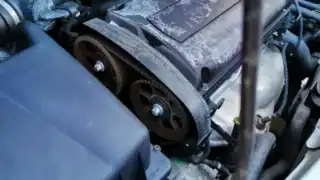
The drive belt on your Japanese vehicle is one of those components that works quietly in the background until it doesn’t. On cars like Toyotas, Hondas, Mitsubishis, Subarus, and Mazdas, the serpentine drive belt (sometimes called the accessory belt) keeps the alternator, power steering pump, air conditioning compressor, and water pump spinning whenever the engine runs. Japanese vehicles drive belt replacement is one of the more straightforward preventive services, but skipping it at the right interval can leave you stranded on the side of the road. At Gatton Automotive Solutions, we see this regularly across all kinds of Japanese makes, and sorting it early is always cheaper than dealing with the breakdown.
Signs Your Drive Belt Needs Attention
Japanese engines are generally well-engineered and belts tend to last well, but rubber degrades over time regardless of how the car is driven. Heat, age, and kilometres all take their toll. The warning signs are usually obvious if you know what to listen and look for.
- Squealing or chirping noise from the engine bay, especially when you first start the car or when you turn on the air conditioning
- Visible cracking, fraying, or glazing on the belt surface, which you can sometimes see with the bonnet open
- Battery warning light appearing on the dash, which can indicate the alternator is no longer being driven properly
- Overheating, which may point to the water pump losing drive (on models where the water pump is belt-driven rather than chain-driven)
- Power steering feeling heavy, particularly on older Japanese vehicles that use hydraulic rather than electric steering
- Air conditioning cutting in and out or failing to cool effectively
On some Subaru and Mitsubishi models, belt wear can be harder to spot visually because of the engine layout. If your service history shows the belt hasn’t been replaced in a while, it’s worth having it inspected rather than waiting for a symptom to appear.
How We Handle Drive Belt Replacement on Japanese Vehicles
The replacement process starts with a proper inspection. We check the belt condition, the tensioner pulley, and the idler pulleys, because a new belt fitted to a worn tensioner won’t last as long as it should. On many Japanese vehicles, particularly Toyotas and Hondas, the tensioner is spring-loaded and self-adjusting, but it still wears internally over time. We assess whether it needs replacing at the same time as the belt.
We also check belt alignment across all driven pulleys. A misaligned belt will wear unevenly and can cause noise even when brand new. For Mazda and Mitsubishi models with multiple belt-driven accessories, we verify each pulley spins freely and isn’t putting unnecessary side load on the new belt.
Parts selection matters here. For Japanese vehicles, we source belts to OEM specification, matching the correct length, rib count, and material grade for the specific engine. Fitting an undersized or substandard belt might get the car going, but it compromises the lifespan of both the belt and the components it drives. We handle parts sourcing in-house, so you’re not left waiting on delays.
A Note on Timing Belts vs Drive Belts
These are two different things, and it’s a common point of confusion. The drive belt (or serpentine belt) sits on the outside of the engine and drives external accessories. The timing belt is internal and synchronises the camshaft and crankshaft. Many Japanese vehicles, particularly older Mitsubishis, Hondas, and some Subarus, use a rubber timing belt that also has a recommended replacement interval. If you’re unsure which service your vehicle needs, or if it’s overdue for both, we’ll check and give you a straight answer.
What Affects the Cost and Time of a Belt Replacement?
Drive belt replacement on most Japanese passenger vehicles is a relatively quick job. A few variables do affect the overall time and cost involved.
If the tensioner or idler pulleys are worn, replacing them at the same time as the belt adds parts and a modest amount of labour, but it’s significantly more practical than coming back in six months when those components fail. On some SUV and 4WD models, access to the belt is more involved due to engine bay packaging, particularly on Subaru’s horizontally-opposed engines where the belt runs across the width of the bay. Larger Japanese 4WDs and utes, including diesel-powered models, may involve more substantial work.
We’ll give you an honest rundown before any work begins, no surprises, and no unnecessary extras added to the invoice.
Why Choose Gatton Automotive Solutions for Your Japanese Vehicle?
Gatton Automotive Solutions is a full-service workshop covering everything from everyday Japanese passenger cars to 4WDs, utes, trucks, and heavy equipment, all under one roof. You don’t need to drive to Ipswich or Toowoomba for a quality service on your Toyota, Honda, Mazda, or any other Japanese make. We handle the full range, from a simple belt replacement to more involved engine work, smash repairs, suspension upgrades, and tyre fitting.
Our approach is straightforward: we look at what your car actually needs, tell you what we found, and let you make the call. No upselling, no unnecessary work. With five-star reviews from drivers across the Lockyer Valley, our reputation is built on doing the job right and treating people fairly.
If your Japanese vehicle is making noise, due for a service, or you’re simply not sure when the belt was last replaced, Book Your Free Inspection with us online or Call Us Now. We’re based in Gatton and happy to look after drivers from right across the region.